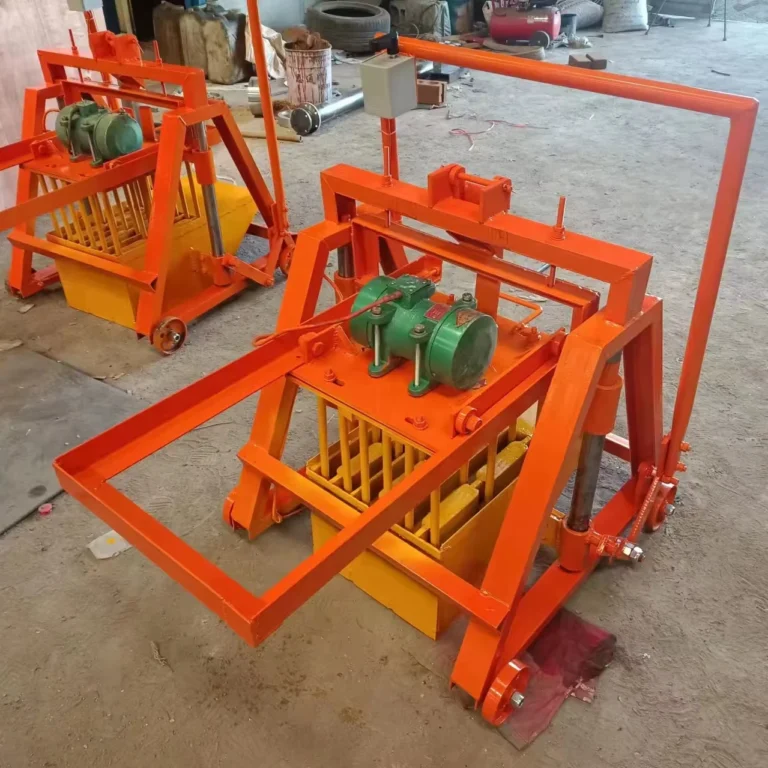
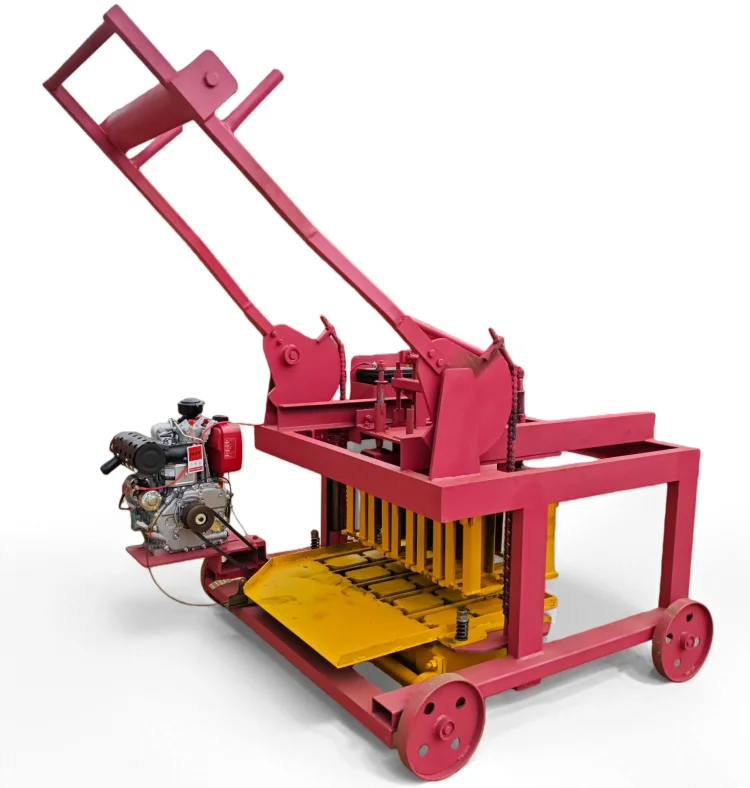
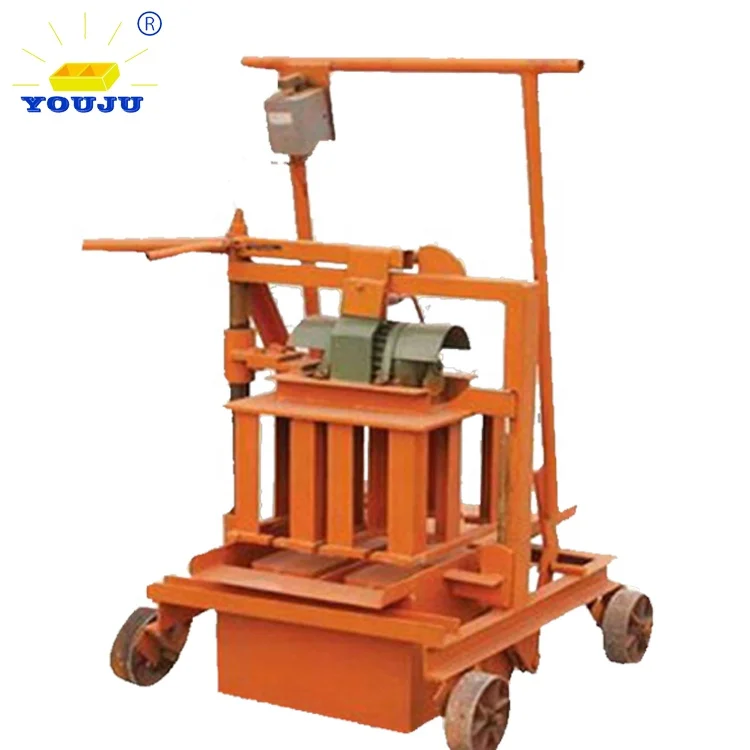
Single Focus Design — the QMR4-45 mobile block machine is specified as one matched system with mould and pallet requirements eliminated, so capacity figures align with what you actually produce on-site.
Technical Specifications
| Parameter |
Value |
| Model |
QMR4-45 |
| Product Type |
Mobile Egg Laying Block Making Machine |
| Overall Dimensions (L×W×H) |
2420×1320×1650mm |
| Net Weight |
810kg |
| Moulding Cycle |
40-45s |
| Pallet Size |
No pallet required |
| Rated Power |
6kW |
| Diesel Engine Option |
6kW or 6-8HP |
| Voltage |
220V or 380V or according to client local voltage (frequency not stated in source — confirm with manufacturer) |
| Output Capacity (400×200×200mm) |
3000pcs/day (4pcs/mould, 8-hour shift) |
| Output Capacity (400×150×200mm) |
3500pcs/day (5pcs/mould, 8-hour shift) |
| Output Capacity (400×120×200mm) |
4500pcs/day (6pcs/mould, 8-hour shift) |
| Automation Level |
Semi-automatic |
| Assembly State |
Mobile / egg-laying type |
| Standards |
CE (certificate details not stated in source — confirm with manufacturer) |
Application Suitability
| Application |
Material or Output |
| On-site construction hollow block production |
Cement, sand, and crushed stone aggregate without a fixed plant |
| Remote housing project block manufacturing |
Local aggregate mixes in areas with unreliable grid electricity |
| Small-scale block enterprise startup |
Low-investment hollow block production with no pallet consumption |
| Contractor self-supply at cement working sites |
Standard concrete hollow blocks in 400×200×200, 400×150×200, and 400×120×200mm formats |
Why "3000 Pieces Per Day" Means Nothing Without the Block Format
Every output figure for this mobile block machine for sale is tied to a specific hollow block dimension and mould cavity count.
Buyers regularly receive quotations stating a single daily capacity number with no mention of which block size was used to calculate it. I have seen contractors order a machine expecting 4500 blocks daily, only to discover that figure assumed the smallest format while their market actually demands the largest — cutting real output to two-thirds of what they planned for. The QMR4-45 capacity is therefore stated per format: 3000 pieces per day for 400×200×200mm blocks at four cavities per mould, rising to 4500 pieces per day only when running 400×120×200mm blocks at six cavities, both based on an 8-hour shift [NEED_CITE: block machine capacity calculation standards by format].

Eliminating the Pallet and the Concrete Floor
The egg-laying design of this mobile block machine for sale means it deposits wet blocks directly onto the ground as it moves forward. There is no pallet circulation system, no pallet return conveyor, and no need to invest in thousands of wooden or bamboo pallets that warp, break, and consume storage space. For a contractor who already has a flat, hard-packed area on a building site, the machine begins producing blocks the same day it is unloaded.
Dual Power for Unreliable Grids
Remote construction sites in many regions face load-shedding or simply have no three-phase supply available. The QMR4-45 addresses this with a selectable power source: a 6kW electric motor where grid power is stable, or a 6-8HP diesel engine where it is not. This choice is made before production so the machine arrives configured for your actual site conditions rather than requiring a field retrofit [NEED_CITE: diesel engine adaptation for construction machinery in off-grid locations].
Reading the Specs That Actually Matter on Site
The 40-45 second moulding cycle governs your realistic throughput more than any other number on the sheet. Combined with the manual mould change procedure, it tells you how many format switches you can afford in a single shift before production time erodes. The 810kg net weight keeps the machine portable — a small crane or forklift can reposition it between buildings on a large project — while still providing enough mass for the vibration system to consolidate the concrete mix properly. The 6kW rated power requirement means the electric version can typically run on a standard industrial supply without a dedicated transformer, but frequency must be confirmed for your country before the motor is wound.
The Cost of Skipping Site Condition Checks
Ordering a mobile block machine for sale without verifying your aggregate gradation and cement availability against the machine’s mix requirements leads to blocks that crumble at demoulding or fail compression tests weeks later. I recall a Middle East project where the local sand carried a high clay content; the machine ran fine, but block strength was inconsistent until the mix was adjusted — a problem that delayed commissioning by two weeks. Voltage and frequency mismatches are equally costly: a motor wound for 380V/50Hz will overheat and burn out on a 440V/60Hz supply, and replacement is not a quick fix in a remote location [NEED_CITE: motor failure caused by voltage and frequency mismatch in export machinery].
Why Source This Machine Here
Block machinery is our single focus, which means the QMR4-45 is not assembled from unrelated components sourced from different factories — the press, mould, and vibration system are matched as one unit. We configure the machine against your actual local aggregate and target block format rather than shipping a catalogue default. Custom mould design is available to buyer drawings, so if your market requires a hollow block dimension outside the standard 400×200, 400×150, or 400×120 series, the mould can be engineered to your specification. Automation level is selectable: you can start with the semi-automatic QMR4-45 and move to a higher-tier automatic line later as your market grows. Installation, commissioning, and operator training are included so your team is producing acceptable blocks before our technician leaves the site.
Documentation & Verification
- Line layout showing QMR4-45 placement and material flow on your specific site
- Capacity calculation sheet stating block format, mould cavity count, and shift hours behind every output number
- Mould drawing and format list confirming included hollow block sizes
- Voltage and control language confirmation document signed before production
- Factory test record on your specified block format before dispatch
Installation, Commissioning & Support
- Flat, hard-packed ground area of approximately 3×2m minimum for the 2420×1320mm machine footprint
- Dedicated power circuit matching confirmed voltage and frequency for the 6kW motor or diesel fuel supply arrangement
- Machine arrives fully assembled; only mould installation and power connection required on site
- First-run commissioning with mix adjustment to match your local aggregate and cement type
- Operator training covering cycle timing, mould change procedure, and daily maintenance checks
- Wear parts list and mould maintenance schedule provided at handover
What to Share Before Requesting a Quote
To size this mobile block machine for sale accurately, tell us which hollow block dimensions your market sells, your target daily output per format, and whether your site has reliable grid electricity or requires the diesel option. Share your local aggregate type and any existing mixing equipment so we can confirm compatibility.
Frequently Asked Questions
Q: How is daily output calculated, and which block format does each figure assume?
A: Every output number is tied to a specific hollow block size and mould cavity count. The QMR4-45 produces 3000 pieces per day with 400×200×200mm blocks at four cavities per mould, 3500 pieces with 400×150×200mm at five cavities, and 4500 pieces with 400×120×200mm at six cavities, all based on a continuous 8-hour shift at the 40-45 second cycle time.
Q: Can I run this machine on diesel only if my site has no reliable grid power?
A: Yes. The QMR4-45 is available with a 6-8HP diesel engine as the primary power source. This option is selected before production so the machine arrives fully configured for off-grid operation. You only need to arrange diesel fuel supply at the site.
Q: Do I need a concrete floor or any pallets to operate this egg-laying machine?
A: No pallets are required. The egg-laying design deposits blocks directly onto the ground as the machine moves forward. You need a flat, hard-packed surface — a compacted soil area or existing concrete slab both work — but no dedicated concrete factory floor is necessary.
Q: What voltage and frequency options are available, and is the control display in my language?
A: The QMR4-45 electric version supports 220V or 380V, with custom voltage available on request. Frequency and control display language must be confirmed before production to avoid commissioning delays. We document the agreed electrical specification and language before manufacturing begins.
Q: What is included in the shipment — just the press, or also a mixer and feeding equipment?
A: The standard quotation covers the QMR4-45 press and its mould. Raw material mixing and feeding equipment can be added to match your site setup. Clarify at the inquiry stage whether you need a complete line or only the mobile press unit.

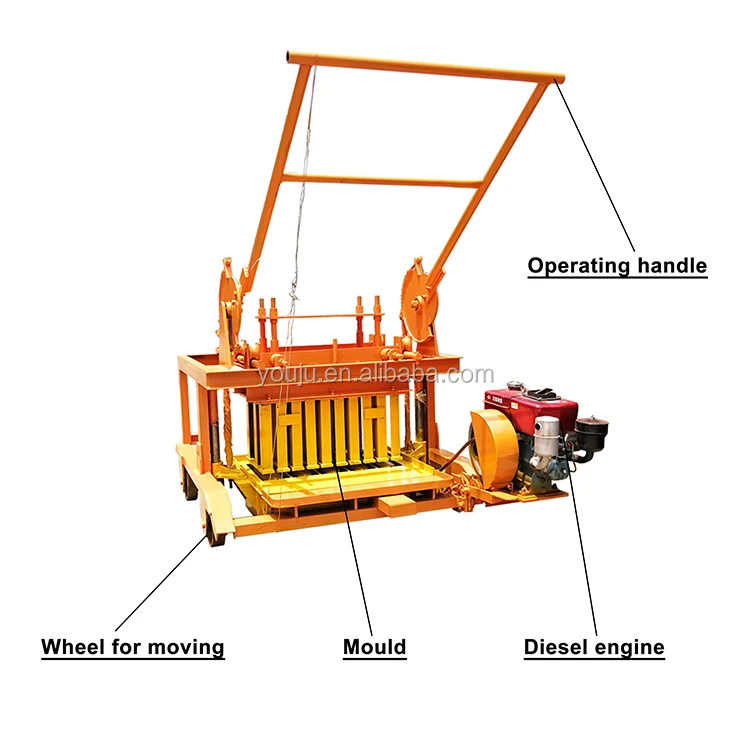
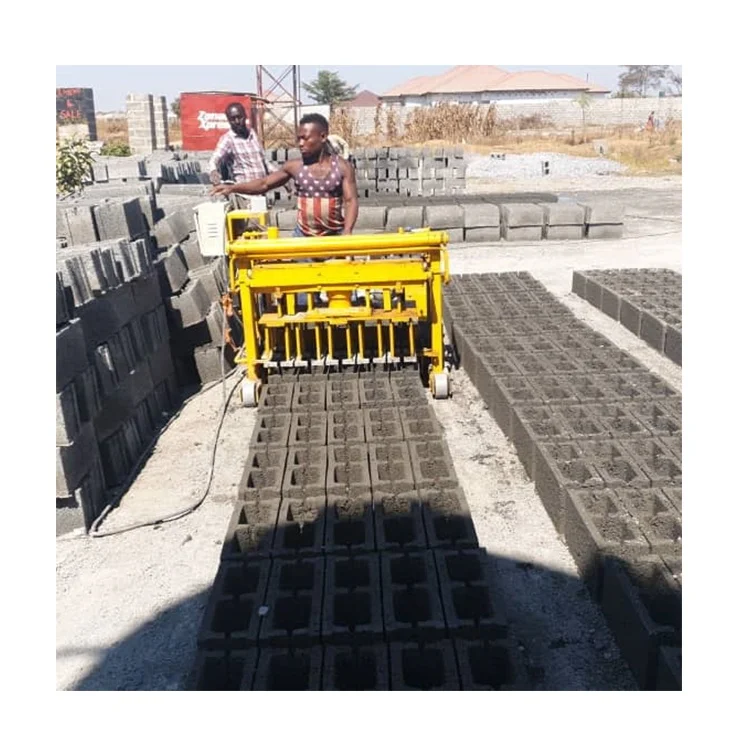 Mobile block machine