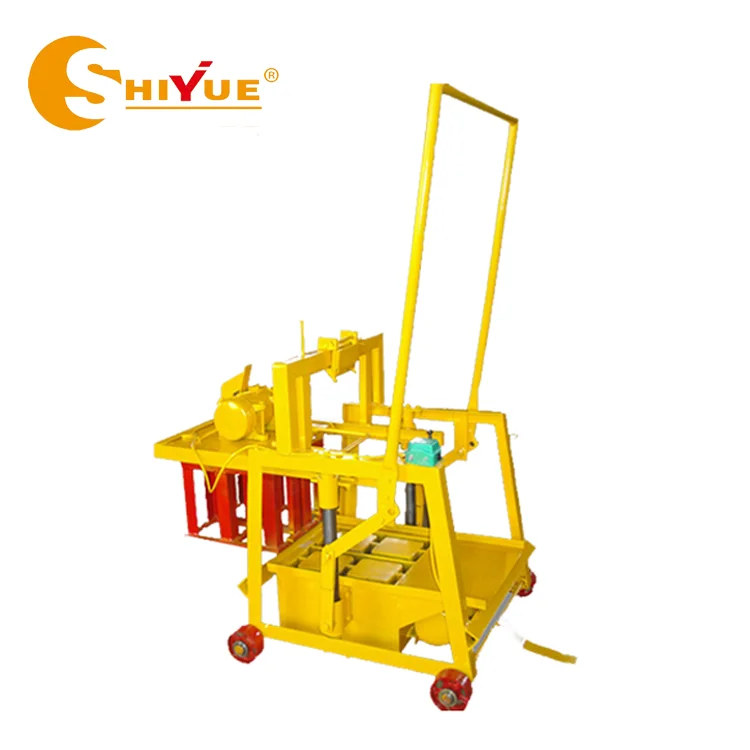
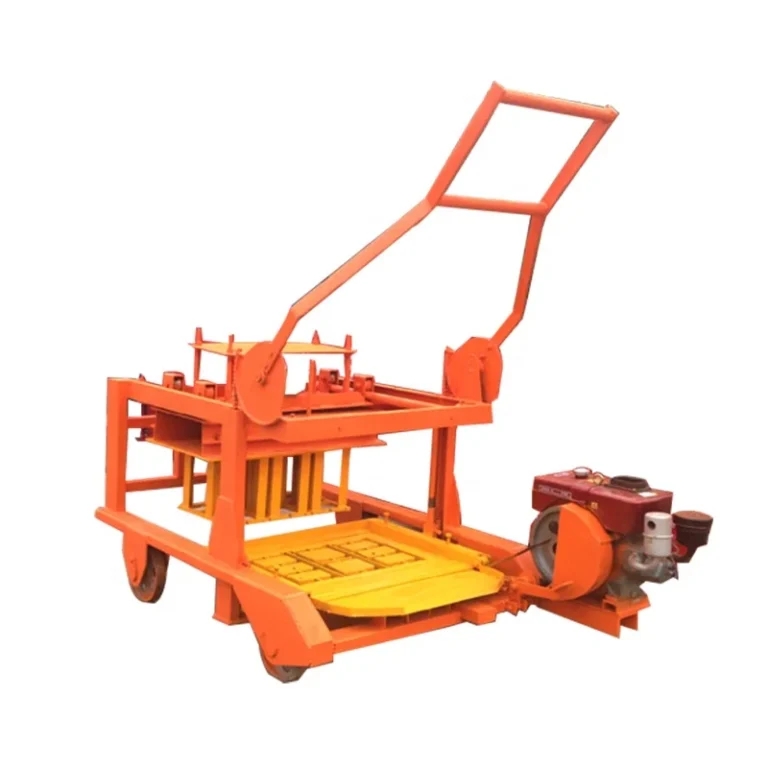
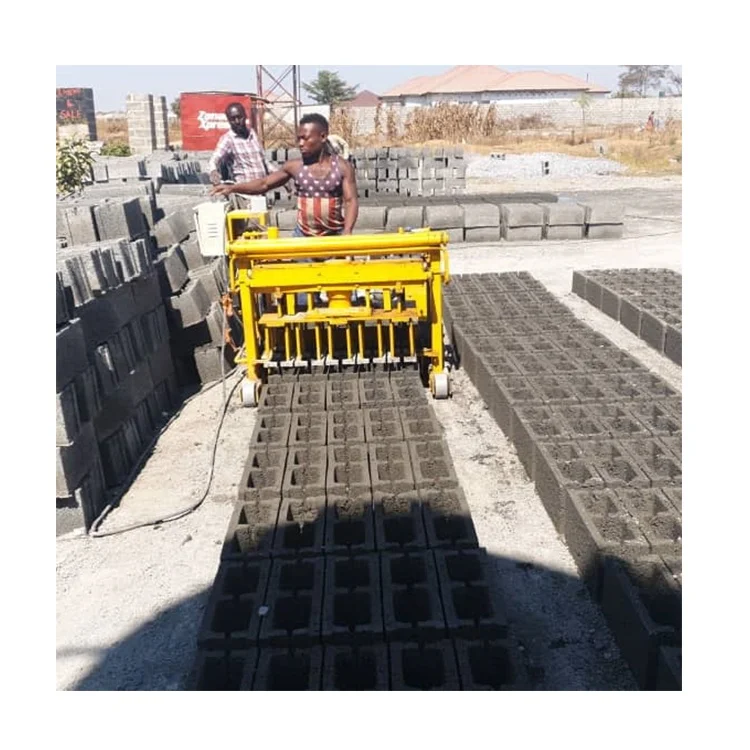
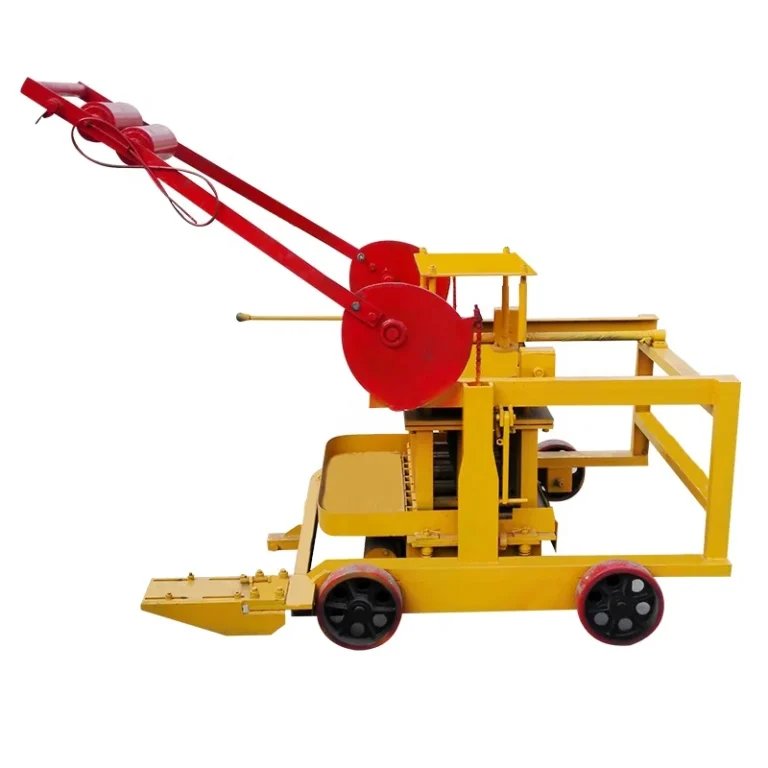
Single-Focus Mobile Tier — every QMJ4-45 egg layer we dispatch leaves as a matched system with its moulds and power source, so first-time buyers know exactly where a mobile machine sits before scaling to a fixed plant.
Technical Specifications
| Parameter |
Value |
| Model |
QMJ4-45 |
| Product Type |
Mobile Egg Laying Block Making Machine |
| Molding Capacity |
4 pcs/mould for 400×200×200 mm hollow block (basis to be confirmed for other formats) |
| Vibration Frequency |
2400 r/min |
| Molding Cycle |
45 s |
| Vibration Method |
Mould vibration |
| Demould Method |
Manual |
| Turning Method |
Manual |
| Total Power |
6 kW |
| Power Source |
Diesel / Petrol engine |
| Automation Level |
Manual operation (egg laying / mobile) |
| Pallet Requirement |
Not required (egg laying type) |
| Mould Formats Available |
400×200×200 mm (4 pcs/mould), 400×150×200 mm (5 pcs/mould), 400×120×200 mm (6 pcs/mould) |
| Productivity |
2600–4000 pcs/day (basis not stated in source — confirm block format / material / thickness) |
| Hydraulic Pressure |
Not stated in source |
| Vibration Force |
Not stated in source |
| Voltage & Frequency |
Not applicable (engine driven) |
| Control System |
Manual operation |
| Standards |
CE (specific standard to be confirmed) |
| Warranty |
1 year (source value — verify against manufacturer catalog) |
Application Suitability
| Application |
Material or Output |
| On-site hollow block production at construction yards |
Crushed stone, river sand, and cement mixes laid directly on compacted ground |
| Small-scale cement block manufacturing for local sale |
Standard concrete mixes with locally sourced aggregate |
| Remote project sites without grid electricity |
Diesel or petrol engine powered operation, no external power dependency |
| First-time block plant setup with minimal capital |
Hollow blocks in 400×200×200, 400×150×200, and 400×120×200 mm formats |
| Contractor self-production at housing developments |
Daily output matched to project pacing rather than commercial plant volume |
What "3000 Blocks a Day" Actually Means on a QMJ4-45
Output only holds when the block format, cycle time, and mix design are all named together.
I have watched crews stand around a mobile block machine because the supplier quoted a cycle count without saying which block size that count assumed. A 400×200×200 mm hollow block at 45 seconds per mould gives a very different daily tally than a 400×120×200 mm block at the same cycle. When the mobile block machine manufacturer you choose cannot tie each number to a named format, you are buying a guess. That gap between quoted and real output is where projects stall and contractors start paying penalties. [NEED_CITE: block format assumptions in capacity quotations]

Where the QMJ4-45 Sits in a Complete Block Machinery Range
A mobile egg layer is the entry tier of a single-focus block machinery range. It handles on-site hollow block production without a fixed plant, pallets, or curing racks. Buyers who need higher daily volume or multiple block formats typically move to a semi-automatic stationary press with pallet feeding and stacking. The QMJ4-45 exists so that a first-time operator or a contractor with a tight site can start producing immediately, then scale upward without treating the mobile machine as wasted capital.
Engine-Driven Independence on Sites Without Grid Power
The diesel or petrol engine power source removes the single biggest infrastructure barrier on remote construction sites. No transformer, no cable run, no generator rental — the mobile block machine manufacturer configures the engine to match local fuel availability and ambient conditions. This matters in regions where grid connection can take weeks to arrange and where voltage fluctuation would damage a standard electric motor. The 6 kW total power requirement stays well within the output envelope of a small diesel engine. [NEED_CITE: engine-driven block machine deployment in off-grid construction sites]
Reading the Specs That Actually Shape Block Quality
Vibration frequency at 2400 r/min drives the mould vibration method, which compacts the concrete mix around the core pins of each hollow block. On a mobile egg layer, this frequency must be matched to the stiffness of the mix — too wet and the block slumps before the operator completes the 45-second moulding cycle, too dry and the vibration cannot fully consolidate the aggregate. The manual demould and turning methods mean the operator controls how long the mould dwells on each position, and that dwell time directly affects surface finish and corner integrity. Mould vibration rather than table vibration keeps the energy focused on the block cavity walls, which is where hollow block strength is determined. Choosing between the three available mould formats changes the pcs-per-mould count from four to six, so daily output shifts accordingly without any change to the machine itself.
The Cost of Skipping the Mix-Design Conversation
When a mobile egg layer arrives on site and the local sand has a higher clay content than the mix the machine was set up for, vibration density drops and blocks crack during curing. I have seen this happen when the buyer assumed any sand would work. The operator then spends half the shift adjusting water ratios by eye, and daily output falls well below what the capacity table promised. The real loss is not the machine — it is the crew standing idle and the delivery schedule slipping. [NEED_CITE: aggregate variation effects on mobile block machine output]
Why Buyers Source This Tier From a Single-Focus Manufacturer
Block machinery as a single focus means the QMJ4-45 is specified alongside its moulds, engine, and handling accessories as one matched system rather than assembled from separate suppliers. Configuration is set against the buyer’s actual mix design, local aggregate, and target block format, not a catalogue default. Mould design covers the hollow block sizes the buyer’s market actually sells, including the three standard formats listed above. The automation level is selectable — a buyer can start with this manual mobile machine and move to a semi-automatic line later. Installation and commissioning support includes operator training on the specific mix and cycle routine at the buyer’s site.
Documentation & Verification
- Line layout showing yard area required for egg laying operation and curing space
- Capacity calculation stating the block format assumed for each output figure
- Mould drawing and format list confirming included hollow block sizes
- Engine specification sheet with fuel type and power curve
- Factory test record on buyer’s target block format before dispatch
- Operation and maintenance manual with wear parts and mould list
Installation, Commissioning & Support
- Compacted, level ground surface required for stable egg laying operation across the working area
- Diesel or petrol engine commissioned on site with fuel grade matched to local supply
- Manual demould and turning mechanisms adjusted to operator pace during first production run
- Vibration frequency verified at 2400 r/min with buyer’s actual mix design and aggregate
- Mould change procedure demonstrated for all included hollow block formats during training
- Wear parts list reviewed with first-replacement items identified and stocking quantities agreed
Before You Request a Quotation
Tell us which hollow block format your market sells most — 400×200×200, 400×150×200, or 400×120×200 mm — and what daily volume you need to sustain. Share your local sand and aggregate type, including any known clay or silt content, so the mix design can be matched before the machine ships. Confirm whether diesel or petrol is the more practical fuel source at your site and what ambient temperature range the engine will operate in.
Frequently Asked Questions
Q: How is daily output calculated and which block format does each figure assume?
A: Each output figure ties to a named mould format and the 45-second cycle. For example, 400×200×200 mm hollow blocks produce four pieces per mould, while 400×120×200 mm blocks produce six per mould. Actual daily count depends on operator pace, mix workability, and site conditions, so the capacity calculation we provide states the assumed format and cycle for every number.
Q: Where does a mobile egg layer sit compared to semi-automatic and automatic tiers?
A: The QMJ4-45 is the entry tier for on-site production without pallets or a fixed plant. Semi-automatic lines add pallet feeding and stationary pressing for higher volume. Automatic lines add stacking and cubing. Each tier is a separate step in the same single-focus range, so buyers can place themselves before committing capital.
Q: What ground preparation does the QMJ4-45 require on site?
A: The machine needs a compacted, level surface — concrete slab or well-graded gravel — large enough for the operator to walk the machine forward as it lays blocks. Curing area should be adjacent and flat. No foundation bolts or fixed plant construction is required since the egg laying design leaves blocks directly on the ground.
Q: Can I upgrade from this mobile machine to a semi-automatic line later?
A: Yes. The mobile egg layer serves as a starting point. When daily volume needs outgrow manual operation, a semi-automatic stationary press with pallet feeding can be introduced. Mould designs from the mobile machine are not directly transferable to stationary presses, but the block formats and market knowledge gained carry forward into the next tier’s configuration.
Q: What spare parts and mould wear items should I stock for the first year?
A: We provide a wear parts and mould list at order confirmation. For a QMJ4-45 running daily, typical first-year stock includes vibration motor bearings, mould liner plates, and core pin inserts. Engine maintenance parts follow the engine manufacturer’s standard schedule. Confirming availability of these items before shipment avoids downtime when the first replacement falls due.

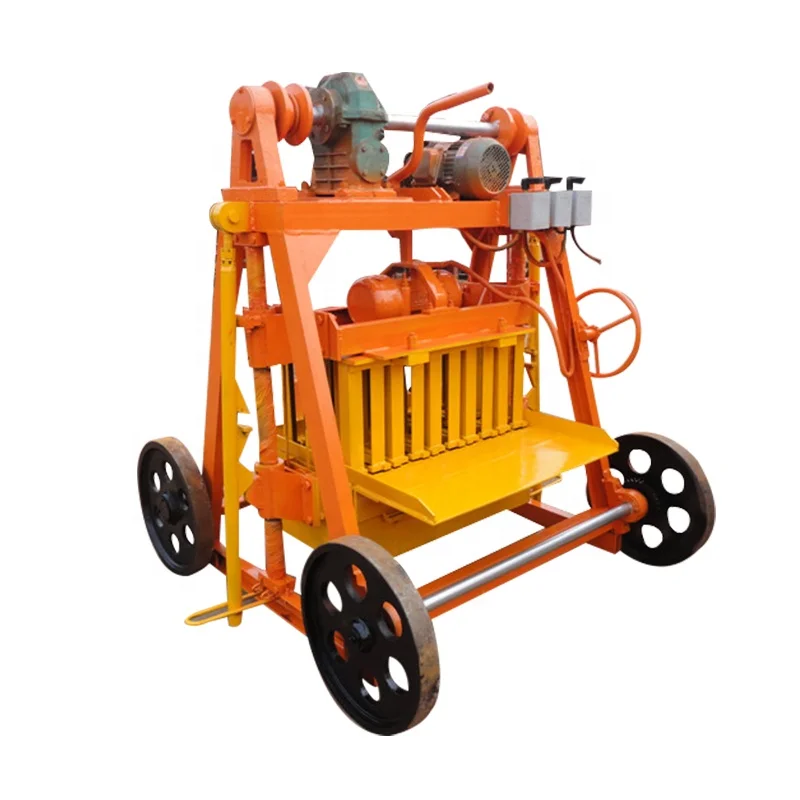
 Mobile block machine