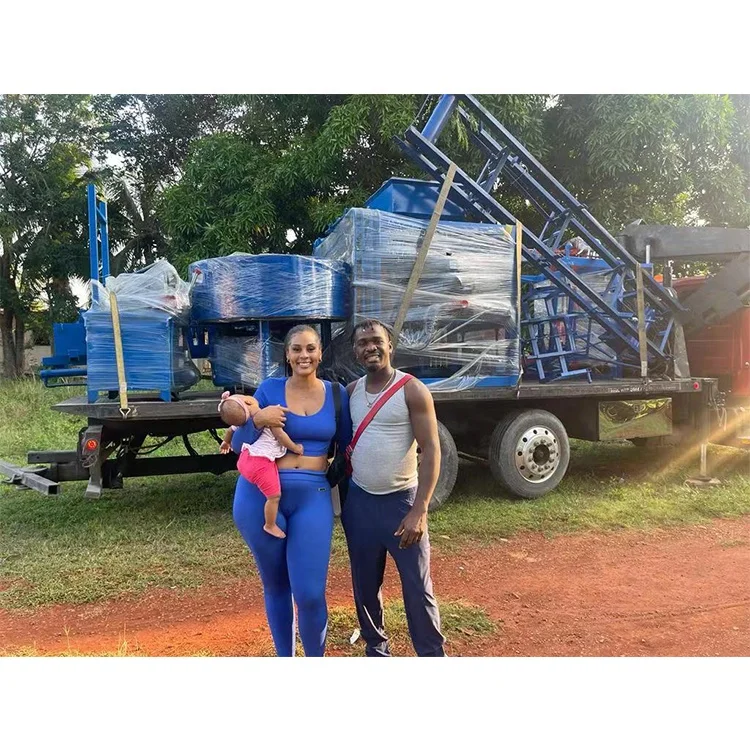
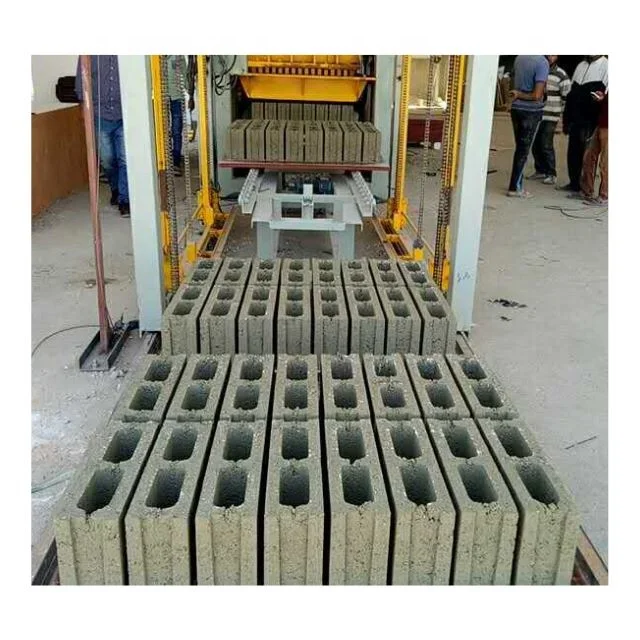
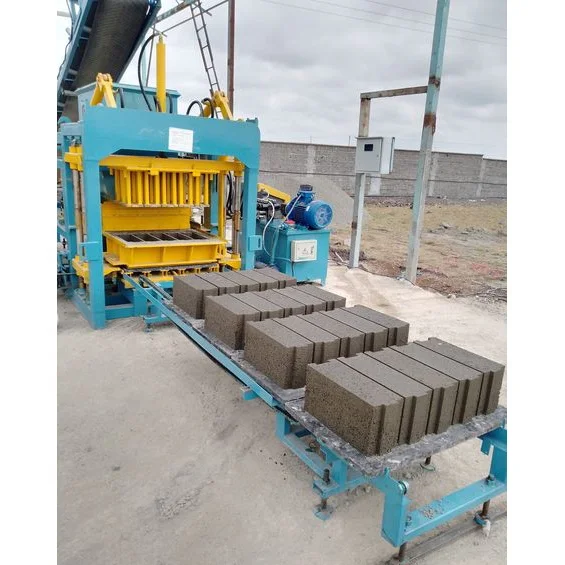
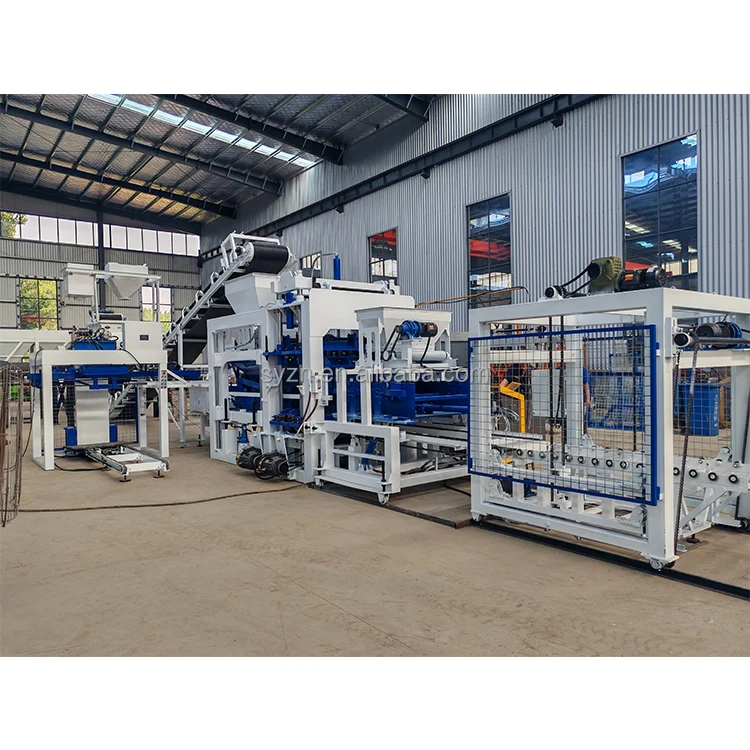
Mid-tier automatic tier — the QT4-15A sits in the middle of the Shiyue range, sized for buyers stepping up from semi-automatic setups without jumping to a high-capacity line.
Technical Specifications
| Parameter |
Value |
| Model |
QT4-15A |
| Product Type |
Fully Automatic Concrete Block Making Machine |
| Overall Dimensions (L×W×H) |
4100×1600×2600 mm |
| Rated Pressure |
16–21 MPa |
| Main Vibration Form |
Platform Vibration |
| Vibration Frequency |
4200 r/min |
| Vibration Force |
55 kN |
| Pallet Size |
880×550 mm |
| Molding Cycle |
25–30 s (basis not stated in source — confirm block format, material and thickness) |
| Overall Power |
18.45 kW (source value listed as 18.45W — verify against manufacturer catalog) |
| Total Mass |
4 T |
| Demolding Method |
Hydraulic |
| Factory Area Required |
300 m² |
| Control System |
PLC (display language options to be confirmed) |
| Voltage & Frequency |
Configurable to target market standard (to be confirmed) |
| Automation Level |
Fully automatic (stacking and pallet handling scope to be confirmed) |
| Warranty |
1 year (excluding spare parts) |
| Certification |
CE declaration where applicable |
Application Suitability
| Application |
Material or Output |
| Hollow block production for residential and commercial masonry |
Crushed stone, sand, cement, fly ash, gravel |
| Solid block manufacturing for load-bearing walls |
Cement, sand, slag, dust, aggregate |
| Paving block and colored paver runs for driveways and walkways |
Crushed stone, sand, cement with pigment |
| Interlocking block and kerbstone for landscape and road edging |
Gravel, sand, cement, fly ash |
What "25–30 Seconds per Cycle" Actually Means for Your Output
A cycle time is only meaningful when tied to the block format and mix it was measured on.
Catalog sheets often quote a single molding cycle without naming the product behind that number. A 25-second cycle on a thin paver is a very different story from 25 seconds on a 200 mm hollow block drawing a stiff, low-slump mix. When I flew to a Middle East site to troubleshoot a similar machine, the local aggregate carried high clay content, and the real output dropped to roughly sixty percent of the quoted figure because the vibration parameters had never been matched to that mix [NEED_CITE: effect of aggregate clay content on block compaction cycle time]. Before any capacity claim is taken at face value, the buyer needs to know exactly which format and which raw material profile produced it.

Where the QT4-15A Fits in the Shiyue Range
The QT4-15A automatic block making machine manufacturer lineup places this model at the midpoint between entry-level semi-automatic presses and high-output automatic lines. Buyers moving from a mobile egg-layer or a small workshop press will find a noticeable step up in consistency and reduced manual handling. Those evaluating higher tiers should weigh whether the additional pallet handling and cubing automation of larger models justifies the investment at their current volume. The 300 m² factory area requirement keeps the footprint manageable for a first fully automatic plant.
Pallet Size and Curing Area Alignment
An 880×550 mm pallet governs how many blocks travel through the press per cycle and how the curing yard must be organized. If the buyer’s existing forklift and rack system were built around a different pallet dimension, switching pallets after arrival creates a cascading mismatch in stacking, transport and storage. Confirming pallet size against the curing layout before production avoids resurfacing an entire yard [NEED_CITE: pallet dimension compatibility with curing rack and forklift systems].
Reading the Core Parameters
The 55 kN vibration force working against 16–21 MPa hydraulic pressure determines how densely the mix is compacted into the mould cavity. Too little vibration on a dry mix leaves weak edges; too much on a wetter mix causes segregation and surface bleeding. Platform vibration at 4200 r/min transmits energy through the pallet rather than the mould walls, which extends mould life and suits formats with deep cores like hollow blocks. The 4 T total mass provides the static weight needed to keep the platform stable under repeated vibration cycles. A 300 m² factory area covers the press, mixer, pallet return conveyor and a basic curing zone, though larger rack systems will need more floor space.
The Hidden Cost of a Mismatched Configuration
When the machine arrives configured for a mix the buyer cannot source locally, the only fix is a material substitution that drives up raw material cost for every production run. Voltage and frequency left unconfirmed can stall commissioning for weeks while a transformer or motor swap is arranged on site. A pallet size that ignores the buyer’s curing forklift forces double-handling of every block off the line [NEED_CITE: commissioning delays caused by unconfirmed voltage and frequency in export machinery]. These mismatches rarely show up in the quotation but surface the moment the first shift starts.
Why Source This Tier Through Shiyue
Block machinery is the single focus at Shiyue, so the press, mould, pallet and handling equipment are specified as a matched set rather than assembled from separate suppliers. Configuration starts from the buyer’s actual mix design and local aggregate, not a default catalog setting. Mould design covers the formats the buyer’s market demands, with custom drawings available when standard moulds do not fit. The automation level is selectable, allowing a buyer to begin with semi-automatic pallet handling and add stacking or cubing modules later. Installation support includes on-site commissioning and operator training so the crew can run the line independently from the first week.
Documentation & Verification
- Line layout and capacity calculation stating the block format assumed for the QT4-15A cycle time
- Machine specification sheet with hydraulic and electrical schematics for the 18.45 kW configuration
- Mould drawing and format list covering hollow, solid, paver and interlocking options
- Pallet specification matched to the 880×550 mm size and buyer’s curing layout
- Voltage, frequency and PLC display language confirmation signed before production
- Factory test record on the buyer’s target block format before dispatch
Installation, Commissioning & Support
- 300 m² factory area with level concrete floor and drainage for the 4100×1600 mm machine footprint
- Dedicated power circuit matching confirmed voltage and frequency for the 18.45 kW total load
- Hydraulic demolding system calibrated on site against the buyer’s mix and aggregate report
- PLC display language and control interface set to operator preference before first production run
- Operator training covering mould change procedure, daily greasing points and pallet return alignment
- Wear parts and mould replacement list provided with recommended reorder intervals
What to Share With Your Inquiry
To build a configuration proposal that holds up once the machine arrives, provide the target block formats with dimensions, the daily volume you need to hit, and a sieve analysis or lab report of your local aggregate and sand. Include your site voltage and frequency, preferred PLC display language, and the pallet size your existing curing racks and forklift can handle. If you have a project deadline driving the purchase, note the date so lead time and shipping can be aligned.
Frequently Asked Questions
Q: What block format does the 25–30 s cycle time assume, and how does daily output change across formats?
A: The cycle figure is measured on a reference format that must be confirmed against your specific block dimensions, wall thickness and mix design. A thin paver may cycle faster than a 200 mm hollow block. Realistic daily output is calculated per format in the capacity document supplied with the proposal.
Q: Where does the QT4-15A sit in the Shiyue range compared to semi-automatic and higher-tier models?
A: It occupies the mid-tier automatic slot, offering hydraulic demolding and platform vibration above semi-automatic presses while staying below the high-capacity lines that add full stacking and cubing automation. Buyers can start here and add automation modules as volume grows.
Q: What plant footprint is required, and how does the 880×550 mm pallet affect curing layout?
A: The press and immediate supporting equipment need roughly 300 m². Pallet size dictates curing rack spacing and forklift clearance, so confirming pallet compatibility with your existing yard before production prevents costly re-layout after delivery.
Q: Which moulds are included, and can custom moulds be designed to buyer drawings?
A: Standard moulds cover hollow, solid, paver, interlocking and kerbstone formats. Custom mould design is available from buyer drawings when local market demand calls for a non-standard shape, size or surface texture.
Q: Is voltage, frequency and PLC language confirmed before shipment to avoid commissioning delays?
A: Yes. Voltage, frequency and PLC display language are confirmed in writing before production starts. This prevents motor and control mismatches that would otherwise stall commissioning once the machine reaches the site.

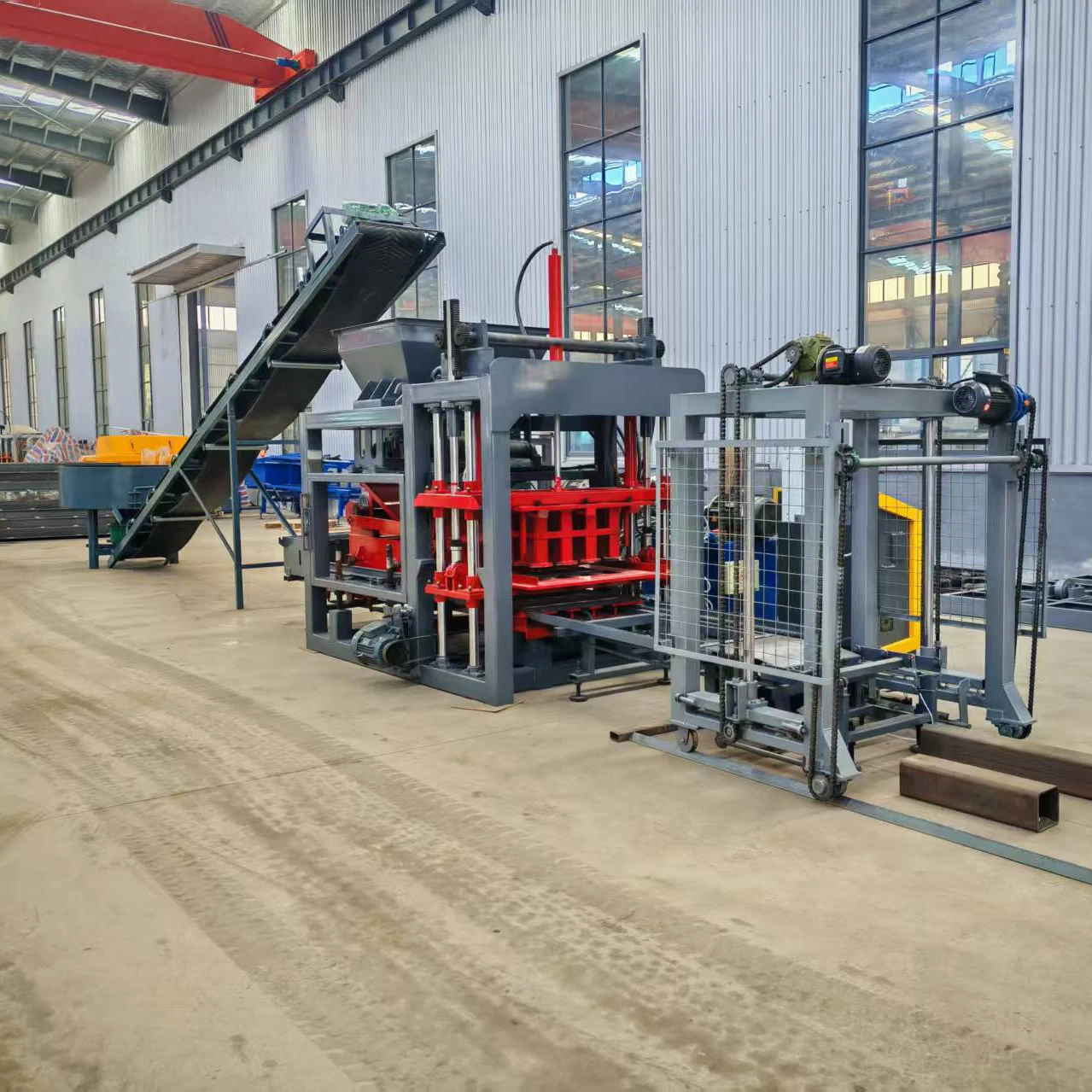
 High quality block machine