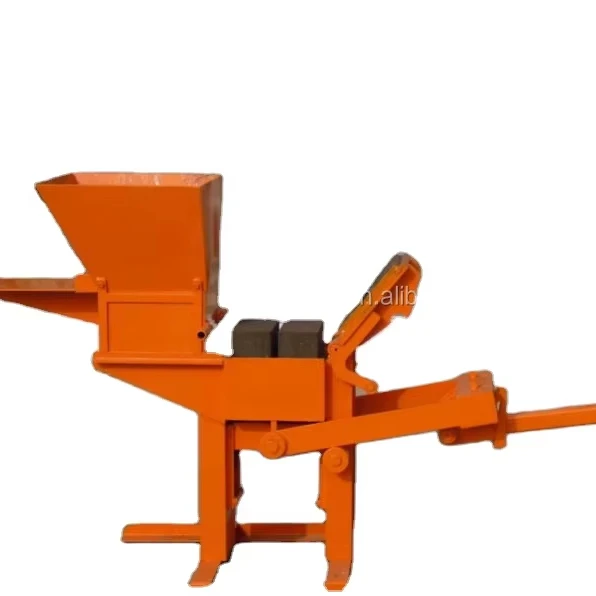
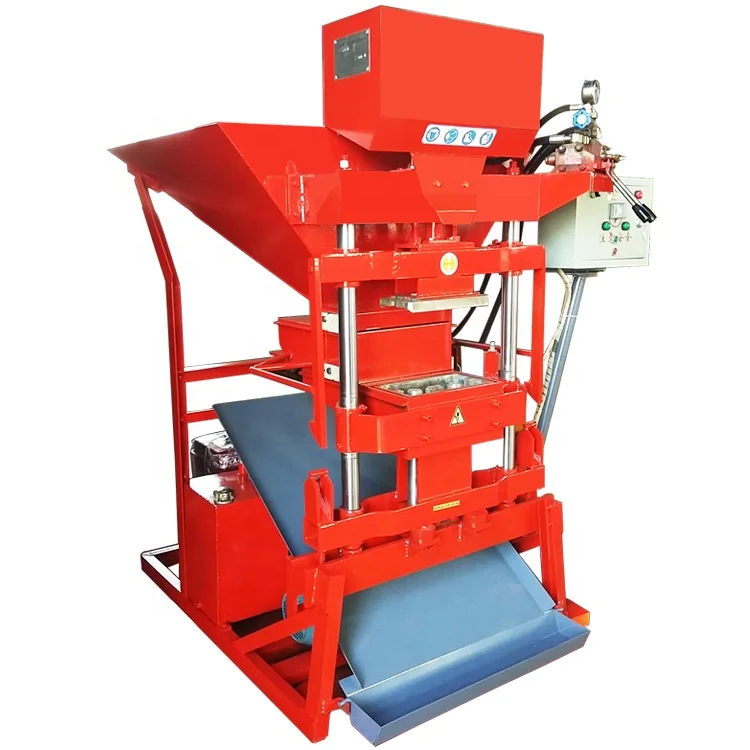
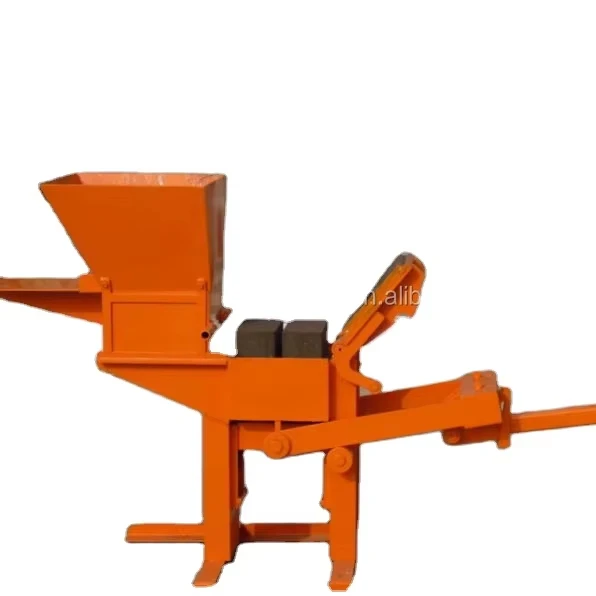
Matched system sizing — the LY4-10 is positioned within a complete tier range where machine, mould, pallet and handling are specified as one system before you commit to a footprint.
Technical Specifications
| Parameter |
Value |
| Model |
LY4-10 |
| Product Type |
Interlocking Clay Brick Making Machine |
| Rated Power |
11 kW |
| Hydraulic Pressure |
16 MPa |
| Molding Cycle |
10-15 s |
| Output Capacity |
14400 pcs/day (based on 300×150×100mm interlocking block, basis not stated in source) |
| Pcs per Mould |
4 (300×150×100mm interlocking block) |
| Production Rate |
1440 pcs/hour (based on 300×150×100mm interlocking block) |
| Raw Materials |
Laterite, yellow or red soil, sand, cement, water |
| Mix Option 1 (Cement-Clay) |
Water 3%, Cement 6-8%, Clay 80-90% |
| Mix Option 2 (Full Clay) |
Water 3%, Clay 90-95% |
| Overall Dimensions |
2260 × 1500 × 2380 mm |
| Machine Weight |
1600 kg |
| Workers Required |
1-2 |
| Automation Level |
Automatic (material feeding, mould pressing, mould lifting) |
| Standards |
CE, ISO 9001 |
Application Suitability
| Application |
Material or Output |
| Interlocking clay brick production for building walls |
Laterite and red soil blended with 6-8% cement |
| Ecological brick manufacturing |
Full-clay mix at 90-95% clay content |
| On-site production for housing projects |
Yellow soil and sand sourced from excavation |
| Landscaping and garden paving formats |
Cement-clay blends for weather resistance |
| Road and square construction bricks |
High-density interlocking blocks at 16 MPa pressure |
What "14400 Pieces per Day" Actually Means for an Interlocking Clay Brick Making Machine Manufacturer
Every capacity figure must be tied to the exact block format it was measured on — here that is the 300×150×100mm interlocking block at 4 pieces per mould.
When a supplier quotes daily output without naming the block size, the number collapses the moment you switch to a different format your market actually buys. I have watched buyers sign off on capacity claims only to discover their chosen brick dimension cuts real throughput to a fraction of the headline number. Before you compare machines across tiers, confirm which format the cycle time was tested against and whether the mould change system can handle your full product range without consuming an entire shift [NEED_CITE: capacity calculation standards for block making machinery].

Where the LY4-10 Sits in the Full Machine Range
The LY4-10 occupies the mid-tier position for automatic interlocking clay brick production, sitting above manual and egg-laying mobile options but below the high-capacity fully automatic lines with integrated stacking and cubing. Buyers evaluating their first interlocking clay brick making machine manufacturer typically start here when daily volume targets exceed what a mobile unit can sustain but do not yet justify a full continuous plant. The 1600 kg weight and compact 2260 × 1500 × 2380 mm footprint mean it ships in a single container and drops onto a prepared slab without heavy civil work.
Automation Tiers and Where They Connect to Supporting Equipment
At this tier, the automatic cycle covers material feeding, mould pressing and mould lifting, but the upstream batching and downstream pallet handling still require separate specification. This is where many first-time plant setups stumble — the press completes its cycle only to sit idle because pallets have not arrived or the curing rack area is undersized for the output rate. When planning the line, the interlocking clay brick making machine manufacturer must confirm that pallet feeding speed, curing space and manual or mechanical stacking all match the 10-15 second moulding cycle so the LY4-10 is never left waiting [NEED_CITE: block production line synchronization requirements].
Reading the Pressure, Cycle and Mix Data Together
Hydraulic pressure at 16 MPa acts on the clay-cement blend during the moulding phase, compacting particles into a dense interlocking form that holds its geometry through demoulding and early curing. The 10-15 second cycle is the window in which that pressure is applied and released across four cavities simultaneously. Mix design directly affects what the pressure can achieve: the cement-clay blend at 6-8% cement gives structural bricks suitable for load-bearing walls, while the full-clay option at 90-95% clay produces lighter ecological bricks for partition work and landscaping. If your local laterite has a different particle size distribution from the test mix, the same pressure may yield a different density — which is why sample testing with your actual soil matters before you lock in the configuration.
The Cost of Choosing the Wrong Tier for Your Project
Selecting a mobile machine when your daily output requires sustained production leads to premature wear on a unit designed for intermittent use, while over-investing in a high-capacity line for a small contractor project leaves expensive automation sitting idle. I have seen development contractors buy into a tier above their actual need because the capacity number looked reassuring, only to find the supporting equipment — batching, curing racks, forklift capacity — was never sized to match. The result is a press that runs at half throughput because the rest of the line cannot keep pace [NEED_CITE: block plant capacity mismatch case studies].
Why Source the LY4-10 Through a Single-Focus Block Machinery Supplier
Block machinery as a single focus means the LY4-10 is not paired with generic pallets or third-party moulds assembled after the fact — the machine, mould and pallet are specified together against your target block format. Configuration is set against your actual local aggregate and mix design, not a catalogue default that may not match your laterite source. Mould design covers the interlocking formats your market sells, with custom drawings available when standard formats do not align with local building codes. The automation level is selectable, so a buyer can start with the semi-automatic option at this tier and add pallet feeding or stacking automation as volume grows. Installation and commissioning support includes operator training on the specific mix and cycle parameters your site will run [NEED_CITE: CE machinery directive requirements for industrial equipment].
Documentation & Verification
- Line layout with capacity calculation tied to the 300×150×100mm interlocking block format
- Machine specification sheet confirming voltage, frequency and PLC display language
- Mould drawing and format list matching your target market brick dimensions
- Factory test record demonstrating cycle time on your specified clay-cement mix
- CE declaration documentation for import clearance in regulated markets
Installation, Commissioning & Support
- Foundation slab sized to the 2260 × 1500 mm base footprint with anchor bolt provisions
- Dedicated power circuit rated for the 11 kW motor draw at your local voltage and frequency
- Machine arrives as a single unit with hydraulic and electrical connections requiring on-site hookup
- PLC display language confirmed and tested before dispatch to avoid first-day commissioning delays
- Operator training covers mix ratio adjustment between cement-clay and full-clay blends
- Mould wear parts list provided with recommended replacement intervals based on clay abrasiveness
What to Share Before Requesting a Quote
Provide the specific interlocking brick dimensions your local construction market uses, along with the daily volume you need to sustain your project timeline. Share a sample analysis or description of your available laterite or soil so the mix design can be adjusted to your material. Confirm your site voltage, frequency and preferred control language so the electrical package is correct before the machine leaves the factory.
Frequently Asked Questions
Q: How is the 14400 pcs/day capacity verified and what block format does it assume?
A: The figure is based on the 300×150×100mm interlocking block at 4 pieces per mould, running the 10-15 second molding cycle. If your target format differs in size, the pieces per mould and cycle count per shift will change. A capacity recalculation is prepared for your specific block dimension during the proposal stage so you see realistic daily output before committing.
Q: Where does the LY4-10 sit in the full machine range — semi-automatic, automatic or mobile tier?
A: It sits in the automatic mid-tier, handling material feeding, mould pressing and mould lifting automatically while leaving pallet handling and stacking for separate specification. Mobile egg-laying machines sit below for on-site contractor use, and full-line automatic systems with integrated cubing sit above for high-volume continuous production plants.
Q: What voltage, frequency and control language options are available for my market?
A: Voltage and frequency are configured to match your site supply before production begins, not after arrival. PLC display language is confirmed and tested during factory commissioning so operators can read alarms and cycle parameters from day one without delays caused by unfamiliar characters on screen.
Q: Can I start with the LY4-10 semi-automatic and upgrade automation later?
A: The platform supports starting at a lower automation level with manual pallet handling and adding automatic pallet feeding or stacking as your production volume grows. This approach lets first-time plant operators manage investment in stages while keeping the same core press and mould set throughout the upgrade path.
Q: What plant footprint and supporting equipment does this tier require?
A: The machine itself occupies 2260 × 1500 × 2380 mm, but the full working area must include space for raw material storage, a mixer, pallet staging and a curing zone sized to hold one day of output. Supporting equipment is specified alongside the press so pallet dimensions and curing rack capacity match the cycle rate.

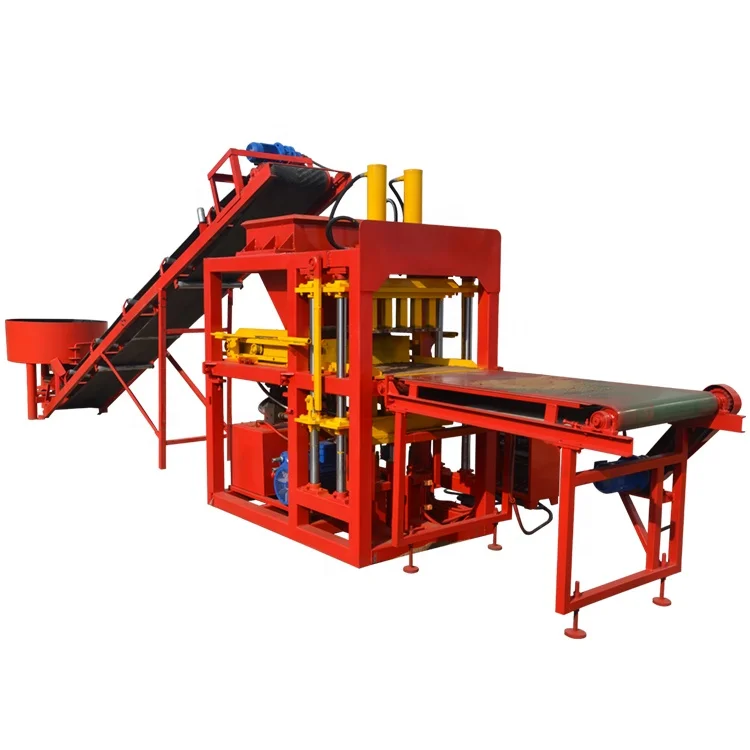
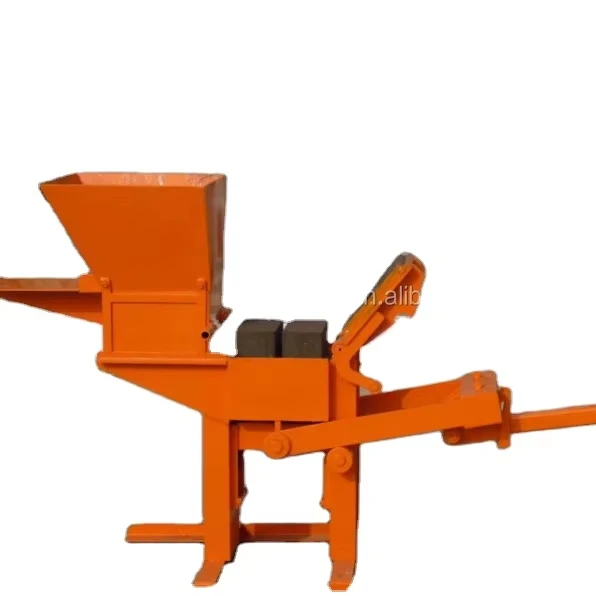 Clay interlocking brick