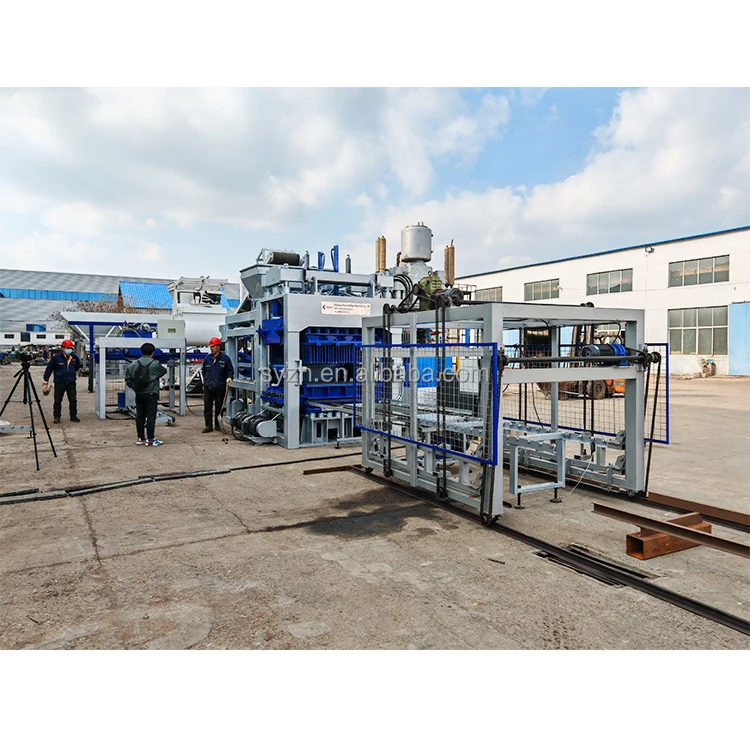
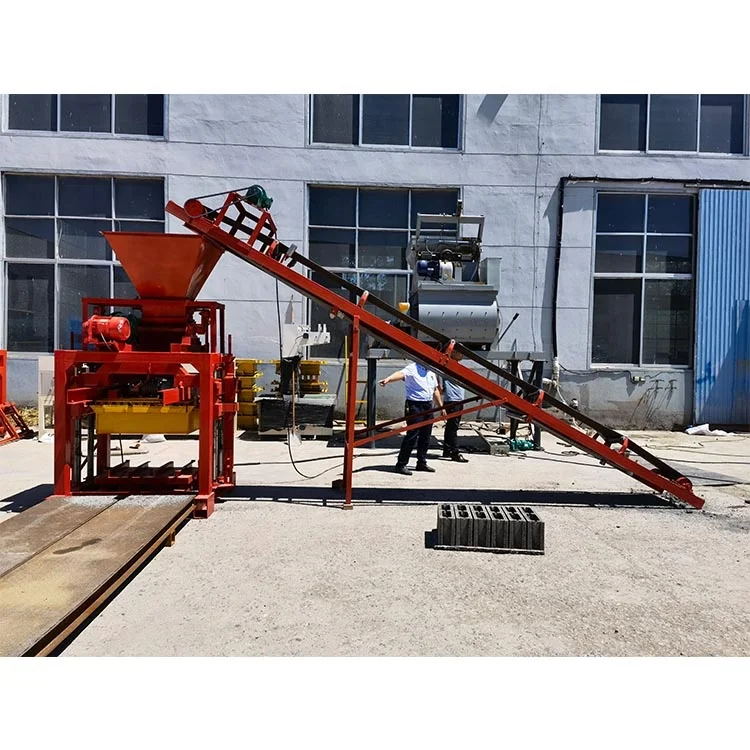
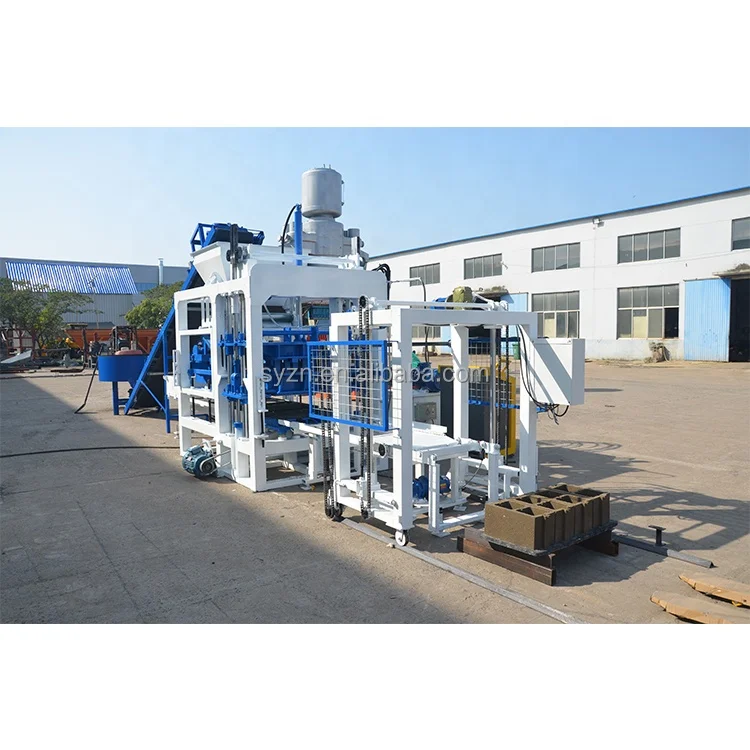
Matched System Supply — block machine, mould, pallet and handling equipment specified together for the LY4-10, avoiding the mismatch that happens when sourcing from separate vendors.
Technical Specifications
| Parameter |
Value |
| Model |
LY4-10 |
| Product Type |
Fully Automatic Clay Brick Making Machine |
| Machine Power |
11 kW |
| Molding Cycle |
10 seconds |
| Output Capacity |
11520 pcs/8hours (basis not stated in source — depends on block format) |
| Theoretical Output |
1140 pcs/hour (based on 300×150×100mm, 4 pcs/mould) |
| Raw Material |
Concrete, sand, cement, fly ash, lime, gypsum |
| Machine Weight |
1200 KG |
| Overall Dimensions |
1600×1400×2100 mm |
| Voltage |
Configurable according to local supply |
Application Suitability
| Application |
Material or Output |
| Ecological brick production |
Fly ash, lime, gypsum, cement blends |
| Concrete block manufacturing |
Sand, cement, crushed stone aggregates |
| Clay brick forming |
Local clay mixes with specific moisture content |
| On-site contractor production |
Housing project volumes using available local materials |
Why the Voltage Question Must Precede the Price Quote
Confirming local voltage and frequency prevents weeks of idle labor on the project site.
I have seen a block machine sit idle for nearly a month because the factory wired it for 380V/50Hz while the site in Dubai ran on 440V/60Hz. The main motor tripped instantly upon energizing, and the contractor burned through labor costs waiting for a transformer retrofit. Every LY4-10 we ship has its electrical configuration locked in before production starts, matching the exact supply standard at the destination [NEED_CITE: voltage and frequency standards by export market].
Positioning the LY4-10 Within the Complete Block Machine Range
The LY4-10 occupies the compact automatic tier, sitting above mobile egg-laying machines and semi-automatic workshop presses in output capability, yet below high-capacity hydraulic lines that require dedicated plant buildings. For a block machine manufacturer, defining where each model fits helps buyers match their investment level to their actual daily volume requirement without overbuilding capacity they cannot sell.
Output Tiers and Plant Footprint Considerations
This model’s overall dimensions of 1600×1400×2100 mm and weight of 1200 KG define a relatively small footprint, making it viable for contractors who need to produce on a constrained job site or entrepreneurs launching a first block plant inside an existing warehouse. Higher-tier automatic machines demand curing racks, automatic stackers, and dedicated mixing stations that expand the total line length considerably. The LY4-10 allows a buyer to start with a defined press capacity and add supporting automation later as market demand justifies the expansion [NEED_CITE: typical block plant layout configurations].
Reading the Specifications Against Your Mix Design
The 11 kW machine power drives both the hydraulic system and the vibration mechanism. The theoretical output of 1140 pieces per hour is calculated on a 10-second molding cycle producing four 300×150×100mm blocks per mould; any change in block format, wall thickness, or material density alters that cycle time and the resulting daily count. Raw material compatibility spans concrete, sand, cement, fly ash, lime, and gypsum, but the vibration force must be matched to the specific aggregate size and moisture content available locally to achieve consistent block strength. Voltage is configurable to the buyer’s local grid, which must be confirmed alongside frequency before the motor and control panel are sourced.

The Cost of Skipping Configuration Details
When pallet size is selected without checking the curing area dimensions and the forklift already on site, blocks end up stacked by hand because the pallets do not fit the existing racks. When the PLC display language is not confirmed, operators spend days deciphering error codes in a language they cannot read, delaying commissioning and first production runs [NEED_CITE: PLC interface language options in industrial machinery]. These oversights do not show up in the purchase price but surface as lost production days and frustrated crews once the machine is bolted to the floor.
Why Source the LY4-10 Through This Range
Block machinery remains the single focus here, meaning the LY4-10 is specified alongside its mould, pallet, and handling equipment as a matched set rather than assembled from unrelated suppliers. Machine configuration is set against the buyer’s actual mix design and target block format, not pulled from a catalogue default. Mould design covers the formats the buyer’s local market actually purchases, including custom drawings when standard formats do not match. Automation level is selectable, allowing a buyer to begin with semi-automatic pallet handling and upgrade the stacking and cubing stations later as volume grows. Installation support includes operator training so the crew understands cycle timing, mould change procedure, and daily maintenance from the first production shift.
Documentation & Verification
- Line layout drawing showing the LY4-10 footprint with supporting equipment stations
- Capacity calculation sheet stating the specific block format and molding cycle assumed
- Machine specification sheet covering hydraulic pressure and electrical schematic
- Voltage and control language confirmation record signed before production
- Factory test record with packing photographs taken prior to container loading
Installation, Commissioning & Support
- Foundation pad must accommodate the 1600×1400 mm base footprint and 1200 KG static weight
- Dedicated electrical circuit sized for the 11 kW motor plus vibration and auxiliary loads
- Voltage and frequency verified at the panel before the main motor is energized for the first time
- Mould mounting and alignment checked against the specified block format on initial startup
- Operator training covers the 10-second molding cycle, material feed timing, and daily lubrication points
- Wear parts list supplied with recommended replacement intervals for hydraulic seals and vibration components
What to Include in Your Inquiry
Provide the target block format you intend to produce, the daily output volume your market requires, and the specific raw materials available at your site including aggregate type and cement grade. State your local voltage, frequency, and preferred PLC display language so the electrical package is correct before shipment. Indicate the available floor space and ceiling height so the line layout accounts for material feeding, pallet circulation, and curing rack placement around the LY4-10 press.
Frequently Asked Questions
Q: How is the quoted capacity of the LY4-10 verified and what block format does it assume?
A: The theoretical output of 1140 pieces per hour is calculated on a 10-second molding cycle using a mould that produces four blocks measuring 300×150×100 mm. Any change in block dimensions, wall thickness, or material composition alters the cycle time. We provide a capacity calculation sheet that states the exact format and cycle time assumed so you can project realistic daily production for the block you actually sell.
Q: Where does the LY4-10 sit compared to semi-automatic and higher-tier automatic machines in the range?
A: The LY4-10 sits in the compact automatic tier, offering more output than mobile egg-laying units and semi-automatic workshop presses, but requiring less floor space and supporting equipment than high-capacity hydraulic lines. It suits entrepreneurs launching a first plant or contractors producing on a housing project site where a full automatic line with stacker and cubing system would exceed available space and budget.
Q: What voltage and control language options are confirmed before production of the LY4-10?
A: Voltage and frequency are configured to match your local electrical supply, and the PLC display language is set to your operator’s preference. Both are confirmed in writing before the motor and control panel are sourced, preventing the commissioning delays that occur when a machine arrives wired for a different grid standard or displaying menus in an unfamiliar language.
Q: What is the plant footprint and what supporting equipment is needed around the LY4-10 press?
A: The machine itself measures 1600×1400×2100 mm and weighs 1200 KG. A complete production setup requires space for raw material feeding and mixing upstream, pallet circulation and handling at the press, and a curing area downstream sized to match daily output. The line layout drawing shows how these stations connect and where cycle times must align so the press is not left waiting for material or pallets.
Q: How are moulds, pallets, and wear parts supplied after the first replacement is due?
A: Moulds for every standard format are kept in supply, and custom mould design is available to buyer drawings. Pallets are specified in size and material to match your curing racks and forklift. A wear parts list is provided with the machine, covering hydraulic seals and vibration components, with availability confirmed at the time of order so replacements are on hand when first needed.

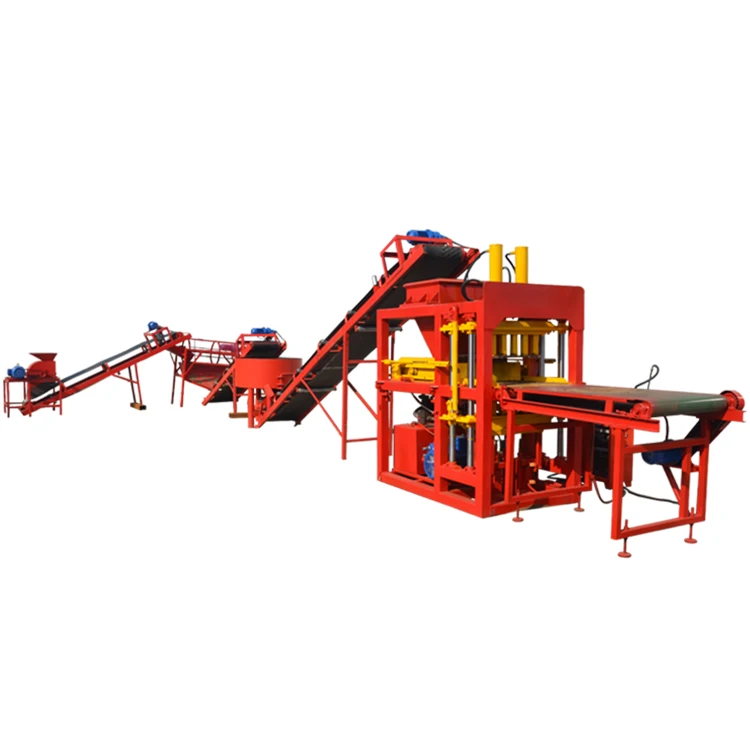
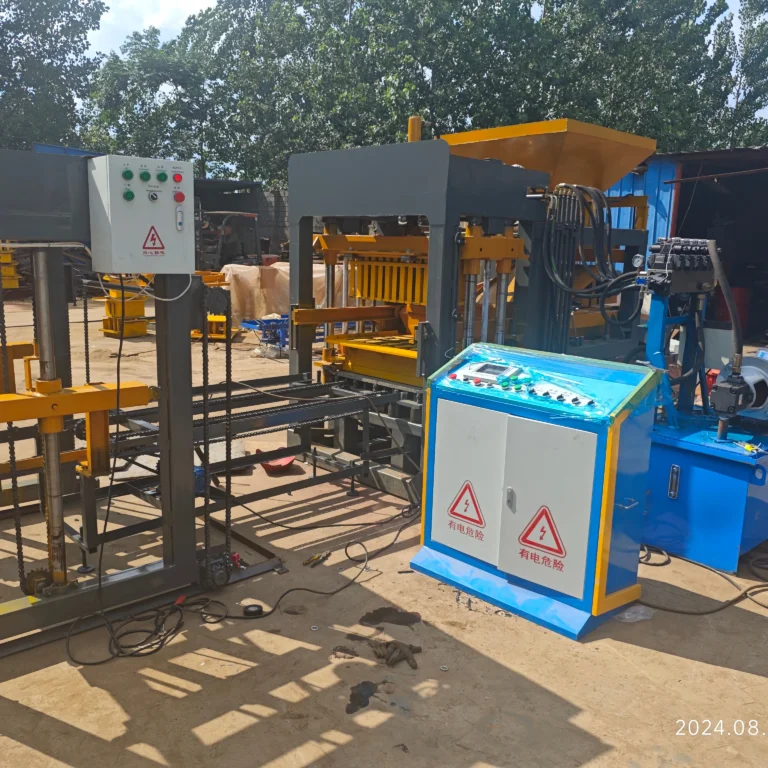 High quality block machine