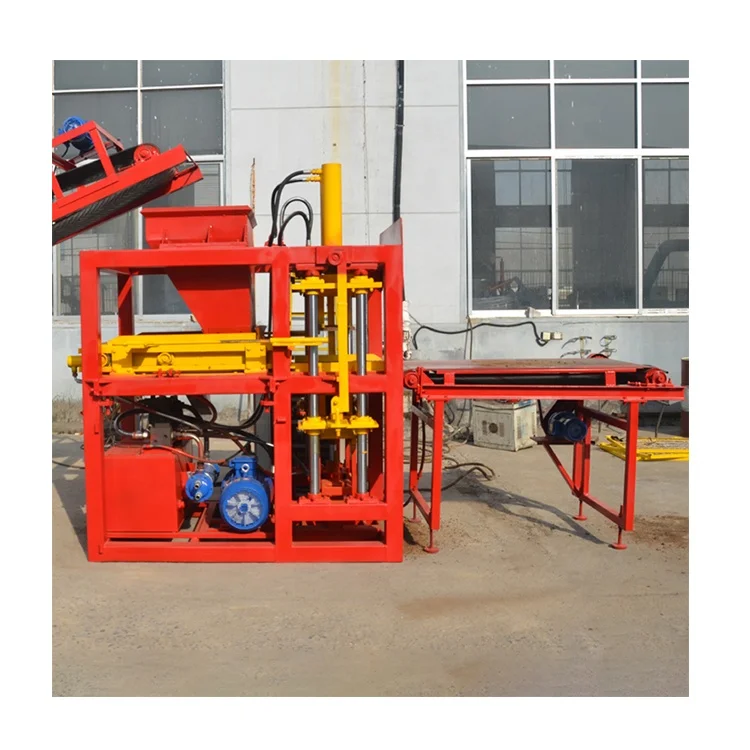
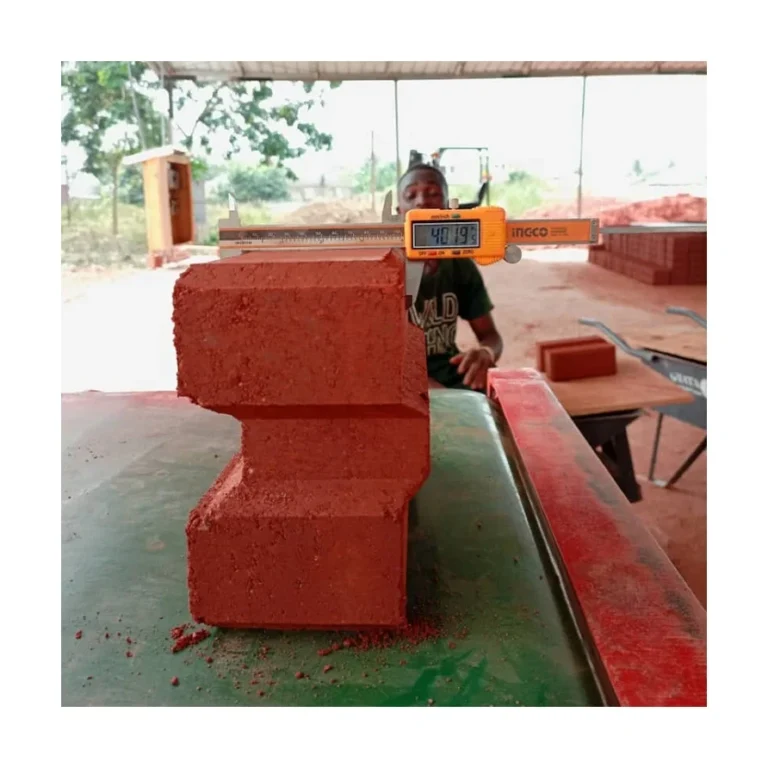
Single-Focus Engineering — the LY2-40 is specified as part of a matched brick and mould system rather than a standalone catalogue item, so its output claims align with your actual clay profile.
Technical Specifications
| Parameter |
Value |
| Model |
LY2-40 |
| Product Type |
Manual Clay Interlocking Brick Making Machine |
| Operating Mode |
Completely manual, no electrical power required |
| Overall Dimensions (L×W×H) |
1600 × 700 × 1200 mm |
| Net Weight |
200–240 kg |
| Molding Cycle |
30–40 seconds (basis to be confirmed against block format and wall thickness) |
| Output Capacity |
400–1,000 pcs/day (basis not stated in source — confirm block format / material / thickness before ordering) |
| Lifting System |
Manual lever actuation |
| Mobility |
Integrated steel wheels for on-site repositioning |
| Mould Compatibility |
Changeable moulds for multiple interlocking and earth brick formats |
| Recommended Mixer |
JFA-1 or JQ350 |
| Warranty |
1 Year |
Application Suitability
| Application |
Material or Output |
| On-site interlocking brick production for housing projects |
Local clay or laterite soil blended with stabiliser |
| Off-grid earth brick workshops in areas without electrical supply |
Raw earth, sandy clay, or laterite |
| Small-scale ecological brick production |
Compressed earth blocks with cement or lime stabilisation |
| Contractor-led block making at remote construction sites |
Locally sourced clay with variable sand content |
What "400 to 1,000 Pieces per Day" Actually Depends On
Daily output on a Manual Clay Interlocking Brick Making Machine is determined by the block format, wall thickness, and operator rhythm — not a single catalogue number.
I have watched a 30-second cycle time assumption collapse on a Middle East site where the local clay had higher sand content than the standard test sample. The press itself performed identically, but the mix required longer compaction per stroke and more frequent mould cleaning, cutting effective daily yield sharply. When you evaluate a Manual Clay Interlocking Brick Making Machine, the cycle time and daily figure must be stated against the specific interlocking profile you intend to produce [NEED_CITE: soil stabilisation ratios for compressed earth block production]. Without that alignment, the number on the datasheet and the number on your pallet rack will not match.

Positioning the LY2-40 Across the Block Machine Range
The LY2-40 sits at the fully manual entry point of a range that extends through semi-automatic presses and into high-capacity automatic lines. For a buyer surveying options for a first brick operation, this machine establishes the baseline: zero electrical demand, minimal footprint, and a mould-changeable design that lets you test market demand for different interlocking profiles before committing capital to a powered press. Understanding where the LY2-40 sits helps you plan an upgrade path without replacing your entire curing and handling setup later.
How Mobility Shapes Your Site Layout
Steel wheels on the LY2-40 mean the press can follow the curing area as your stockyard expands, rather than forcing bricks to travel back to a fixed station. On a housing project where walls go up in phases, the Manual Clay Interlocking Brick Making Machine moves to where the next section of foundation is being laid, reducing pallet carrying distance for your crew [NEED_CITE: on-site compressed earth block logistics for low-rise construction]. This mobility eliminates the need for a permanent plant footprint and the concrete pad that a stationary press would require.
Reading the Specs That Matter for Clay Interlocking Bricks
The 1,600 × 700 × 1,200 mm frame envelope defines how much working clearance your operators need on each side — plan for at least one metre of swing space around the lever arc. The 200–240 kg net weight is heavy enough to resist shifting during compaction strokes but light enough for two workers to reposition on level ground. Mould changeability is the spec that determines your format flexibility: each interlocking profile requires its own mould insert, and the changeover time directly affects how many different brick types you can produce in a single shift. The recommended JFA-1 or JQ350 mixer ensures the clay-stabiliser blend reaches the press at a consistent moisture level, which is critical because uneven moisture causes the interlocking tongues and grooves to crumble during demoulding.
The Cost of Skipping a Soil Sample Before You Order
Ordering a manual press without sending a soil sample first is the most common reason buyers end up with a machine that cannot hit its stated output. When the local clay shrinks more than expected during drying, interlocking tongues crack and the bricks fail the drop test, forcing the entire batch to be reworked by hand. When the sand content is too high, the mix does not bind under manual pressure alone, and you spend the shift adding cement stabiliser you did not budget for. These are not machine faults — they are configuration gaps that a soil sample would have revealed before the press left the factory [NEED_CITE: compressed earth block failure modes related to soil gradation].
Why Buyers Source This Tier From a Single-Focus Supplier
Block machinery is the only product line here, so the LY2-40 is evaluated alongside its moulds, pallets, and recommended mixer as one matched system rather than assembled from separate vendors. Configuration starts with your actual clay sample and target interlocking profile, not a catalogue default. Mould design covers the formats your local market sells, with custom drawings available when standard profiles do not match your architect’s specification. The automation level is selectable — you can begin with the LY2-40 manual tier and move to a semi-automatic press later while keeping your curing racks and pallet inventory. Installation support includes operator training so your crew understands the compaction rhythm that produces consistent block density.
Documentation & Verification
- Line layout showing curing area sized to the LY2-40 daily output and your chosen interlocking format
- Mould drawing and format list confirming which interlocking profiles are included and which are optional extras
- Machine specification sheet covering frame dimensions, cycle time assumptions, and manual operating parameters
- Operation and maintenance manual with lever, gear, and bearing wear parts list
Installation, Commissioning & Support
- Level compacted earth or gravel pad sufficient for the 200–240 kg frame weight; no concrete foundation required
- No electrical connection needed — the LY2-40 operates entirely on manual lever actuation
- Machine ships assembled on steel wheels; unload and position directly on the production pad
- First-run compaction test with your local clay sample to confirm mould fill and demoulding rhythm
- Operator training on lever stroke cadence, mould release technique, and daily bearing lubrication
- Wear parts list for lever pivot pins, mould liner plates, and wheel axle bearings with reorder codes
What to Prepare Before Requesting a Quotation
Send a representative soil sample from your intended borrow pit, including depth and location notes. Specify the interlocking brick profile your market requires — dimensions, tongue-and-groove geometry, and target wall thickness. Confirm your available curing area dimensions so the line layout can be scaled to your actual daily output expectation rather than a generic figure.
Frequently Asked Questions
Q: How is the daily output of the LY2-40 verified, and which block format is assumed?
A: The 400–1,000 pieces per day range depends on the interlocking profile, wall thickness, and operator cycle rhythm. We verify output against your specific block format and clay sample before confirming a production figure, so the number on your quotation matches what your crew will actually produce on site.
Q: Where does the LY2-40 manual press sit within the full machine range?
A: The LY2-40 is the fully manual, no-power entry point. Above it are semi-automatic presses with electric vibration and hydraulic assist, then fully automatic lines with PLC control and stacking. Buyers often start here to test market demand before investing in powered equipment.
Q: What interlocking profiles can the changeable moulds produce?
A: The mould system accepts inserts for multiple interlocking and earth brick formats. Standard profiles are listed in the format document; custom profiles can be designed from your drawings. Each additional mould insert is quoted separately and ships with matching liner plates.
Q: What site conditions are needed to run this manual press without a fixed plant?
A: You need a level compacted area roughly three metres by four metres for the press and immediate pallet staging, plus a curing zone scaled to your daily output. No electrical supply, concrete pad, or permanent structure is required. The steel wheels let you relocate as the project advances.
Q: How does a buyer plan an upgrade from this manual tier to a semi-automatic line?
A: The upgrade path keeps your curing racks, pallets, and mixer while replacing the manual press with a powered unit. Pallet size and curing area are specified from the start so they remain compatible when you add electric vibration and automatic pallet feeding later.

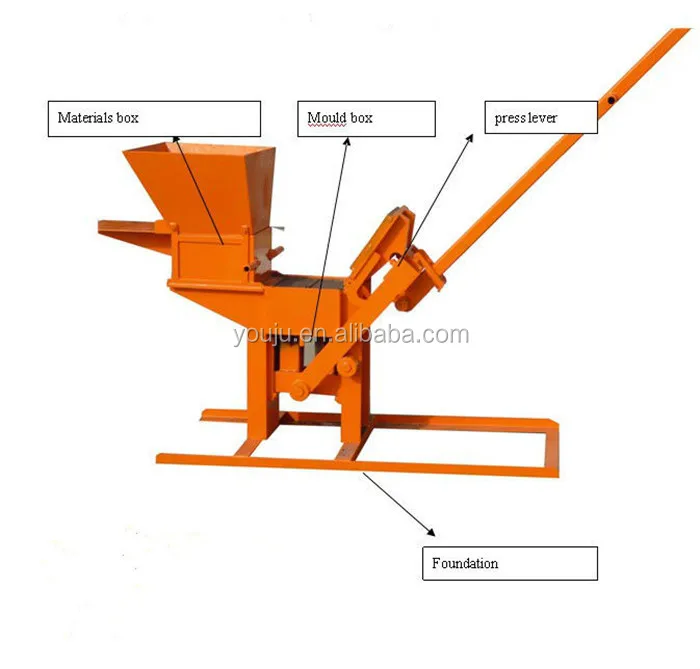
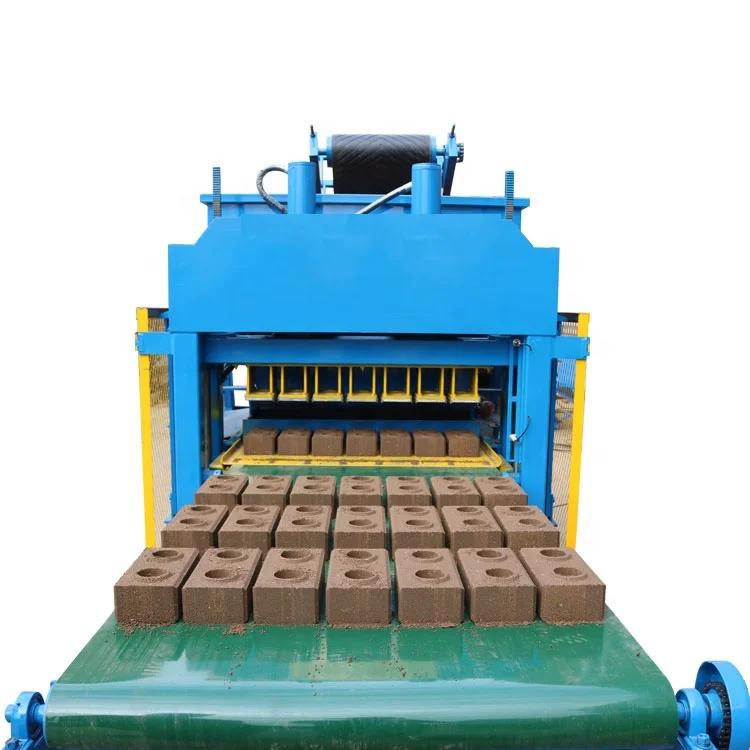 Clay interlocking brick