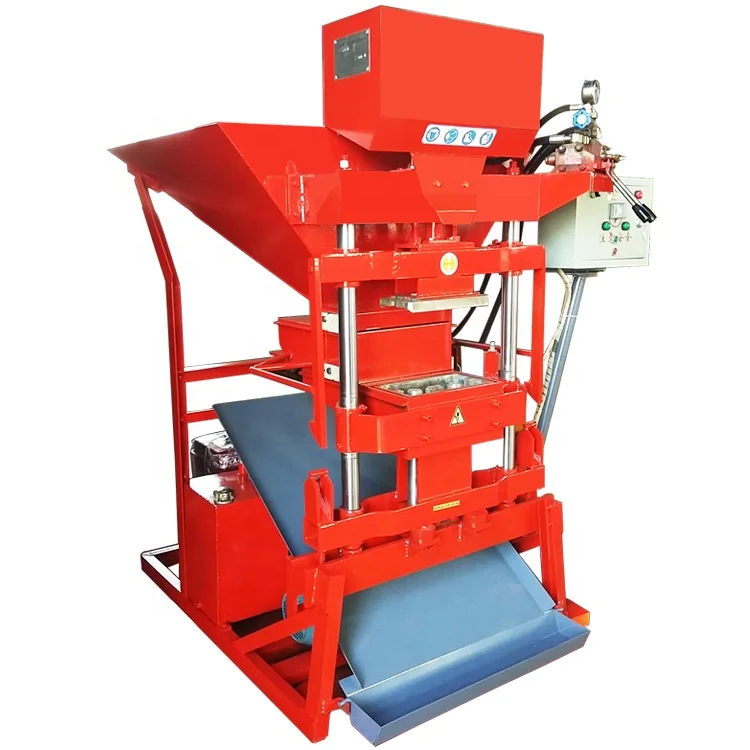
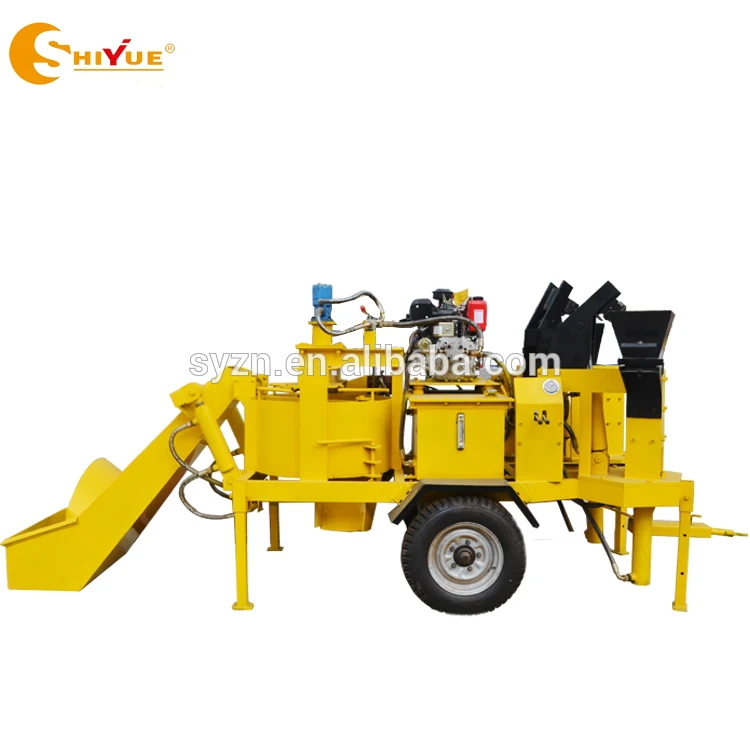
Zero-Power Footprint — The LY2-40 manual clay interlocking brick machine occupies the entry tier of our block press range, built for off-grid sites where electrical infrastructure is not yet available, and positioned as the lowest investment step before buyers scale to semi-automatic or fully automatic lines.
Technical Specifications
| Parameter |
Value |
| Model |
LY2-40 |
| Product Type |
Manual Clay Interlocking Brick Machine |
| Power Source |
No Power, Completely Manual |
| Overall Dimensions (L×W×H) |
1600 × 700 × 1200 mm |
| Net Weight |
200–240 kg |
| Molding Cycle |
30–40 seconds |
| Output Capacity |
400–1000 pcs/day (basis to be confirmed) |
| Lifting System |
Manual |
| Mobility |
Steel wheels |
| Mould |
Changeable for various block formats |
| Basic Equipment Pairing |
JFA-1 Mixer or JQ350 Mixer |
| Warranty |
1 Year |
Application Suitability
| Application |
Material or Output |
| Interlocking brick production in off-grid areas |
Local soil blended with cement, no electrical supply required |
| Compressed earth block (CEB) manufacturing |
On-site red soil, laterite, or sandy loam with cement stabilization |
| Low-investment rural construction projects |
Small workshop output of solid and interlocking formats |
| Cement hollow block production |
Crushed stone, sand, and cement mix, manually operated |
What "400 to 1000 Pieces per Day" Actually Means for a Manual Clay Interlocking Brick Machine
Daily output depends entirely on which block format you press, how many operators feed the mixer, and the curing cycle your site can sustain.
When suppliers quote a range like 400–1000 pcs/day without naming the block size, buyers plan their project timelines around the upper number and discover during commissioning that a larger interlocking profile cuts real throughput to the lower end. I once watched a buyer in West Africa schedule masons based on a 1000-piece assumption, only to find that the specific interlocking brick profile his market demanded held the LY2-40 closer to the 400-piece mark under a single-shift rhythm. That mismatch delayed his first building phase by weeks. A manual clay interlocking brick machine manufacturer should state the assumed format alongside every capacity figure so buyers plan honestly [NEED_CITE: capacity calculation methodology for manual block presses].

Where the LY2-40 Sits in the Block Machine Range
The LY2-40 represents the zero-power, fully manual tier. Buyers who have no grid connection and no generator start here. It requires no electrical hook-up, no PLC panel, and no hydraulic pump station — just human force on the lever and a matched JFA-1 or JQ350 mixer for material prep. For a first-time entrepreneur testing block demand in a rural market, this tier removes the infrastructure barrier entirely. The manual clay interlocking brick machine sits at the base of the range; when daily demand outgrows what two or three operators can sustain, the next step is a semi-automatic press with a small motor and vibration table.
Mobility Without a Fixed Plant Foundation
Steel wheels bolted to the frame let a two-person crew roll the LY2-40 across a cleared site without a forklift or concrete pad. This matters for housing project contractors who move the press closer to the building footprint as walls go up, eliminating the cost of carrying finished blocks across a large yard. Because the machine weighs between 200 and 240 kg, it is heavy enough to stay stable during the compaction stroke but light enough to reposition. No anchor bolts or slab pouring is needed before production starts [NEED_CITE: site preparation standards for manual compressed earth block equipment].
Reading the Specs That Actually Shape Your Output
The 30–40 second molding cycle tells you how fast one brick clears the mould, but that number assumes the operator has pre-mixed material ready in the hopper. If the JFA-1 mixer batch falls behind, the cycle stretches and daily output drops. The changeable mould design means one LY2-40 frame can press interlocking, solid, and hollow formats — but every change requires manual bolt removal and realignment, which typically consumes a portion of the shift. Buyers should confirm the exact interlocking profile their market sells before ordering, because a mould swap mid-project is downtime you cannot recover. The completely manual power configuration eliminates electrical failures but shifts all consistency responsibility onto operator rhythm and mix uniformity.
The Hidden Cost of Skipping the Soil Sample Test
When a buyer orders a manual clay interlocking brick machine without sending a soil sample first, the mould may be configured for a standard red earth blend that does not match the local clay’s plasticity. I saw this happen on a project where high-clay soil caused bricks to crack on release, and the team spent over a week adjusting the cement ratio and moisture content before output stabilized. That delay is invisible in a quotation but very real on a construction timeline [NEED_CITE: soil stabilization testing methods for compressed earth blocks]. Matching the mixer pairing — JFA-1 for smaller batches, JQ350 for higher-volume prep — to your soil type and cement percentage is equally critical, because an underpowered mixer leaves dry pockets that weaken the final block.
Why Buyers Source This Tier Here
Block machinery is our single focus, so the LY2-40, its mould, its mixer pairing, and the pallet specifications are treated as one system rather than separate purchases. Configuration is set against the buyer’s actual soil sample and target interlocking profile, not a catalogue default. Mould design covers the formats the buyer’s local market actually sells, including custom profiles from buyer drawings. The automation level is selectable — a buyer can start with the LY2-40 manual tier and step up to a semi-automatic press when demand grows, keeping mould compatibility across the transition. Installation and commissioning support includes operator training on the specific soil-cement ratio that produced the best block during the sample test.
Documentation & Verification
- Line layout showing the LY2-40 footprint with mixer placement and curing area
- Capacity calculation sheet stating the exact block format behind the daily output figure
- Mould drawing confirming the interlocking profile and alternative format options
- Machine specification sheet with dimensions, weight, and cycle time for transport planning
- Factory test record using the buyer’s shipped soil sample before dispatch
Installation, Commissioning & Support
- Clear a level ground area of roughly 2 × 1 m; no concrete slab or anchor bolts required for the LY2-40 frame
- No electrical connection needed — the fully manual system operates independently of any power grid
- Machine ships assembled on steel wheels; unload and roll to the production position
- First-run commissioning tests the mould release with your local soil-cement blend to lock in the mix ratio
- Operator training covers lever stroke rhythm, hopper loading pace, and mould change procedure
- Wear parts list and mould maintenance schedule provided for the one-year warranty period
Before You Request a Quote
To match the right mould and mixer pairing, share the interlocking brick profile your market sells, the daily volume you need to sustain your project timeline, and a soil sample from your actual site. Let us know whether you have curing space for a full day’s output and how many operators you plan to assign. If you are comparing this manual tier against a semi-automatic line, tell us your available power supply so we can map the step-up path.
Frequently Asked Questions
Q: How do I know whether 400 or 1000 pieces per day is realistic for my block format?
A: The range depends on the specific interlocking profile, operator count, and mixer batch speed. Share your target block drawing and we return a capacity calculation stating the assumed format, cycle time, and shift length so you can plan against a confirmed number rather than a generic range.
Q: How does the manual tier compare to semi-automatic in labour and output?
A: The LY2-40 requires two to three operators for mixing, loading, and pressing with no electrical draw. A semi-automatic press adds a vibration motor and may include a pallet conveyor, reducing manual handling and increasing consistency, but it needs a power source and higher initial investment.
Q: Which mould formats fit the LY2-40 and how long does a change take?
A: The frame accepts changeable moulds for interlocking, solid, and hollow block profiles. Mould change involves unbolting the current insert and aligning the new one, which takes a portion of a shift. Confirm your primary format before ordering to minimize swaps during production weeks.
Q: What site conditions does the LY2-40 need to run?
A: You need a level cleared area, a water source for the soil-cement mix, and a covered curing zone sized for a full day’s output. No power connection or concrete foundation is required. Manual pallet handling means operators carry each fresh block to the curing racks.
Q: Are moulds and wear parts available after the first year?
A: Yes. The one-year warranty covers manufacturing defects, and mould replacements plus wear parts remain available for ongoing orders. We keep mould drawings on file so reorders match the original profile without re-sampling.

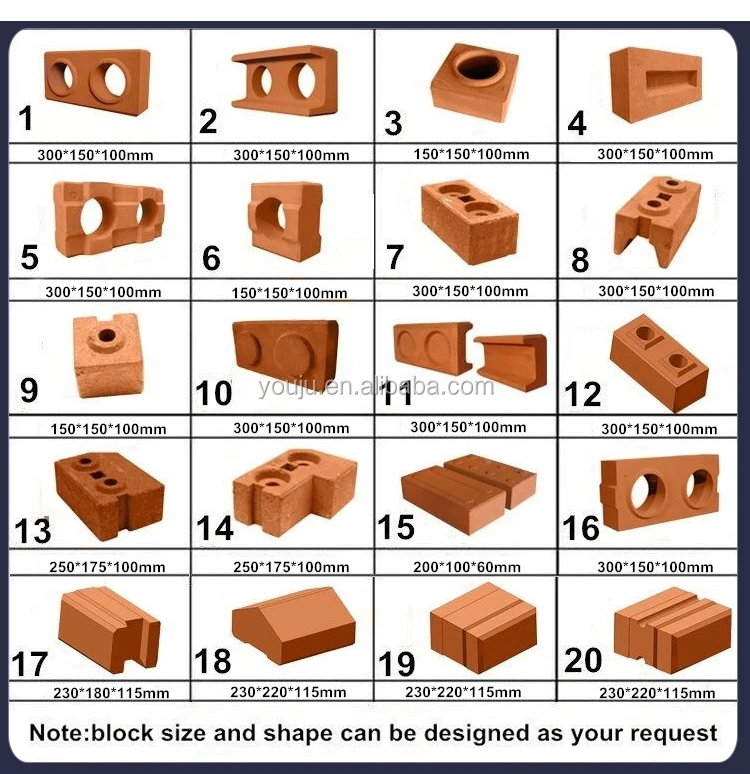
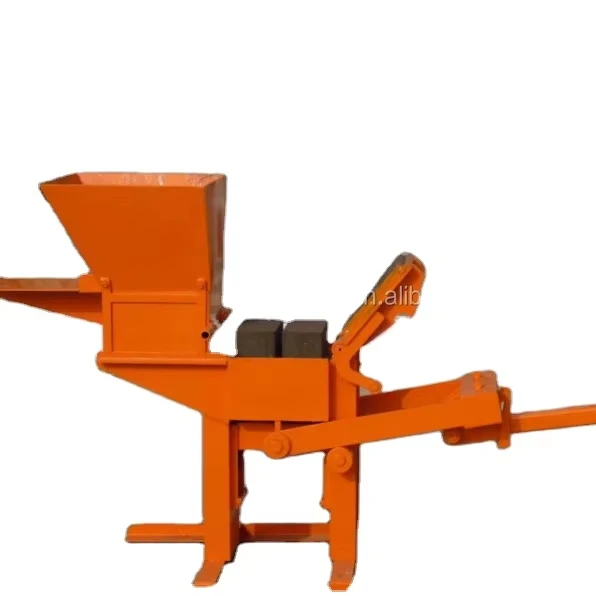 Clay interlocking brick