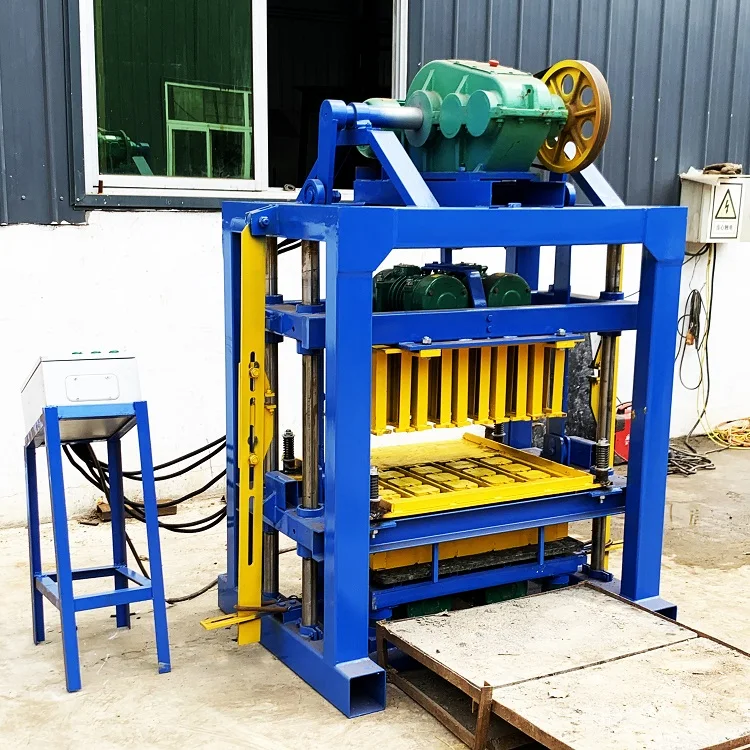
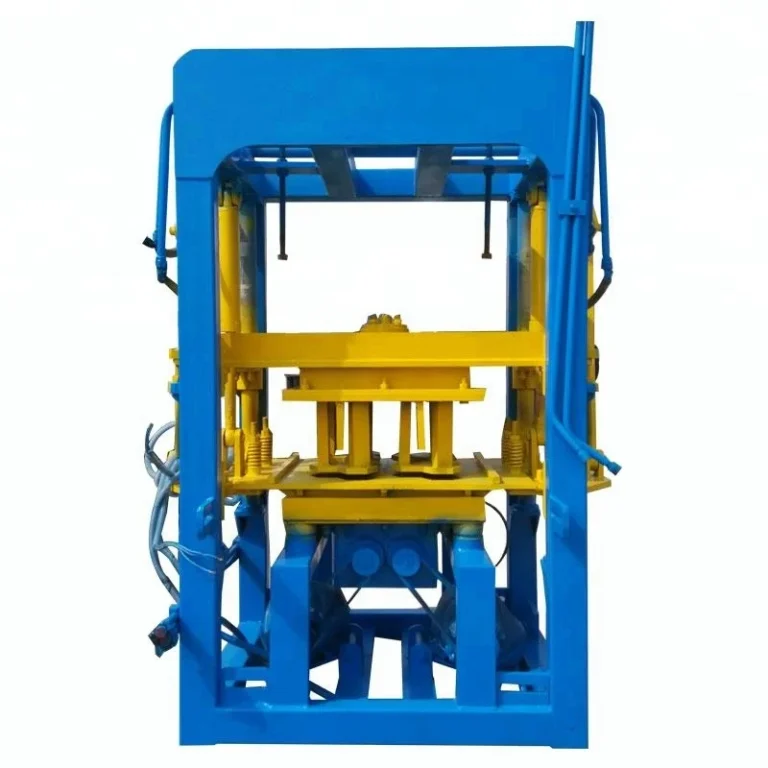
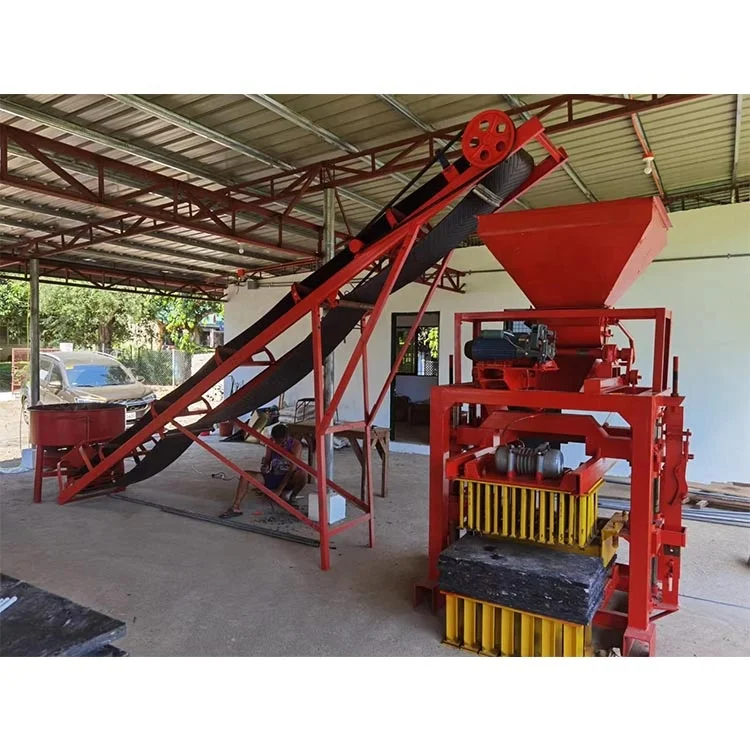
Stationary block machine range — every model tier mapped from manual pallet handling to fully automatic stacking so you can place your plant footprint and investment before narrowing down.
Technical Specifications
| Parameter |
Value |
| Model |
QT4-18 |
| Product Type |
Stationary Block Making Machine |
| Vibration Form |
Platform Vibration |
| Vibration Frequency |
0–60 Hz (adjustable) |
| Vibration Force |
45 kN |
| Pallet Size |
900 × 500 mm |
| Molding Cycle |
18–25 s |
| Demolding Method |
Hydraulic |
| Control System |
PLC (basis not stated in source — confirm PLC brand and language options) |
| Automation Level |
Automatic with PLC & engine control |
| Output (400×200×200 mm hollow block) |
799 pcs/h, 6 399 pcs/8 hr (based on 18 s cycle, 4 pcs/mould) |
| Output (400×150×200 mm hollow block) |
999 pcs/h, 7 999 pcs/8 hr (based on 18 s cycle, 5 pcs/mould) |
| Output (240×115×52 mm solid brick) |
5 199 pcs/h, 41 599 pcs/8 hr (based on 18 s cycle, 26 pcs/mould) |
| Hydraulic Pressure |
(basis not stated in source) |
| Overall Dimensions |
(basis to be confirmed) |
| Net Weight |
(basis to be confirmed) |
| Rated Power |
(basis to be confirmed) |
| Voltage & Frequency |
(basis to be confirmed) |
| Warranty |
1 year for whole machine (excluding spare parts) |
Application Suitability
| Application |
Material or Output |
| Hollow block production |
Crushed stone, river sand, cement blends for 400×200×200 mm and 400×150×200 mm formats |
| Solid brick runs |
Fine aggregate and cement for 240×115×52 mm standard bricks |
| Paving brick and interlocking paver |
Dense aggregate mixes with face-layer options |
| Kerbstone and road curb |
High-strength concrete with coarse aggregate |
| Porous and sod bricks |
Permeable aggregate blends for drainage applications |
Why Quoted Capacity Rarely Matches Day-One Output on a QT4-18 Block Machine Manufacturer Line
Because cycles-per-hour numbers only hold true when the block format, mix design, and pallet handling speed are all matched to that specific rating.
I once watched a buyer receive a stationary press rated for a fast cycle, only to discover the quotation assumed a small solid brick while the plant actually needed hollow blocks. The real daily output dropped to less than half. That gap is what this page tries to close up front [NEED_CITE: block machine capacity calculation standards]. When sourcing from any QT4-18 block machine manufacturer, the capacity figure must name the exact format, mould cavity count, and cycle time behind it, or the number is meaningless for your business plan.

Where the QT4-18 Sits Inside the Shiyue Stationary Range
The QT4-18 occupies the mid-tier of the Shiyue stationary block machine lineup. Below it sit semi-automatic models that still rely on manual pallet transfer, suited to smaller workshops with lower capital. Above it, high-capacity automatic lines add fully automatic stacking and cubing. This positioning matters when you are comparing investment levels and plant footprints across the full range before committing to a single tier.
Matching the Automation Tier to Your Workforce and Site
A buyer moving from manual egg-laying machines will find the PLC-controlled automatic cycle a clear step forward, yet the QT4-18 still leaves room for pallet handling and stacking to be configured separately. That flexibility lets you start with semi-automatic pallet return and add automatic stacking later. Choosing the right tier now prevents over-investing in automation your curing area cannot absorb [NEED_CITE: automation upgrade paths in block production].
Platform Vibration, Hydraulic Pressure, and What They Mean for Block Density
Platform vibration at 0–60 Hz and 45 kN force compacts the concrete from below, while hydraulic demoulding pulls the mould box upward without jolting the fresh block. Together they determine the green strength that allows pallets to move to the curing rack without corner damage. The adjustable frequency range lets the operator tune vibration to different aggregate sizes — finer sand needs higher frequency, while crushed stone with larger particles responds better to lower frequency and longer dwell. The 18–25 s molding cycle varies with block height and cavity count, so a tall hollow block will naturally sit at the longer end of that window.
The Hidden Cost of Skipping Pallet and Handling Alignment
Quotations that stop at the press itself leave pallet feeding, stacking, and curing rack transfer as unplanned costs. If the 900 × 500 mm pallet does not match the curing rack spacing or the forklift tine width already in your yard, you end up hand-stacking thousands of blocks every shift. That bottleneck cancels the cycle speed you paid for [NEED_CITE: pallet handling bottlenecks in block plants]. Always confirm pallet material, rack dimensions, and handling equipment before the order is locked.
Why Buyers Source This Tier From Shiyue
Block machinery is the single production focus here, so the press, mould, pallet, and handling equipment are specified as one matched system rather than assembled from unrelated suppliers. Configuration starts from your actual mix design and local aggregate instead of a catalogue default. Mould design covers the formats your market sells, with custom drawings available. The automation level is selectable, meaning you can start semi-automatic and move up within the same range. Installation support includes operator training so the crew understands cycle tuning from day one.
Documentation & Verification
- Line layout with capacity calculation naming the exact block format and mould cavity count
- Machine specification sheet covering vibration force, pallet size, and hydraulic demoulding method
- Mould drawing and format list showing every cavity option for hollow, solid, and paver blocks
- Voltage and PLC display language confirmation sheet signed before production starts
- Factory test record with photographs and cycle timing on your chosen block format
Installation, Commissioning & Support
- Foundation slab sized to the QT4-18 footprint and vibration isolation requirements
- Dedicated power circuit matching confirmed voltage and frequency before the press arrives
- Machine delivered with pallet frame and hydraulic unit pre-assembled for faster site hookup
- First-run commissioning with cycle time tuning on your actual aggregate and mix ratio
- Operator training covering mould change procedure and PLC parameter adjustment
- Wear parts list with hydraulic seals and vibration motor brushes for the first replacement window
What to Share When Requesting a Quotation
Send the block format you sell most, your target daily output, and the local aggregate type you plan to use. Include your workshop dimensions and curing area layout so the line can be arranged around your existing space. State your site voltage and frequency along with the preferred PLC display language to avoid delays during commissioning.
Frequently Asked Questions
Q: How is the capacity of the QT4-18 calculated and for which block format?
A: The capacity figures shown — such as 6 399 hollow blocks per eight-hour shift — are based on an 18-second molding cycle with four cavities per mould for 400×200×200 mm blocks. Different formats and cavity counts change the output proportionally, so always ask for a capacity table matched to your specific block size.
Q: Where does the QT4-18 sit compared to semi-automatic and higher-tier automatic models?
A: It occupies the mid-tier of the Shiyue stationary range. Semi-automatic models below it use manual pallet transfer, while higher-tier lines above it add automatic stacking and cubing. The QT4-18 gives you PLC-controlled automatic cycling while keeping pallet handling configurable to your budget and plant footprint.
Q: What voltage and PLC language options are available for my market?
A: Voltage and frequency are confirmed during the quotation stage to match your local grid, and the PLC display language is set before production begins. This step prevents commissioning delays that occur when a control panel arrives in a language the operators cannot read.
Q: What plant footprint is required for the QT4-18 with supporting equipment?
A: The footprint depends on whether you add automatic pallet return and stacking. The 900 × 500 mm pallet size drives curing rack spacing and aisle width for forklift access. Sharing your workshop layout allows a line drawing that fits the press, mixer, and handling stations into your available area.
Q: Can I start with the QT4-18 and upgrade automation later within the Shiyue range?
A: Yes. The automation level is selectable, so you can begin with semi-automatic pallet handling and add automatic stacking or cubing modules later. The PLC architecture supports these additions without replacing the core press, keeping your upgrade path inside the same machine family.

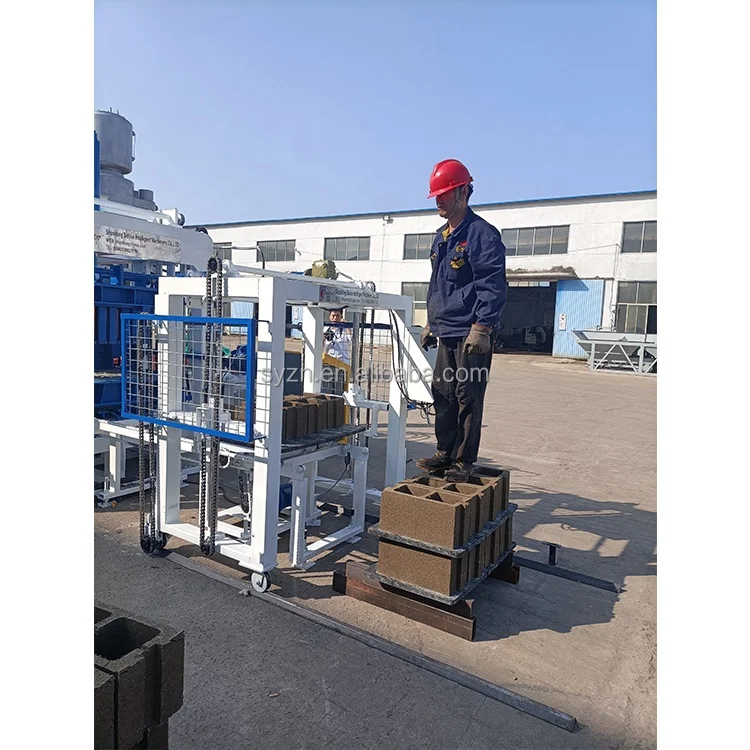
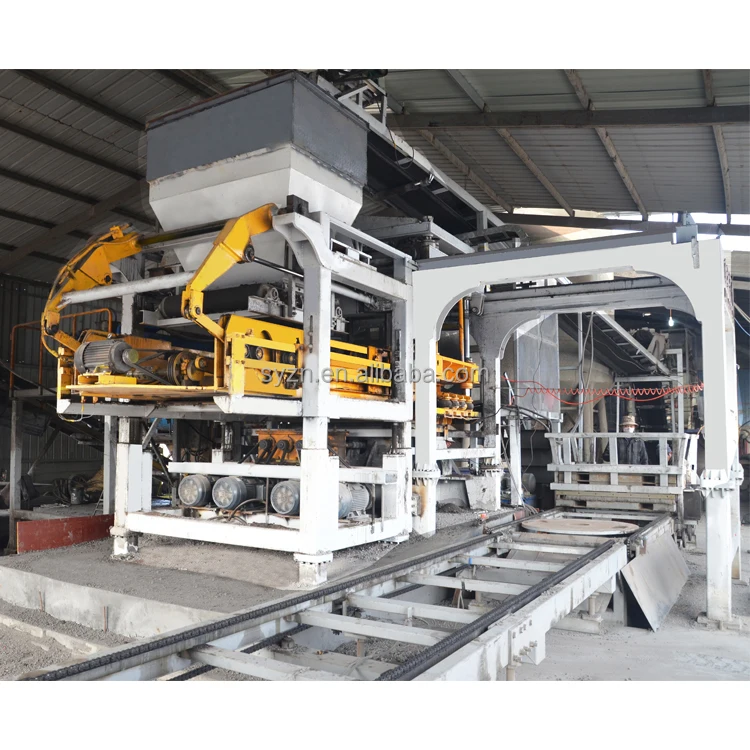 Stationary block machine