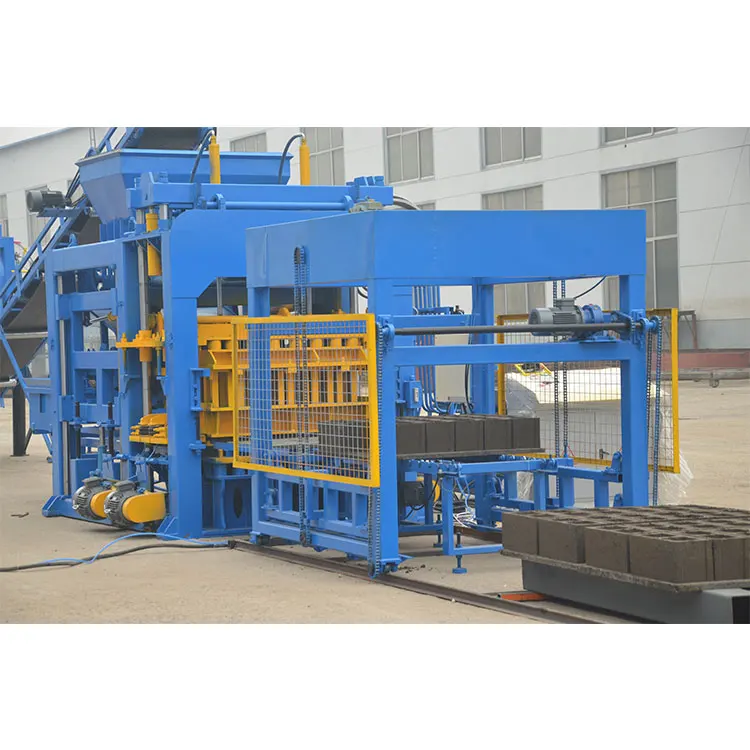
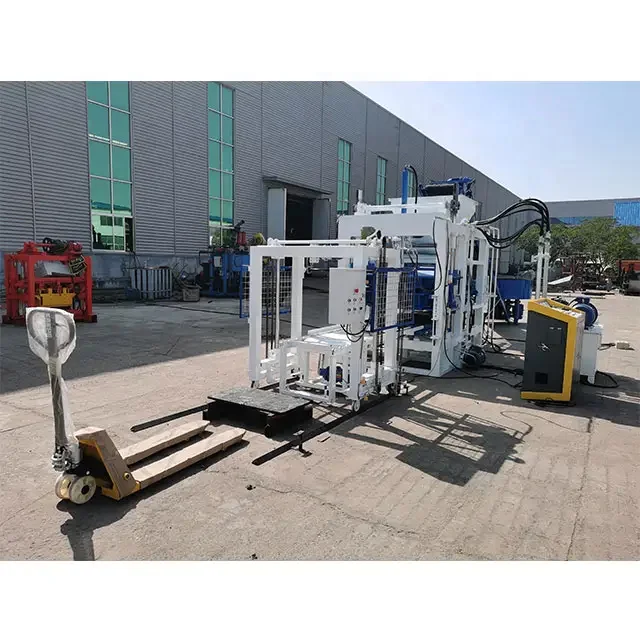
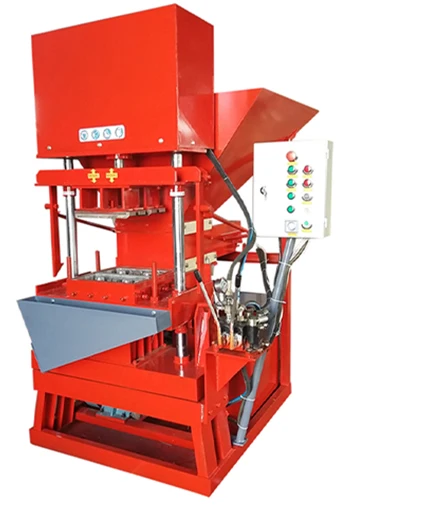
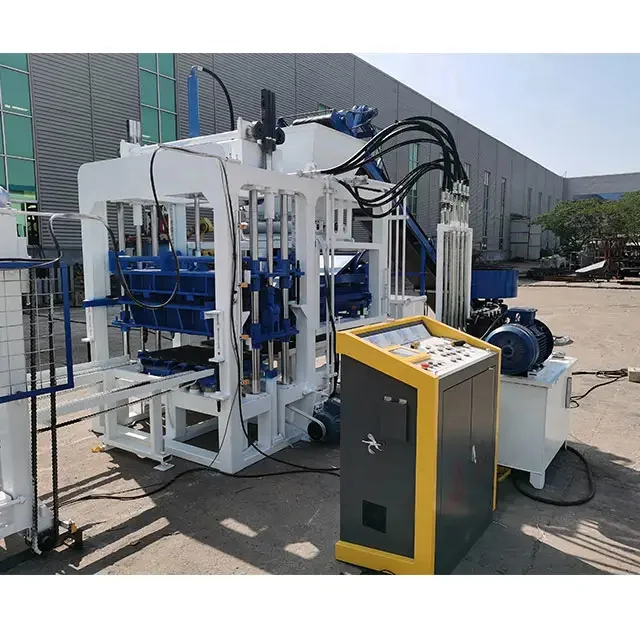
Single-Focus Block Machinery Line — machine, mould, pallet and handling equipment specified together against the buyer’s actual mix design and target block format.
Technical Specifications
| Parameter |
Value |
| Model |
QT6-15 |
| Product Type |
Automatic Concrete Block Making Machine |
| Molding Way |
Vibration and hydraulic pressing |
| Rated Pressure |
21 MPa |
| Molding Cycle |
15s-20s |
| Pallet Size |
900x700mm |
| Main Machine Weight |
6000 KGS |
| Automation Level |
Automatic (simple line configuration) |
| Output Capacity (Hollow Block 400x200x200mm) |
1440 pcs/h, 11520 pcs/8h |
| Output Capacity (Paving Brick 200x100x60mm) |
5040 pcs/h, 40320 pcs/8h |
| Output Capacity (Solid Brick 240x115x53mm) |
7680 pcs/h, 61440 pcs/8h |
| Compatible Materials |
Cement, sand, fly ash, stone powder, slag |
| Motor Voltage |
Customizable to local voltage and frequency |
| Warranty |
1 year (excluding wearing parts) |
Application Suitability
| Application |
Material or Output |
| Hollow Block Production |
Building construction blocks from cement, sand and aggregate |
| Color Paving Brick Production |
Sidewalk and pavement bricks from crushed stone and pigment |
| Solid Brick Manufacturing |
High-density bricks from fly ash, slag and stone powder |
| Curbstone Production |
Pavement curbs and kerbstones from heavy aggregate mixes |
| Waste Material Utilization |
Blocks incorporating fly ash and industrial slag |
What "Pieces per Hour" Leaves Out About the QT6-15 Automatic Block Making Machine for Sale
Cycle time is only meaningful when tied to a specific block format and curing requirement.
Most buyers compare block machines on a single headline capacity number, but that figure assumes a specific block size and a molding cycle that might not apply to the formats you actually sell. A machine cycling every 15 seconds on a solid brick will take considerably longer when the hydraulic pressure and vibration sequence must be adjusted for a hollow block with thinner walls. I have seen buyers discover this gap after the container arrives, when the daily output on their primary product format falls short of what the quotation implied [NEED_CITE: block format impact on actual daily cycle rates]. The QT6-15 automatic block making machine for sale addresses this by publishing capacity against three distinct formats with their respective molding cycles.

Where the QT6-15 Sits in the Machine Range
This model occupies the mid-tier position in the automatic block machine range. Buyers moving up from semi-automatic egg-laying machines or smaller workshop presses will find a significant step in pallet size and cycle rate, while the line configuration remains simpler than a fully automatic stacking and cubing plant. The QT6-15 automatic block making machine for sale is designed for operations that need consistent output across multiple block formats without committing to the footprint and investment of a high-capacity line.
Scalable Line Configuration From Simple to Expanded
The supporting equipment around the press can be specified at different levels depending on current volume and growth plans. A basic line starts with a JS500 mixer and an 8-meter conveyor belt feeding the press, with manual or semi-manual pallet handling. As output requirements grow, the line can be expanded with a batching machine, cement silo, screw conveyor and automatic stacker. This approach allows a buyer to commission the QT6-15 now and add automation stations later without replacing the core press [NEED_CITE: block plant phased automation investment approaches].
How Pressure, Vibration and Pallet Size Shape the Output
The 21 MPa rated hydraulic pressure works together with the vibration system to compact the concrete mix into the mould cavity. Different block formats demand different balances between pressure and vibration; a hollow block with thin walls needs careful vibration to avoid collapse, while a solid paving brick requires maximum pressure for density and strength. The 900×700mm pallet size is a standard dimension that aligns with commonly available curing racks and forklift capacities, so the buyer does not need to invest in custom handling equipment for the curing yard. The 15–20 second molding cycle varies within that range depending on the block format and the concrete mix design being run.
The Cost of Unmatched Pallet and Curing Configuration
When a block machine is quoted without considering the curing area and forklift the buyer already has, the pallet size may not match existing racks, forcing the buyer to purchase new curing infrastructure or handle wet blocks manually off non-standard pallets. I have seen plants where the pallet material specified in the quotation warped under local humidity conditions, causing uneven block thickness and rejection rates that erased the capacity advantage the buyer thought they were getting [NEED_CITE: pallet material selection and curing environment impact]. These issues are not visible in a catalogue comparison but surface quickly once production starts.
Why Source the QT6-15 Through a Single-Focus Machinery Supplier
Block machinery is the sole product focus here, meaning the press, mould, pallet and handling equipment are specified as one matched system rather than assembled from separate suppliers. The configuration is set against the buyer’s actual mix design, local aggregate and target block format, not a catalogue default. Mould design covers the formats the buyer’s market sells, including custom drawings where required. Automation level is selectable so a buyer can start with a simpler line and add stations later. Installation and commissioning support includes operator training, and mould and wear parts supply is maintained after the machine ships.
Documentation & Verification
- Line layout with capacity calculation stating the block format assumed for each output figure
- Machine specification sheet with pallet size and hydraulic pressure confirmed against local aggregate
- Voltage, frequency and PLC display language confirmation before production begins
- Mould drawing and format list showing every block type compatible with the 900×700mm pallet
- Factory test record run on the buyer’s specified block format before dispatch
Installation, Commissioning & Support
- Foundation must support the 6000 KGS main machine weight with level tolerance for the 900×700mm pallet track
- Power supply configured to confirmed voltage and frequency with a dedicated circuit for the hydraulic pump motor
- Machine shipped in dismantled state with reassembly and alignment performed on-site during commissioning
- First production run supervised with molding cycle and pressure adjusted to the buyer’s concrete mix design
- Operator training covers mould change procedure, PLC operation and daily maintenance of vibration and hydraulic systems
- Wear parts list provided covering mould liners, vibration springs and hydraulic seals for first-year planning
What to Share With Your Inquiry
To size the QT6-15 line correctly, share the block formats you plan to produce and the daily volume you need for each one. Include the raw materials available locally — particularly the type and grading of sand or aggregate — along with the voltage and frequency at your site. If you have existing curing racks, forklifts or mixers, note their specifications so the line configuration can be matched around them.
Frequently Asked Questions
Q: How is the QT6-15 output verified per block format, and what cycle time does each format assume?
A: Output figures are published for three block formats — hollow block at 400×200×200mm, paving brick at 200×100×60mm and solid brick at 240×115×53mm — each with its corresponding molding cycle within the 15–20 second range. A capacity calculation document accompanies the proposal stating the format assumed for each figure.
Q: What voltage and frequency options are available, and how is the control language confirmed?
A: Motor voltage is configured to the buyer’s local supply before production begins. Frequency and PLC display language are confirmed in writing during the specification stage so the control interface arrives in the operator’s working language, avoiding commissioning delays.
Q: How does the QT6-15 compare in plant footprint and investment to other tiers in the range?
A: The QT6-15 sits between smaller semi-automatic machines and larger fully automatic lines. It requires more floor space than a mobile egg-layer but less than a high-capacity plant with automatic cubing, making it suitable for buyers who have outgrown manual pallet handling but are not yet ready for a fully automated operation.
Q: Which supporting equipment is included in a standard line, and what can be added later?
A: A basic line includes a JS500 mixer and 8-meter conveyor belt. Additional stations such as a batching machine, cement silo, pallet loader and automatic stacker can be added as volume grows, without replacing the core press or changing the pallet format.
Q: What does the warranty cover, and which parts are excluded?
A: The warranty covers the machine for one year from commissioning, excluding wearing parts such as mould liners, vibration springs, hydraulic seals and pallets. A wear parts list is provided with the documentation so buyers can plan replacement stock from the first production cycle.

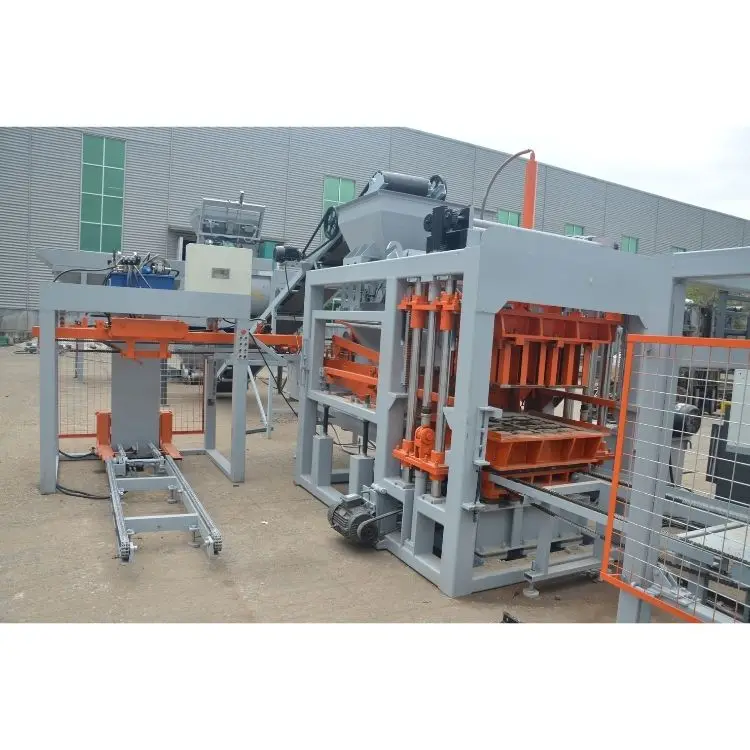
 Semi automatic block