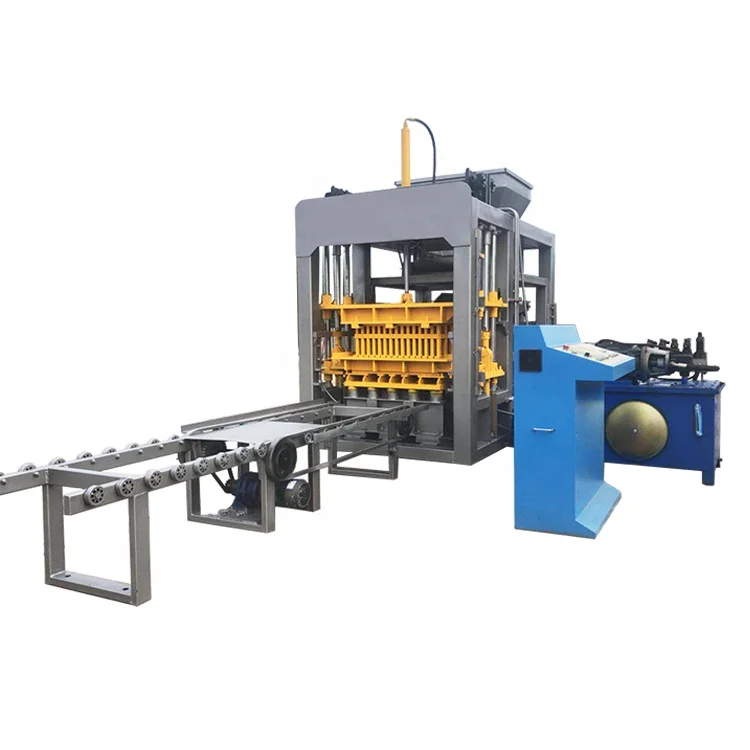
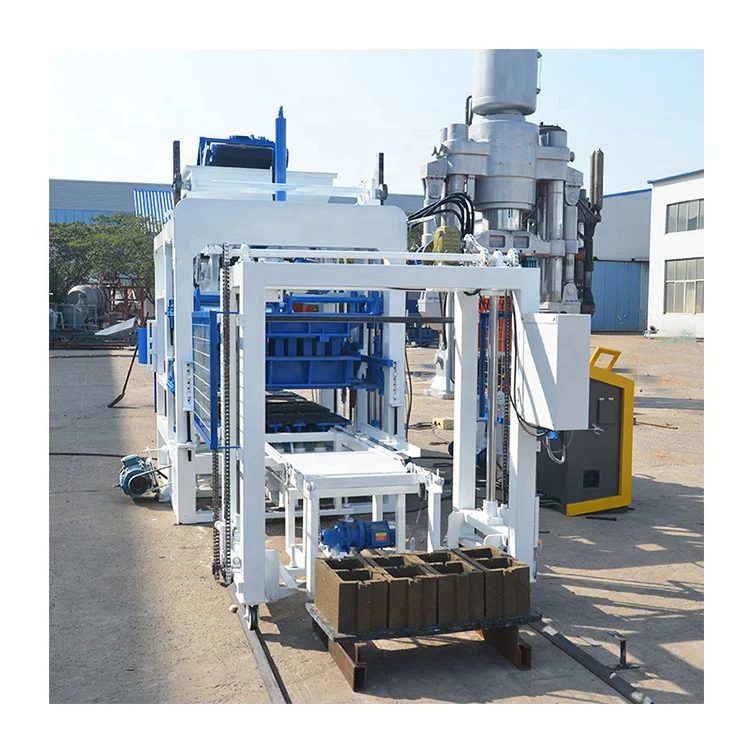
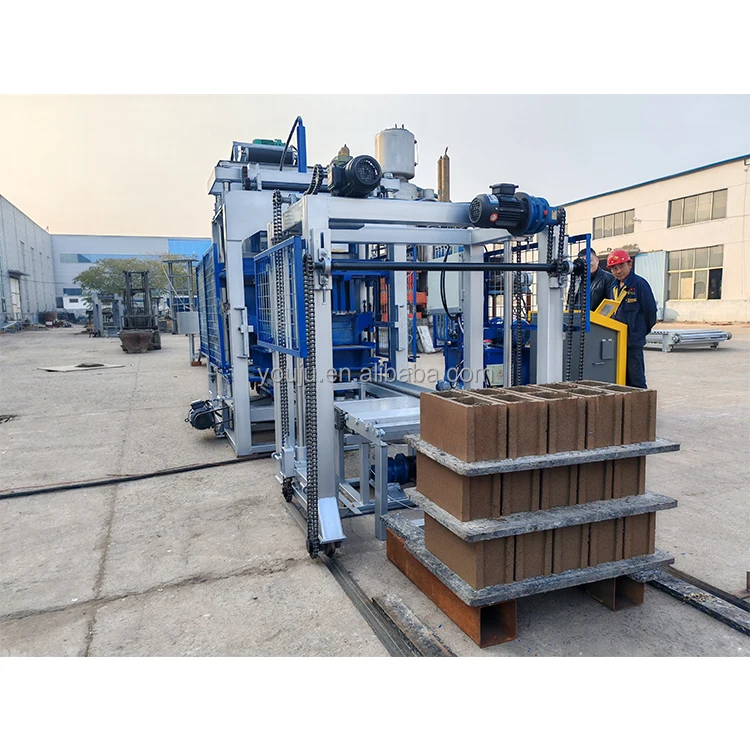
Matched System Design — The QTJ4-40 is specified as one coordinated unit where the host press, mixer, moulds and pallets are aligned before dispatch, eliminating the mismatch risk buyers face when sourcing components separately.
Technical Specifications
| Parameter |
Value |
| Model |
QTJ4-40 |
| Product Type |
Semi-Automatic Hydraulic Block Making Machine |
| Overall Dimensions (L×W×H) |
1350×1460×1800 mm |
| Net Weight |
1.2 T |
| Rated Power |
10.4 kW |
| Molding Cycle |
40 s |
| Vibration System |
Bed mould vertical vibration + upper mould compression vibration |
| Pallet Size |
850×450×20 mm |
| Pallet Material |
Fiberglass (wooden pallet usable if sourced locally) |
| Output Capacity (400×200×200 mm hollow block) |
4 pcs/mould, 360 pcs/h, 2880 pcs/day |
| Output Capacity (400×150×200 mm hollow block) |
5 pcs/mould, 450 pcs/h, 3600 pcs/day |
| Output Capacity (225×112.5×60 mm solid brick) |
9 pcs/mould, 800 pcs/h, 6400 pcs/day |
| Mould Formats |
Hollow, solid, paver (4-inch, 5-inch, 6-inch, 8-inch; custom on request) |
| Voltage |
Configurable to buyer local voltage (confirm exact V/Hz before order) |
| Automation Level |
Semi-automatic |
| Raw Materials |
Concrete, sand, cement, fly ash, lime, gypsum |
| Assembly State |
Host machine + mixer + block mould + pallets (mixer and pallets optional if sourced locally) |
Application Suitability
| Application |
Material or Output |
| Small-scale hollow block production for residential building |
Crushed stone, sand and cement in 400×200×200 mm and 400×150×200 mm formats |
| Solid brick runs for paving and walling |
Cement and fine aggregate in 225×112.5×60 mm format |
| On-site block production for housing contractors |
Local aggregate blended with cement, using the compact 1.2 T footprint |
| Paver and interlocking brick for landscaping |
Cement, sand and pigment through custom mould designs |
| First block plant for entrepreneurs entering the market |
Semi-automatic operation with manageable learning curve |
What "2500 Pieces per Day" Leaves Out for a Semi-Automatic Block Making Machine Manufacturer
Output figures mean nothing unless the block format and raw material are stated alongside them.
I once watched a Central American buyer take delivery of a machine quoted at a headline cycle rate. His local volcanic aggregate was far lighter than the river sand used during the factory test. The machine ran, but daily output fell sharply short of the number on the quotation. [NEED_CITE: aggregate density variation and its effect on block molding cycle] The QTJ4-40 capacity figures above each name the exact block dimensions they assume, so you can compare them directly against what your market actually buys. A semi-automatic block making machine manufacturer should present capacity this way from the first proposal.

Where the QTJ4-40 Sits in the Stationary Machine Range
The QTJ4-40 occupies the entry tier of the stationary line, aimed at workshop-scale output where a fully automatic stacking and cubing system would be disproportionate to the volume. Buyers who need to produce several thousand hollow blocks in a single shift and plan to scale later can start here and add automation stages as demand grows. The compact 1350×1460 mm footprint fits inside a standard industrial bay without requiring a dedicated building.
Matching the Machine Tier to Your Product Mix
A small plant rarely makes one format. The QTJ4-40 accepts moulds from 4-inch to 8-inch hollow blocks as well as solid bricks and pavers, letting a single press cover the common product spread. [NEED_CITE: typical product mix for small block plants in developing markets] Mould change is manual at this tier, which keeps the purchase price contained but means format switching occupies part of a shift. Buyers whose market demands frequent short runs of different formats should weigh that trade-off before choosing this tier over a higher-automation model.
Reading the Specifications That Matter on the Shop Floor
The combined bed mould vertical vibration and upper mould compression vibration work together to compact the concrete mix from both directions, producing more uniform density through the block cross-section. The 850×450×20 mm pallet size dictates the curing rack dimensions and forklift tine spacing you need on-site — order pallets or build racks without checking this and you face costly rework. Voltage is configurable but must be confirmed in writing before production starts; a 380 V/50 Hz machine shipped to a 220 V/60 Hz market will not run without a transformer and may damage the motor. The 10.4 kW rated power means a standard three-phase supply with adequate breaker capacity is sufficient, but buyers should verify their workshop panel can handle the inrush current during press startup.
The Cost of Skipping the Raw Material Conversation
When a buyer does not send a local aggregate sample before the machine is configured, the vibration force and hydraulic pressure settings are based on a default mix. If the actual material is lighter or more porous, blocks emerge weaker or the cycle must slow down to reach target strength. [NEED_CITE: concrete mix design adjustment for local aggregate properties] This is not a defect — it is a configuration gap that shows up only after the press is bolted to the floor.
Why Buyers Specify the QTJ4-40 Through This Channel
Block machinery is our single focus, so the QTJ4-40 is quoted as a matched set of press, mould, pallet and mixer rather than a bare machine with add-ons from separate vendors. Configuration is set against your actual mix design and target block format, not a catalogue default. Mould drawings are provided for every format you order, including custom dimensions, so you can verify market fit before steel is cut. Automation level is selectable, meaning a buyer who starts semi-automatic can plan a future upgrade path. Installation support includes operator training so your crew understands cycle timing and mould change procedure from day one.
Documentation & Verification
- Line layout and capacity calculation stating the block format each output figure assumes
- Machine specification sheet with confirmed voltage, frequency and control language
- Mould drawing and format list for every ordered block size before production
- Factory test record on your raw material mix with photographs before dispatch
- Hydraulic and electrical schematic for local maintenance teams
- Packing photographs and customs documentation support for smooth clearance
Installation, Commissioning & Support
- Foundation pad must be level and rated for the 1.2 T static load plus dynamic vibration forces
- Dedicated three-phase circuit with breaker sized for 10.4 kW rated power plus startup surge
- Machine ships as a single host unit; mixer and pallets packed separately for container loading
- On-site commissioning covers first-cycle parameter tuning to match local aggregate density
- Operator training includes manual mould change procedure and daily vibration bed inspection
- Wear parts list covers high-friction hydraulic and vibration components with reorder part numbers
Starting Your QTJ4-40 Inquiry
Tell us which block formats sell in your market and the daily volume you need for each. Share your local aggregate type and any sample test results you already have. Confirm your workshop voltage, frequency and the control display language your operators will need so the machine arrives ready to run.
Frequently Asked Questions
Q: How is output capacity calculated for each block format on the QTJ4-40?
A: Each capacity line in the specification table names the exact block dimensions, pieces per mould and cycle time it assumes. For example, the 2880 pcs/day figure is based on 400×200×200 mm hollow blocks at 4 pcs per mould and a 40-second cycle. If your target format or material differs, the daily output will shift accordingly.
Q: Where does the QTJ4-40 sit in the full machine range — when should a buyer step up?
A: It is the entry stationary tier for workshop-scale output. Buyers who need continuous high-volume production across a single format, or who want to eliminate manual pallet handling, should look at the next automation tier where automatic stacking and cubing are included.
Q: What voltage and frequency options are available, and how is this confirmed?
A: The QTJ4-40 is built to the buyer’s local electrical standard. Exact voltage, frequency and control display language must be confirmed in writing before production begins so the motor, wiring and PLC arrive matched to your workshop supply.
Q: What plant footprint and supporting equipment are needed alongside this machine?
A: The host unit occupies roughly 1350×1460 mm. You also need space for the mixer, pallet return area, curing racks sized to the 850×450 mm pallet, and forklift access. The mixer and pallets can be sourced locally if you prefer.
Q: Can the automation level be upgraded later from semi-automatic?
A: The QTJ4-40 is designed as a starting point. Buyers can later add automatic pallet feeding or stacking modules depending on demand growth. Discuss the upgrade path at the inquiry stage so the initial machine layout leaves room for future additions.

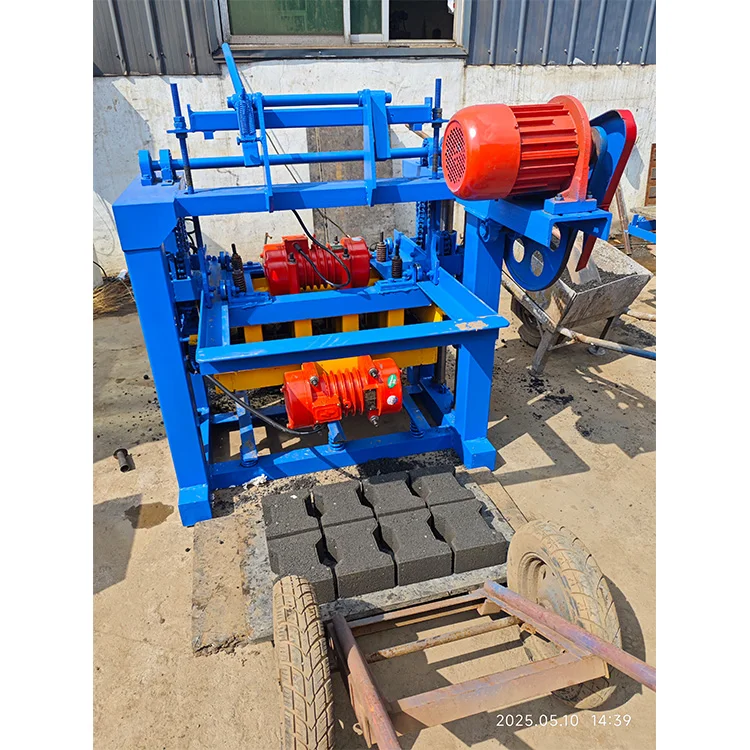
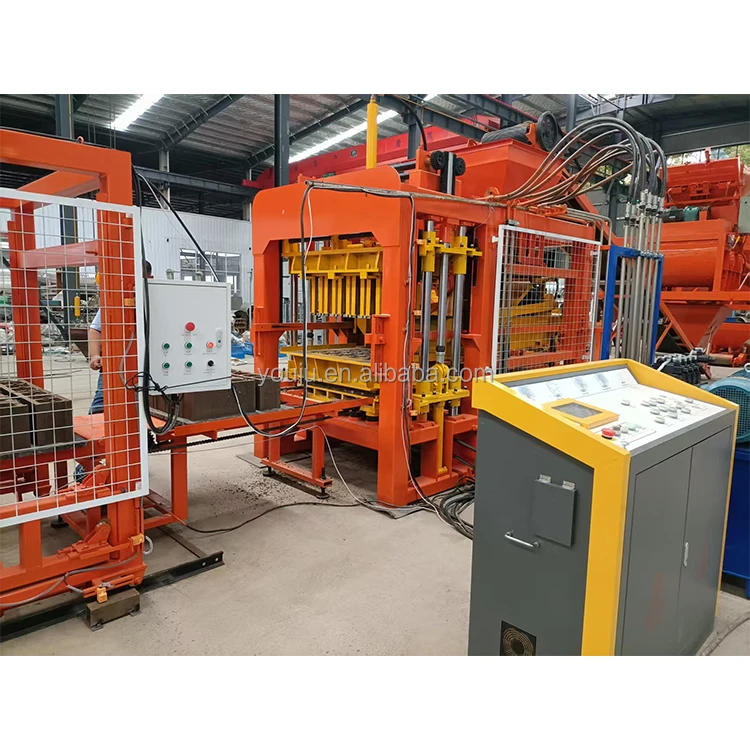 Stationary block machine