Mid-Tier Automation Clarity — Every output figure here is tied to a specific block size and cycle, keeping your daily throughput projections grounded before you commit to the line.
Technical Specifications
| Parameter |
Value |
| Model |
QT5-15 |
| Product Type |
Fully Automatic Concrete Block Making Machine |
| Overall Dimensions (L×W×H) |
7100×1600×2610 mm |
| Molding Cycle |
15 s |
| Vibration Frequency |
0-60 Hz |
| Exciting Power (Vibration Force) |
40 kN |
| Rated Power |
33.5 kW |
| Mixer Model |
JS500 |
| Pallet Size |
1100×550 mm |
| Total Weight |
5 T |
| Control System |
PLC control system |
| Hydraulic Station |
Included |
| Automation Level |
Fully automatic |
| Applied Products |
Paver, solid block, hollow block, curbstone |
| Raw Materials |
Crushed stones, sand, cement, dust, fly ash |
| Output Capacity (Hollow Block 400×200×200 mm) |
5 pcs/mould, 450 pcs/hr, 3600 pcs/8hr |
| Output Capacity (Hollow Block 400×150×200 mm) |
6 pcs/mould, 540 pcs/hr, 4320 pcs/8hr |
| Output Capacity (Solid Brick 400×100×200 mm) |
8 pcs/mould, 720 pcs/hr, 5760 pcs/8hr |
| Included Equipment |
Block making machine, hydraulic station, PLC control system, pallet feeder, brick conveyor, block sweeper |
| Voltage & Frequency |
(basis to be confirmed with buyer) |
| Assembly State |
(basis to be confirmed with buyer) |
Application Suitability
| Application |
Material or Output |
| Hollow block production for building walls |
Crushed stone, sand, cement, fly ash in 400×200×200 mm and 400×150×200 mm formats |
| Solid brick manufacturing |
Cement, dust, and fine aggregate in 400×100×200 mm format |
| Paver and interlocking block production |
Crushed stone and cement mix for pedestrian and light-traffic surfaces |
| Curbstone forming |
Dense aggregate-cement mix for road and sidewalk edge applications |
| Contractor on-site block making |
Multi-format output using locally sourced raw materials |
What "450 Pieces per Hour" Actually Means in Practice
A capacity number without a block format attached is meaningless for production planning.
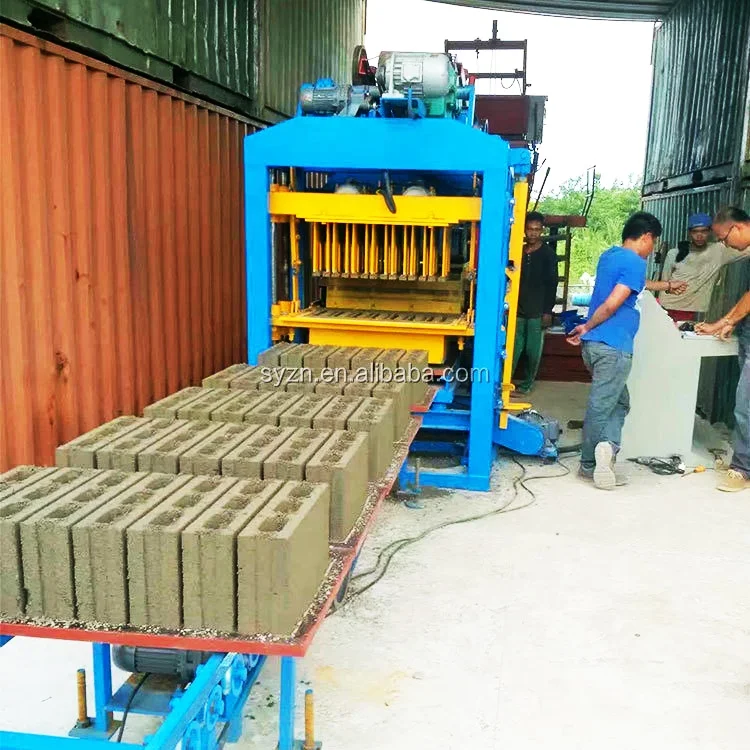
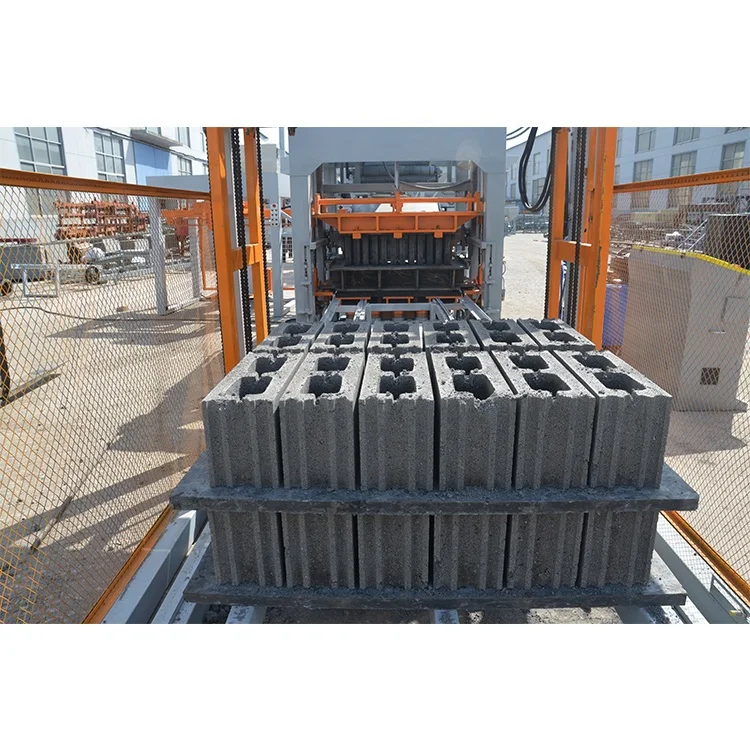
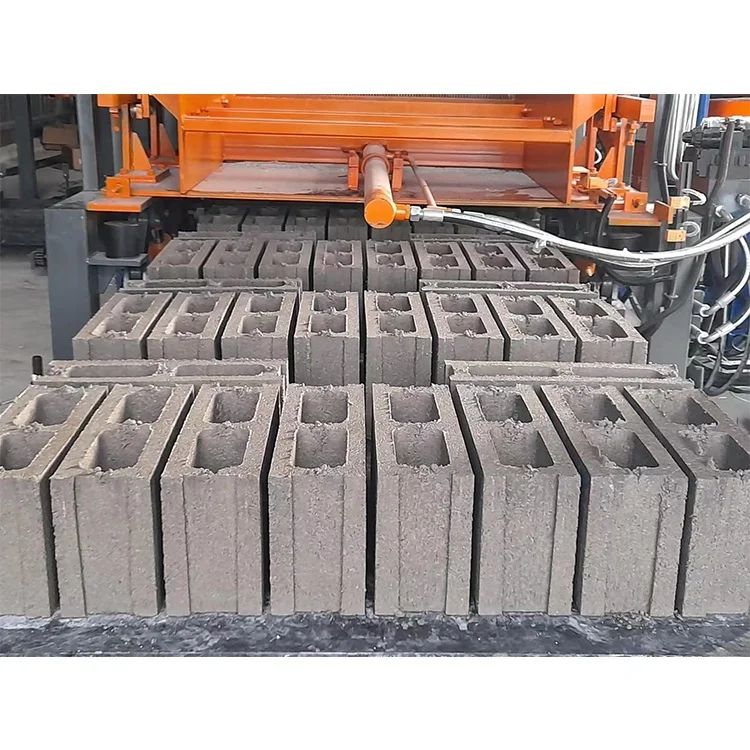
The QT5-15 automatic block making machine manufacturer specs quote 450 pieces per hour, but that figure only holds when you are running 400×200×200 mm hollow blocks at five pieces per mould with a 15-second cycle. Switch the mould to 400×100×200 mm solid bricks and the per-cycle count rises to eight pieces, shifting the hourly output to 720. Buyers often compare machines on a single headline number, then discover after commissioning that their actual product mix — the formats their local market actually buys — delivers a different throughput entirely. Asking which block format was assumed before you sign the order prevents this mismatch. [NEED_CITE: capacity quoting conventions in concrete block machinery trade]

Where the QT5-15 Sits Across the Automatic Range
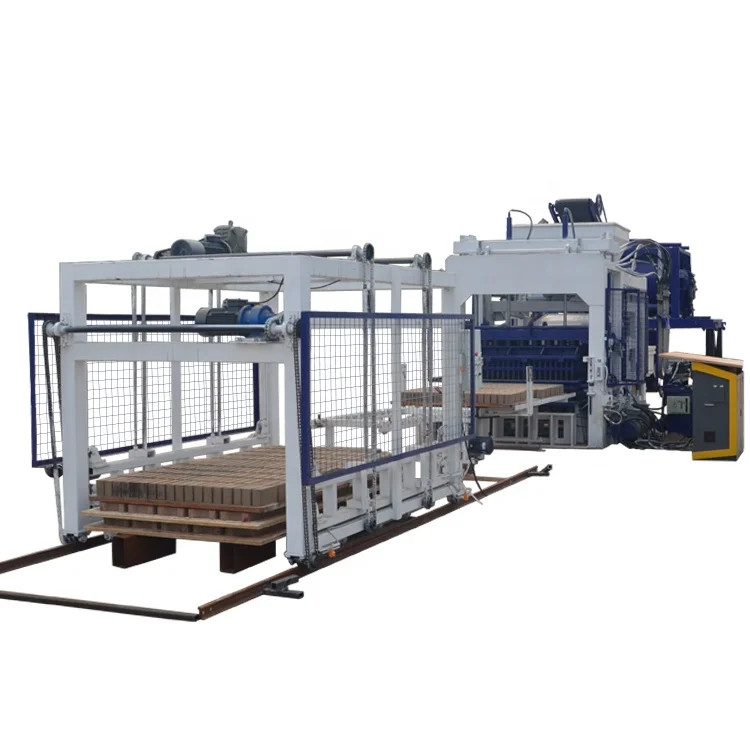
The SHIYUE range spans from semi-automatic units for first-time plants up to high-capacity lines with automatic stacking and cubing. The QT5-15 sits in the mid-tier, offering fully automatic pressing cycles with PLC control while leaving pallet handling and stacking as configurable additions. This positioning suits a buyer who wants consistent cycle repeatability without the full capital outlay of a top-tier line.
For a first-time entrepreneur or a contractor adding block production to an existing site, the QT5-15 automatic block making machine manufacturer tier provides a clear entry into automatic operation. The buyer can later integrate automatic stackers or curing rack handlers as volume grows, keeping the press itself as a constant platform.
Understanding the Supporting Stations Around the Press
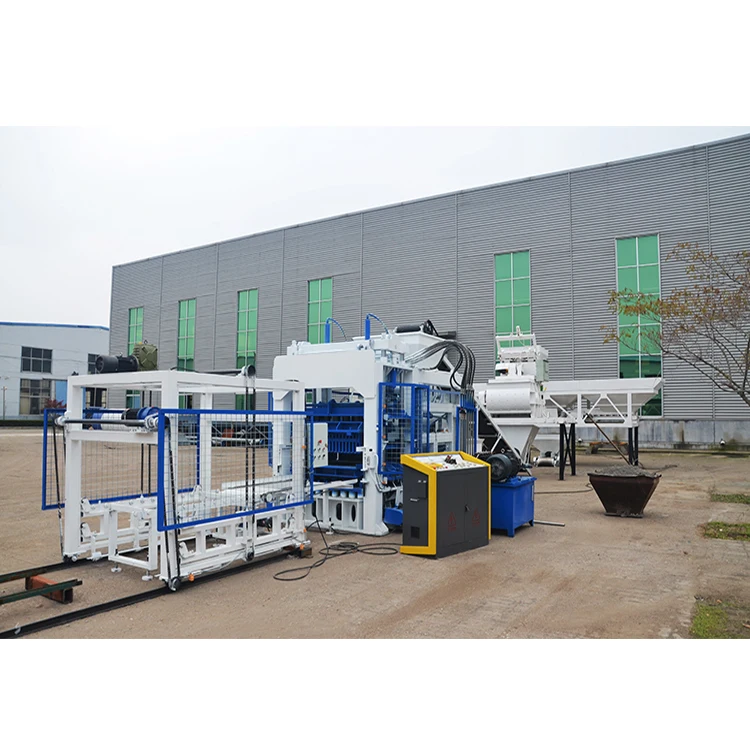
A block press does not run alone. Raw material must arrive at the mixer on time, the JS500 mixer must discharge into the press hopper before the next cycle starts, and pallets must feed into position without delay. If any station lags, the press waits, and the 15-second cycle stretches into something longer. The included pallet feeder, brick conveyor, and block sweeper address the immediate upstream and downstream stations so the press is not starved or blocked. [NEED_CITE: cycle time synchronization in concrete block production lines]
Reading the Core Parameters
Hydraulic station and vibration force. The 40 kN exciting power, adjustable across a 0-60 Hz frequency range, works together with hydraulic pressure to compact the mix into the mould. Vibration settles aggregate particles into voids while hydraulic pressure holds the head plate down. If your local aggregate is angular and poorly graded, you will need the upper portion of that frequency range and sufficient hydraulic pressure to achieve target block density.
Pallet size and curing area compatibility. The 1100×550 mm pallet determines how many blocks are pressed per cycle and must also match your curing rack dimensions and the forklift you already have on site. A pallet that does not fit your existing racks means re-racking by hand or buying new racks.
Mould change and format flexibility. The press platform accepts multiple mould formats — hollow block, solid brick, paver, curbstone — but the time and tooling required for each swap vary. A buyer whose market demands frequent format changes should confirm the mould change procedure before ordering.
The Cost of a Misconfigured Line
When vibration force and hydraulic pressure are not matched to the buyer’s actual mix design, blocks leave the press with inconsistent density. Low-density corners break during pallet transport; high-density blocks consume more cement than necessary, raising material costs across every shift. Similarly, if the pallet size was chosen without checking the buyer’s curing rack spacing, the entire wet-block handling workflow must be reorganised after the machine arrives. These rework costs are not visible in the quotation but appear on the shop floor within the first week. [NEED_CITE: common commissioning issues in exported concrete block equipment]
Why Buyers Choose This Configuration
Block machinery is the single focus here, so the press, mould, pallet, and handling stations are specified as one matched system rather than assembled from unrelated suppliers. The QT5-15 automatic block making machine manufacturer configuration is set against the buyer’s actual mix design and target block format, not a catalogue default.
Mould design covers the formats the buyer’s market actually sells, and custom mould drawings are available when standard formats do not cover a local requirement. The automation level is selectable, so a buyer starting semi-automatic can upgrade the same press platform later. Installation support includes operator training so the crew knows the PLC interface and mould change procedure before production begins.
Documentation & Verification
- Line layout with capacity calculation tied to each specific block format
- Machine specification sheet confirming rated power and pallet dimensions
- Mould drawing and format list for hollow, solid, paver, and curbstone types
- Hydraulic and electrical schematic for on-site maintenance reference
- Voltage and control language confirmation sheet before production
- Factory test record on your target block format before dispatch
Installation, Commissioning & Support
- Foundation pad must accommodate 7100×1600 mm footprint with level tolerance
- Dedicated power circuit sized for 33.5 kW rated draw plus mixer load
- Machine shipped dismantled; reassembly and alignment on site required
- First-run parameter tuning of vibration frequency and hydraulic pressure for your mix
- Operator training covering PLC interface, mould swap, and daily checks
- Wear parts list with reorder references for hydraulic seals and mould liners
What to Share When Requesting a Quotation
Provide the block formats your local market buys most, the daily volume you need to hit, and your raw material sources including aggregate type and grading. Confirm your site voltage, frequency, and the PLC display language your operators will use. If you already have pallets or curing racks on site, share their dimensions so the line is configured around them rather than the other way round.
Frequently Asked Questions
Q: How is daily output calculated for the QT5-15, and which block format does each figure assume?
A: Every output number is tied to a specific format and cycle. For 400×200×200 mm hollow blocks, the press produces 5 pieces per mould at a 15-second cycle, yielding 450 per hour and 3,600 over an 8-hour shift. Switching to 400×100×200 mm solid bricks raises the count to 8 per mould and 5,760 per shift. Always match the capacity figure to the format you actually plan to run.
Q: What voltage, frequency, and PLC language options are available for my market?
A: Voltage and frequency are confirmed after the buyer states their local grid standard. The PLC display language is also set during order confirmation so operators read instructions in their working language upon commissioning. Both items are documented on a confirmation sheet before production starts to avoid delays after arrival.
Q: Where does the QT5-15 sit compared to semi-automatic and higher-tier models?
A: The QT5-15 automatic block making machine manufacturer tier delivers fully automatic press cycles with PLC control at a mid-range investment. Below it, semi-automatic models require more manual pallet handling. Above it, higher-tier lines add automatic stacking, cubing, and curing rack systems. The press platform itself can serve as a constant as you add downstream automation later.
Q: What supporting equipment is included versus optional?
A: The standard package includes the block press, hydraulic station, PLC cabinet, pallet feeder, brick conveyor, and block sweeper. Automatic stackers, curing rack handlers, and cubing systems are available as optional additions. The buyer’s automation level is confirmed during the quotation stage so the line matches current needs with room to expand.
Q: How long does a mould change take on the QT5-15?
A: Mould change time depends on the specific format being swapped and the tooling included with the order. Buyers whose production schedule requires frequent format switches should confirm the changeover procedure and any required tools during the configuration stage so the process is understood before the machine arrives on site.

 High quality block machine