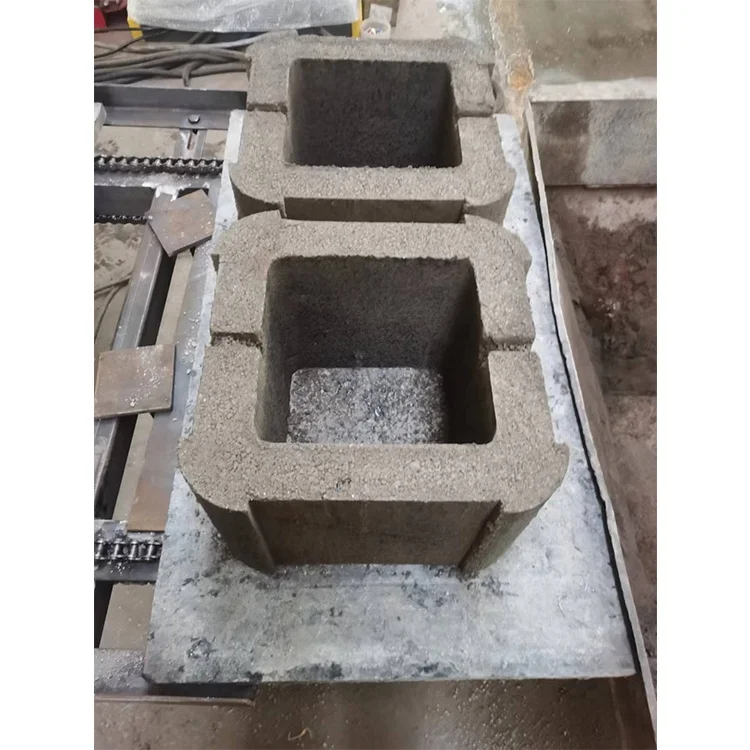
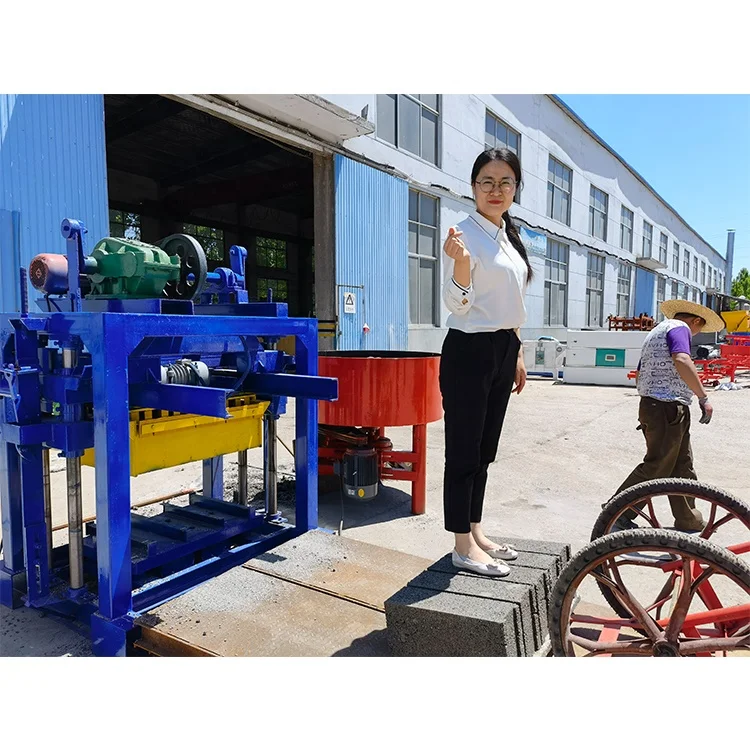
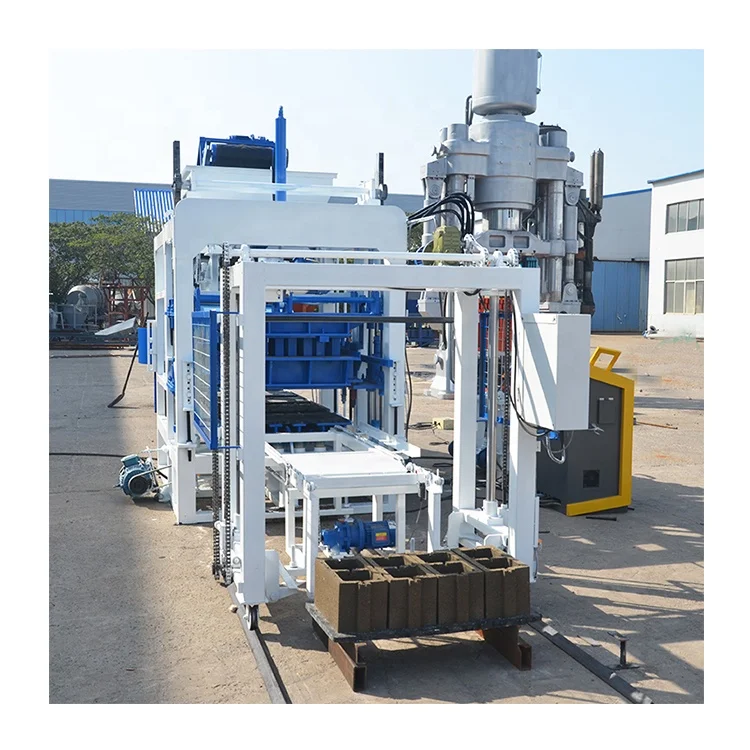
Matched System Configuration — The QT12-15 anchors the top tier of our fully automatic block machine range, specified as one integrated press, mould, pallet and handling package rather than a collection of separate components.
Technical Specifications
| Parameter |
Value |
| Model |
QT12-15 |
| Product Type |
Fully Automatic Hydraulic Block Making Machine |
| Total Power |
62 kW |
| Pallet Size |
1300 × 900 mm |
| Moulding Cycle |
15–30 seconds (basis not stated in source — confirm block format / material / thickness) |
| Vibration Type |
Table vibration (dynamic and static table with frequency conversion) |
| Vibration Acceleration |
20g |
| Vibration Force |
120 KN (source value — verify against manufacturer catalog) |
| Voltage |
Customized to buyer’s local industrial voltage and frequency |
| Control System |
PLC with configurable display language |
| Automation Level |
Fully automatic |
| Mould Configuration |
Customized to buyer’s block format |
| CE Declaration |
Available where applicable |
Application Suitability
| Application |
Material or Output |
| Hollow block production |
Crushed stone, cement, flyash aggregate blends |
| Solid block manufacturing |
Dense concrete mixes for load-bearing walls |
| Paving block and kerbstone |
High-strength concrete with fine aggregate |
| Flyash brick forming |
Flyash, sand, lime and cement blends |
| Interlocking and porous brick |
Graded aggregate with controlled water-cement ratio |
| Slope protection brick |
Heavy-duty concrete for civil engineering projects |
Why the Voltage Question Should Come Before the Price
A machine that cannot be powered on arrival is not a production asset — it is a crate of steel sitting on your factory floor.
I was stationed at our Southeast Asia office overseeing QT12-15 order fulfilment when a fully automatic block machine manufacturer shipped a line to Indonesia without locking down the local voltage standard. The site ran a different industrial supply than we assumed. The line sat idle while a transformer and control panel modification were arranged — nearly three weeks of lost production on a project that had already committed to delivery schedules. Now every quotation we issue confirms voltage, frequency and PLC language before the machine enters production [NEED_CITE: voltage and frequency standards by export market]. When buyers compare options from a fully automatic block machine manufacturer, the specification conversation must start with the electrical environment at the destination site, not the cycle time on the brochure.

Where the QT12-15 Sits in the Output Tier Map
Our range spans mobile egg-laying machines for on-site work, semi-automatic presses for smaller plants, and the QT12-15 at the high-capacity end. Buyers surveying options for a first or replacement machine need to see the complete tier map before narrowing down. The QT12-15 suits operations targeting continuous high-volume output with pallet-based curing, where a fixed plant footprint and dedicated curing area are already planned or available.
Understanding the Full Range Before Committing
Choosing between tiers is not simply about picking the largest machine. A semi-automatic press may serve a startup plant better when capital is staged and volume will grow. The QT12-15 is the right call when daily output targets, local block demand and site conditions justify the investment in full automation. Every tier in our range shares common pallet dimensions and mould mounting standards within its class, so a buyer who starts semi-automatic can transition upward without scrapping earlier equipment [NEED_CITE: block plant capacity planning and phased investment].
Reading the Specifications That Actually Matter
The QT12-15 uses table vibration combining dynamic and static elements with frequency conversion control, reaching 20g acceleration to compact material rapidly within the mould cavity. This matters because vibration force and hydraulic pressure must work together — vibration settles the mix while pressure locks it into final density. The 1300 × 900 mm pallet size defines your curing rack layout and the forklift capacity you will need on the floor. A moulding cycle of 15–30 seconds is quoted across formats, but the actual figure depends entirely on which block you are pressing, its thickness and the aggregate blend feeding the hopper. The 62 kW total power draw tells your electrical contractor what dedicated supply and breaker rating the press circuit requires before the machine leaves our factory.
What Happens When Configuration Is Skipped
A buyer who orders on cycle time alone, without confirming block format, pallet size and local aggregate, receives a machine that may produce well in the factory test but underperforms on their own floor. Pallet handling left out of the quotation means output stacks by hand at the end of the line, cancelling the automation the press itself delivers. Voltage and control language unconfirmed before shipment means the first week on site is spent waiting for electricians and translators instead of training operators [NEED_CITE: common commissioning delays in exported industrial machinery].
Why Procure This Range Here
Block machinery is our single focus, so the QT12-15 press, its moulds, pallets and handling equipment are specified as one matched system from the start. Configuration is set against your actual mix design and local aggregate, not a catalogue default. Mould design covers the formats your market sells, with custom drawings accepted. Automation level is selectable within the range, letting a buyer begin semi-automatic and move upward as volume justifies it. Installation and commissioning support includes operator training on the specific controls and mould change procedures of your machine.
Documentation & Verification
- Line layout with capacity calculation stating the block format assumed for each cycle time
- Machine specification sheet covering QT12-15 power, pallet size and vibration ratings
- Mould drawing and format list supplied with quotation before commitment
- Voltage and PLC control language confirmation recorded before production begins
- Factory test record and packing photographs provided before shipment
Installation, Commissioning & Support
- Foundation plan matching QT12-15 overall dimensions and vibration load requirements
- Dedicated electrical circuit sized for the 62 kW total power draw at confirmed voltage
- Machine dismantled for container loading with reassembly sequence documented
- PLC language and control parameters verified on site during first-power commissioning
- Operator training covering mould change, pallet feed and daily maintenance routines
- Wear parts and mould replacement list provided with lead times for reordering
Starting the Specification Conversation
To position the QT12-15 correctly within the full range, share your target block formats and the daily output you need for each. Tell us your local aggregate sources, the industrial voltage and frequency at your site, and the PLC display language your operators require. If you already have curing racks and forklifts in place, send their specifications so pallet size can be matched from the start.
Frequently Asked Questions
Q: How is the QT12-15 capacity calculated and for which block format?
A: Capacity figures are stated per block format, not as a single blanket number. The moulding cycle varies between 15 and 30 seconds depending on block type, thickness and material blend. We provide a line layout showing the assumed format for each cycle time figure before you commit, so daily output expectations are grounded in your actual product mix.
Q: Where does the QT12-15 sit compared to semi-automatic and mobile tiers?
A: The QT12-15 anchors the high-capacity automatic end of our range. Semi-automatic models serve smaller plants with lower initial investment. Mobile egg-laying machines handle on-site production without a fixed plant. Each tier shares design principles within its class, and buyers can start at one tier and scale upward as volume grows.
Q: What pallet size does this model require and is it matched to my setup?
A: The QT12-15 runs on 1300 × 900 mm pallets. We confirm pallet material and dimensions against your existing curing area and forklift capacity before production. Mismatched pallets cause bottlenecks at the curing stage, so this specification is locked in during the quotation phase, not left to assumption.
Q: Can I start semi-automatic and upgrade to full automation later?
A: Yes. Our range allows a buyer to begin with semi-automatic pallet handling and add automatic stacking or cubing as production volume justifies the investment. The press platform and mould mounting remain compatible through the upgrade path, protecting your initial equipment purchase.
Q: Which block formats and moulds are included, and can I add custom designs?
A: Standard moulds cover hollow blocks, solid blocks, pavers, flyash bricks, interlocking bricks, porous bricks and slope protection bricks. Custom moulds built to your drawings are available. The format list and mould drawings are supplied with the quotation so you see exactly what each mould produces before ordering.

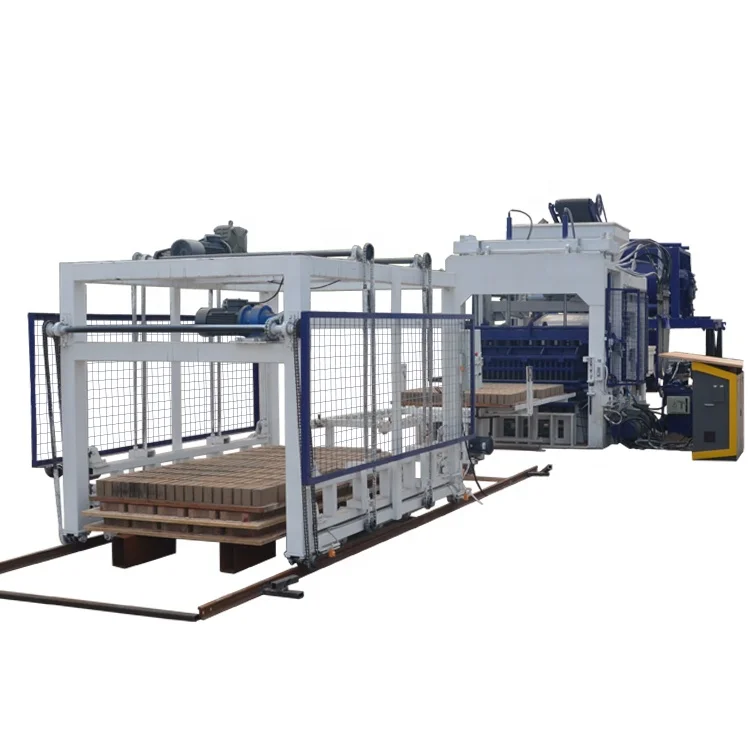
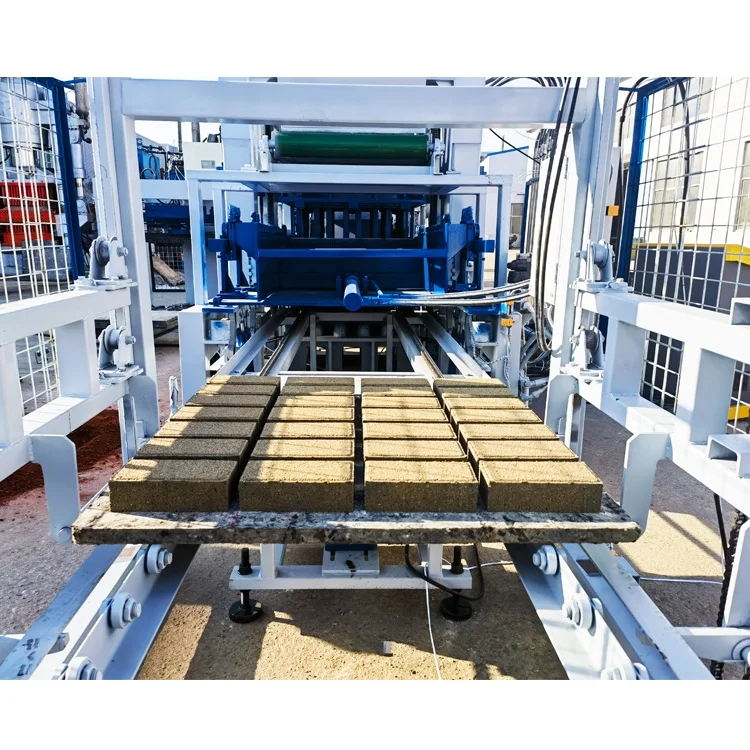 High quality block machine