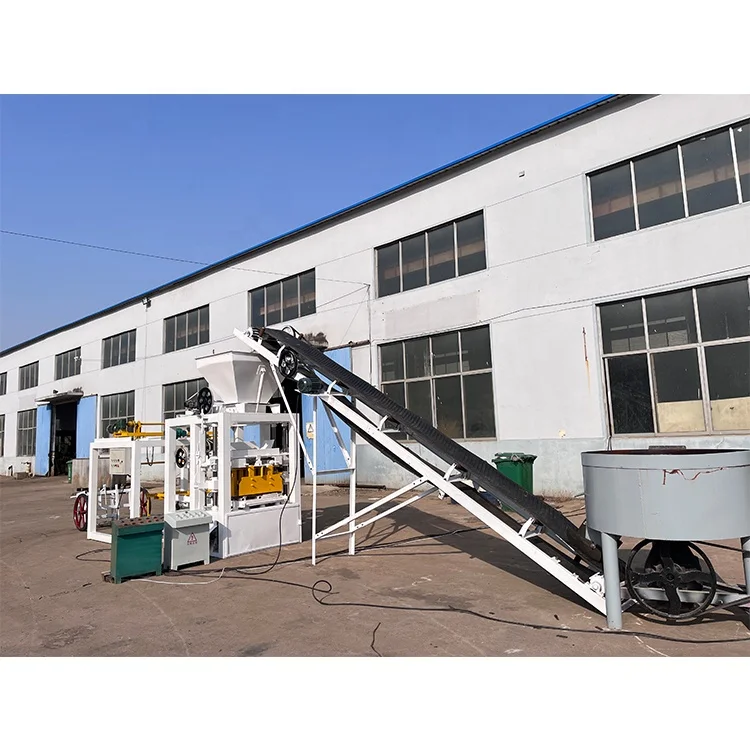
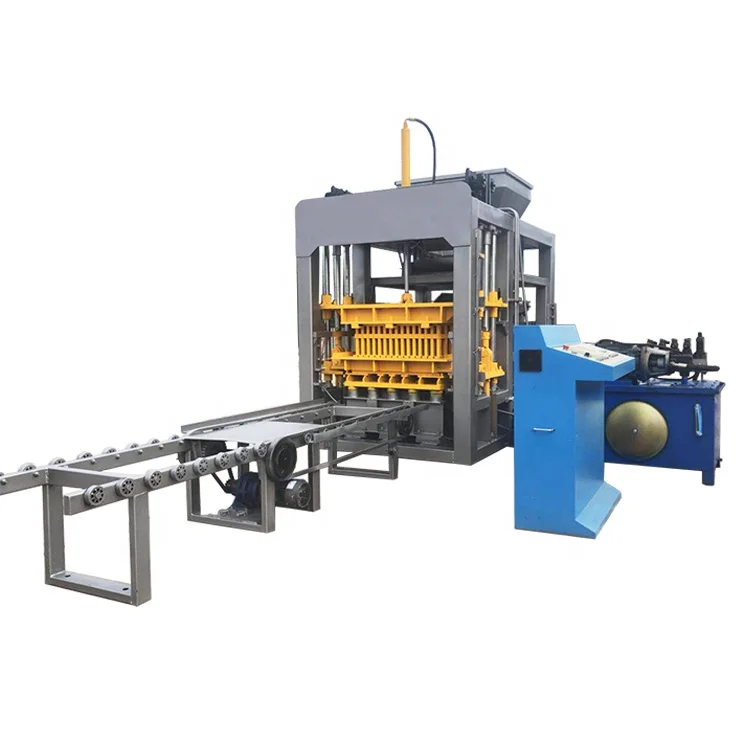
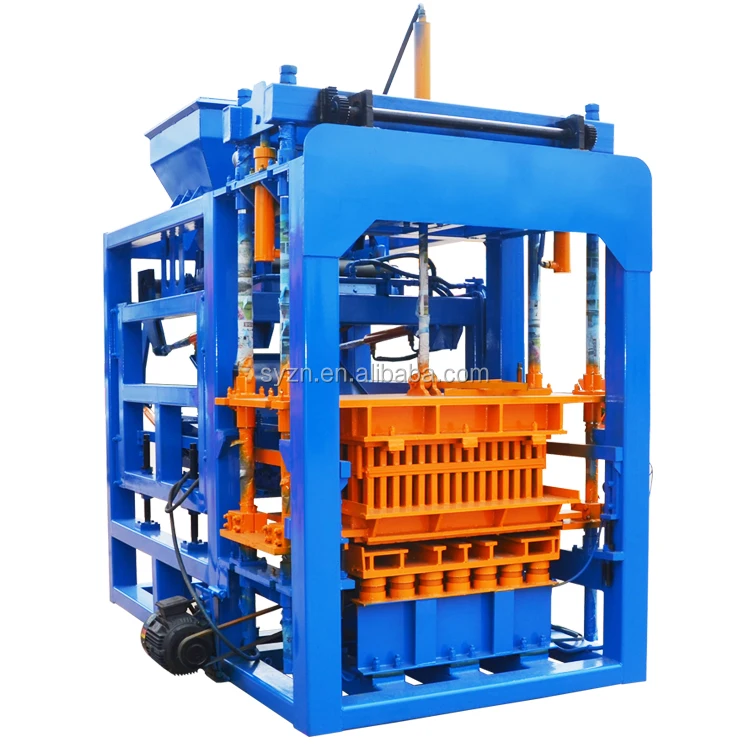
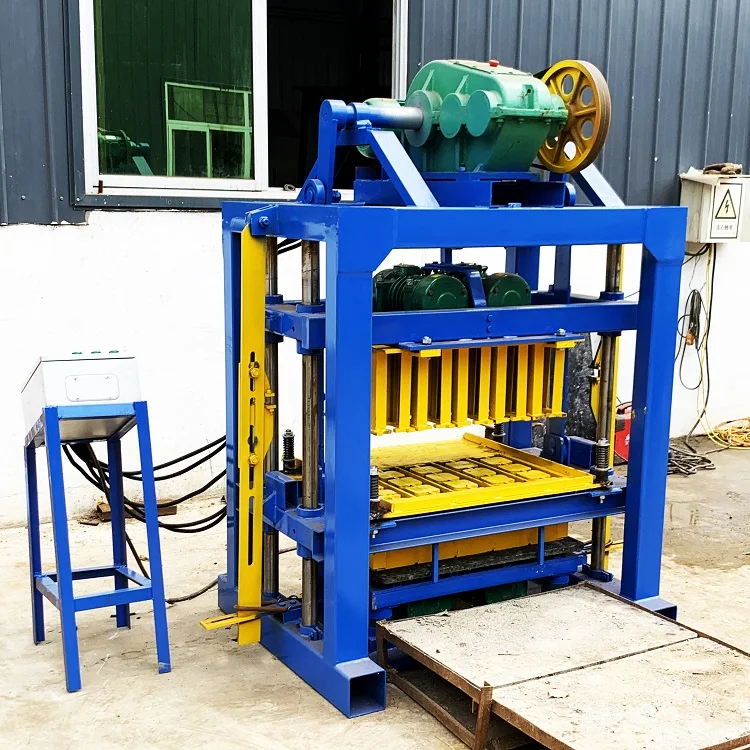
Configured Against Your Mix — the QT4-20 output capacity is calculated per block format and cycle time, not a single headline figure copied from a catalogue.
Technical Specifications
| Parameter |
Value |
| Model |
QT4-20 |
| Product Type |
Stationary Hydraulic Block Making Machine |
| Overall Dimensions (L×W×H) |
7100×1600×2610 mm |
| Rated Pressure |
16–21 MPa |
| Main Vibration Form |
Platform Vibration |
| Vibration Frequency |
4600 r/min |
| Vibration Force |
40 kN |
| Pallet Size |
1020×570 mm |
| Molding Area |
400×800 mm |
| Molding Cycle |
15–25 s |
| Overall Power |
27.5 kW |
| Total Mass |
5 T |
| Demolding Method |
Hydraulic |
| Factory Area Required |
500 m² |
| Output Capacity (Hollow Brick) |
7,200–9,600 pcs/day based on 400×200×200 mm, 4 pcs/mold, 15–20 s cycle (basis not stated in source for shift length) |
| Output Capacity (Porous Brick) |
20,200–26,800 pcs/day based on 240×115×90 mm, 14 pcs/mold, 15–20 s cycle (basis not stated in source for shift length) |
| Output Capacity (Standard Brick) |
47,400–53,700 pcs/day based on 240×115×53 mm, 28 pcs/mold, 15–17 s cycle (basis not stated in source for shift length) |
| Control System |
PLC Control (basis not stated in source — confirm brand / language options) |
| Voltage & Frequency |
Basis not stated in source — confirm voltage / frequency |
| Applied Products |
Concrete blocks, hollow/solid blocks, pavers |
| Raw Materials |
Crushed stone, sand, cement, dust, fly ash, gravel, slag |
| Warranty |
One year for the whole machine |
| Standards |
CE (implied — verify against certificate) |
Application Suitability
| Application |
Material or Output |
| Hollow block production for building walls |
Crushed stone, sand, cement, fly ash, slag |
| Standard solid brick manufacturing |
Cement, sand, gravel, stone dust |
| Porous brick production for lightweight masonry |
Cement, fly ash, lightweight aggregates |
| Paving brick and paver manufacturing |
Crushed stone, sand, cement, pigment additives |
| On-site block production for housing projects |
Locally sourced aggregate and cement blends |
What the Capacity Number Hides When Format Is Left Out
Every output figure here names the block format, the pieces per mold, and the cycle time behind it.
Buyers often receive a quotation stating a single daily capacity for a stationary block machine manufacturer without specifying which block format that number assumes. The result is a machine that runs at a fraction of the quoted output once the buyer switches to the format their market actually demands. I have watched contractors sign for what they believed was a high-capacity line, only to discover the number was based on a small solid brick they never intended to sell [NEED_CITE: block format and cycle time assumptions in capacity quotations]. The QT4-20 range addresses this by stating output separately for hollow brick, porous brick, and standard brick — each tied to its own molding cycle.

Where the QT4-20 Sits Across the Full Machine Range
The QT4-20 occupies the mid-tier of our stationary block machine range. Below it, smaller semi-automatic models serve workshop-scale plants with lower capital outlay. Above it, high-capacity automatic lines handle continuous multi-shift operations with full stacking and cubing. This tier bridges the gap for a stationary block machine manufacturer buyer who has outgrown manual pallet handling but is not yet ready for a fully automatic cubing system. The 500 m² factory area requirement keeps the footprint manageable for a first dedicated block plant.
Choosing the Right Tier Before the Line Is Built
Placing yourself on the range early prevents two common mistakes. The first is over-investing in automation that the site layout and curing area cannot support. The second is under-specifying the press, then trying to add pallet feeders and stackers later when space has already been committed [NEED_CITE: plant layout constraints after machine installation]. The QT4-20 tier allows a buyer to start with semi-automatic pallet handling and add automatic stacking as production volume justifies the investment, all within the same machine platform.
How Pressure and Vibration Shape Block Density
The rated pressure of 16–21 MPa and the 40 kN platform vibration at 4,600 r/min work together to compact the mix into a dense, consistent block. Hydraulic pressure alone would leave air voids in a dry mix; vibration alone would not consolidate a stiff aggregate blend. The combination determines whether a hollow block can survive transport without corner damage. The 1020×570 mm pallet size must also match the curing racks and forklifts already on site — a mismatch here means either replacing the curing area or accepting lower output per pallet cycle. The 15–25 s molding cycle varies with block height and mix stiffness, and the PLC-controlled sequence holds the cycle consistent across shifts.
The Cost of Skipping Format-Level Capacity Checks
When capacity is confirmed only against a single showcase format, the buyer’s actual product mix exposes the gap weeks after commissioning. Pallets pile up at the press exit because the handling system was never sized for the slower cycle of a taller hollow block. Mould changes take longer than expected because the format was never included in the original mould drawing set [NEED_CITE: mould change delays in multi-format block plants]. These issues do not show up in a catalogue comparison but surface quickly once production begins.
Why Buyers Source This Tier Through Us
Block machinery is our single focus, so the press, mould, pallet, and handling equipment are specified as one matched system rather than assembled from separate suppliers. Configuration is set against the buyer’s actual mix design and local aggregate, not a catalogue default. Mould design covers the formats the buyer’s market sells, including custom drawings. Automation level is selectable, allowing a semi-automatic start with a defined upgrade path. Installation support includes operator training on the specific formats in the mould list.
Documentation & Verification
- Line layout showing capacity per block format for the QT4-20 tier
- Machine specification sheet with voltage, frequency, and PLC language confirmed
- Mould drawing and format list covering quoted output figures
- Pallet specification matched to curing rack and forklift dimensions
- Factory test record documenting cycle times per format before shipment
- Hydraulic and electrical schematic for local maintenance teams
Installation, Commissioning & Support
- 500 m² factory area with level concrete foundation for the 7100 mm machine length
- Dedicated power circuit sized for 27.5 kW overall load before delivery
- Machine arrives dismantled; reassembly sequence documented in the manual
- PLC display language and voltage confirmed before production begins
- Operator training covers mould change procedure across all specified formats
- Wear parts list with hydraulic seals and vibration platform components identified
What to Share Before Requesting a Quote
To match the right tier from our stationary block machine range, we need to know your target block formats, daily output expectation per format, and the raw materials available locally. Confirming site voltage, frequency, and preferred PLC display language at this stage avoids commissioning delays. Share your existing curing area dimensions and forklift capacity so the pallet size can be aligned before the quotation is issued.
Frequently Asked Questions
Q: How is daily output calculated and which block format does each figure assume?
A: Each output figure for the QT4-20 states the block dimensions, pieces per mold, and cycle time. Hollow brick output is based on 400×200×200 mm blocks at 4 pcs/mold with a 15–20 s cycle. The shift length behind the daily total should be confirmed during quotation so the figure matches your actual working hours.
Q: Where does the QT4-20 sit compared to smaller and larger models in the range?
A: It is the mid-tier stationary option, above semi-automatic workshop machines and below high-capacity automatic lines. The 500 m² factory area requirement and 27.5 kW power draw place it between entry-level and full automatic tiers. Buyers can start here and add automation modules later without replacing the press.
Q: What plant footprint does this machine tier require?
A: The QT4-20 needs approximately 500 m² of factory area to accommodate the press, pallet return system, and initial stacking zone. This is larger than mobile or egg-laying units but smaller than high-capacity automatic lines that require extended curing rack conveyors and cubing stations.
Q: Can I start semi-automatic and add automation later?
A: Yes. The QT4-20 platform supports a semi-automatic configuration with manual pallet handling at the outset. Automatic pallet feeding, stacking, and cubing modules can be added to the same machine frame as production volume grows, keeping the original press investment intact.
Q: What voltage and control language options are available?
A: Voltage, frequency, and PLC display language are confirmed during the quotation stage to match your local power supply and operator requirements. Specifying these before production avoids rewiring and reprogramming delays during on-site commissioning [NEED_CITE: voltage and frequency standards by export market].

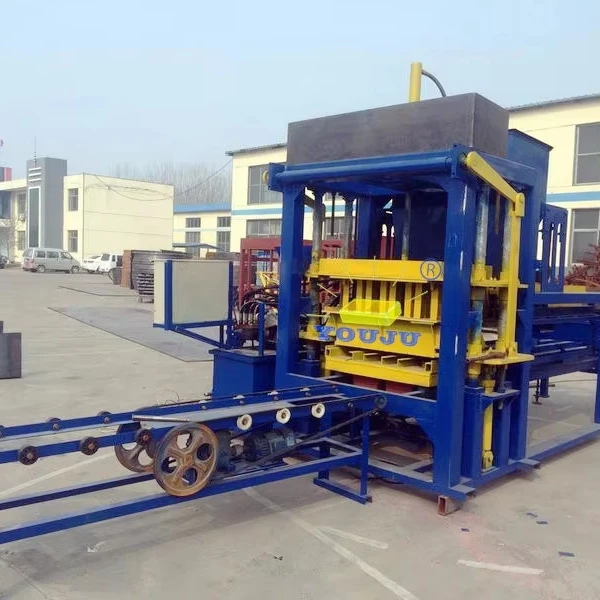
 Stationary block machine