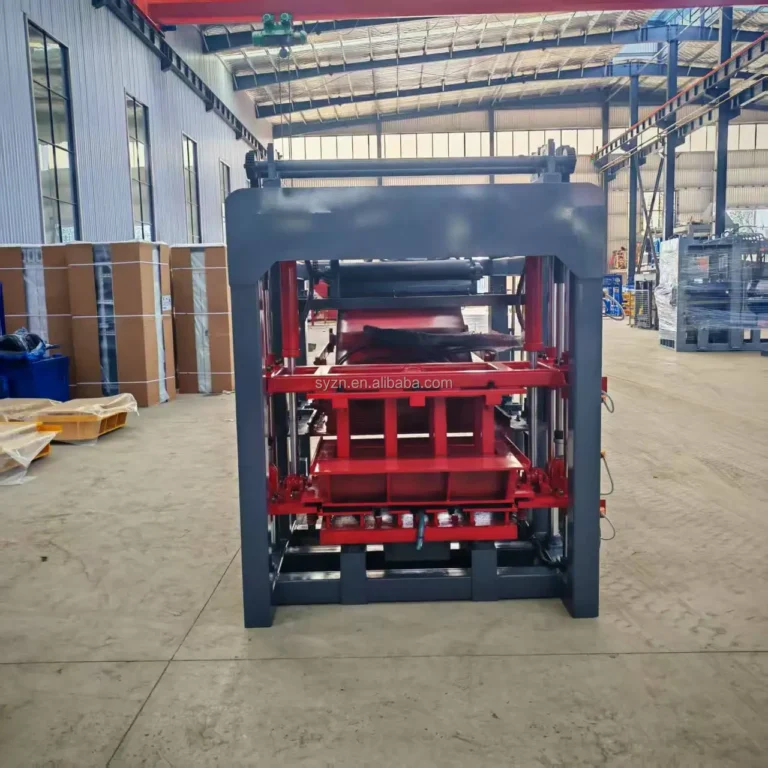
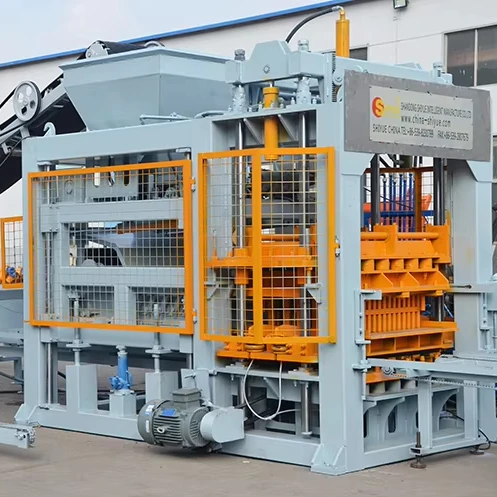
System-matched configuration — The QT6-15 block making machine manufacturer delivers a press, moulds, pallets, and handling equipment specified as one line against your local aggregate and target format, not assembled from separate suppliers.
Technical Specifications
| Parameter |
Value |
| Model |
QT6-15 |
| Product Type |
Fully Automatic Hydraulic Vibration Block Making Machine |
| Overall Dimensions (L×W×H) |
7400×1900×2660 mm |
| Total Weight |
7 T |
| Molding Cycle |
15–25 s |
| Vibration Frequency |
4600 r/min |
| Exciting Power (Vibration Force) |
40–50 kN |
| Total Power |
31.25 kW |
| Mixer Model |
JQ350 |
| Pallet Size |
850×550×25 mm |
| Control System |
PLC control system |
| Hydraulic Station |
Included |
| Included Auxiliary Equipment |
Pallet feeder, brick conveyor, block sweeper, manual hydraulic trolley |
| Applied Products |
Paver, solid block, hollow block, curbstone |
| Raw Materials |
Crushed stone, sand, cement, dust, fly ash |
| Output (400×200×200 mm hollow block) |
9600–13440 pcs/8 hr (basis: 15–20 s cycle) |
| Output (400×150×200 mm hollow block) |
14400–19200 pcs/8 hr (basis: 15–20 s cycle) |
| Output (240×115×53 mm solid brick) |
16200–19440 pcs/8 hr (basis: 15–20 s cycle) |
| Voltage & Frequency |
(basis not stated in source — confirm before production) |
| Automation Level |
Fully automatic with integrated handling |
Application Suitability
| Application |
Material or Output |
| Hollow block production for load-bearing walls |
Crushed stone, sand, and cement mix, 400×200×200 mm or 400×150×200 mm format |
| Solid brick manufacturing for masonry |
Cement and fly ash blend, 240×115×53 mm format |
| Paving block production for walkways and yards |
Aggregate-rich mix for surface durability |
| Curbstone forming for road edges |
High-density concrete with coarse aggregate |
| On-site production for housing projects |
Local sand and stone with portable cement supply |
What "9600 Blocks per Day" Leaves Out When Sizing a QT6-15 Block Making Machine Manufacturer
Capacity numbers only matter when tied to the exact block format you sell.
Many quotations list an impressive hourly figure without revealing it was measured on a small solid brick, leaving buyers shocked when actual hollow block output falls to a fraction of that number. I have watched project timelines slip because the daily target was set against a catalogue headline, not the 400×200×200 mm hollow block the buyer’s market actually demands [NEED_CITE: honest capacity quotation standards in block machinery trade]. The QT6-15 output figures above are each tied to a specific format and cycle time, so your production plan starts from reality.

Where the QT6-15 Sits in the Full Machine Range
The SHIYUE range spans mobile egg-laying machines for on-site work, semi-automatic presses for first-time plant owners, and high-capacity automatic lines for established producers. The QT6-15 block making machine manufacturer occupies the mid-tier automatic position, offering PLC-controlled operation with integrated pallet feeding and block conveying for buyers who have outgrown manual pallet handling but do not yet need the footprint and investment of a high-output line.
Understanding the Plant Footprint Before You Commit
At 7400×1900×2660 mm for the press alone, the QT6-15 requires a dedicated bay with room for the JQ350 mixer upstream and the curing area downstream. Buyers moving from a semi-automatic setup often underestimate the floor space needed for the 850×550 mm pallets in the curing zone — the pallet specification must align with your existing forklift dimensions and rack layout [NEED_CITE: block plant layout planning guidelines for curing area and pallet circulation]. This machine tier suits a medium workshop rather than an open-yard operation.
How Hydraulic Pressure and Vibration Force Shape Block Density
The 40–50 kN vibration force at 4600 r/min works in tandem with the hydraulic station to compact the concrete mix during the 15–25 second molding cycle. Vibration alone settles the aggregate, while hydraulic pressure locks it into the mould cavity — if either force is mismatched to your local sand gradation or cement ratio, block strength becomes inconsistent across batches. The pallet size of 850×550×25 mm is chosen to match the press table area and the weight of a fully compacted hollow block load, ensuring the pallet does not deflect under vibration and cause uneven block height.
The Hidden Cost of Skipping Voltage Confirmation
Shipping a machine with a 380V/50Hz electrical cabinet to a site running 440V/60Hz means the motor runs overspeed, the PLC faults, and the hydraulic pump overheats — I have seen this exact scenario halt a West African project for weeks while a transformer was air-freighted in [NEED_CITE: industrial voltage and frequency standards by region]. The QT6-15 voltage and frequency must be confirmed against your site supply before the electrical cabinet is built, and the PLC display language must match your operators. This confirmation costs nothing at order stage but prevents costly delays at commissioning.
Why Source the QT6-15 Block Making Machine Manufacturer Here
Block machinery is our single focus, so the press, mould, pallet, and handling equipment are specified as one matched system rather than sourced separately. The configuration is set against your actual mix design and local aggregate, not a catalogue default. Mould design covers every format your market sells, including custom drawings you provide. Automation level is selectable, so you can begin with the included pallet feeder and conveyor, then add stacking later. Installation support includes operator training on your specific block formats.
Documentation & Verification
- Line layout and capacity calculation stating the block format assumed for each output figure
- Machine specification sheet with voltage, frequency, and PLC language confirmed before production
- Mould drawing and format list for every block type included in your order
- Hydraulic and electrical schematic matching the as-built configuration
- Factory test record and packing photographs before container loading
Installation, Commissioning & Support
- Foundation must support 7 T machine weight plus dynamic vibration loads across the 7400 mm frame length
- Dedicated power circuit required for 31.25 kW total draw, with voltage and frequency matching confirmed pre-production
- Pallet feeder and brick conveyor arrive as separate assemblies, requiring alignment to the press cycle during commissioning
- PLC control system parameters set on-site against your mix design and target block density
- Operator training covers mould change procedure and daily maintenance of the hydraulic station
- Wear parts list provided with recommended stock levels for the first year of operation
What We Need to Quote Accurately
Share the block formats you plan to produce, your target daily output per format, and the local raw materials available — including sand type and aggregate size. Confirm your site voltage, frequency, and preferred PLC display language so the electrical cabinet is built correctly the first time. Let us know your existing curing area dimensions and forklift capacity so the pallet specification integrates with your layout.
Frequently Asked Questions
Q: How is the QT6-15 output capacity calculated for each block format?
A: Each output figure is based on the molding cycle time for that specific format. The 400×200×200 mm hollow block runs a 15–20 second cycle, yielding 9600–13440 pieces over an eight-hour shift. Smaller formats like the 240×115×53 mm solid brick complete more pieces per cycle, producing higher shift totals against the same cycle window.
Q: Where does the QT6-15 sit between semi-automatic and high-capacity lines?
A: It is the mid-tier automatic option in the SHIYUE range. Buyers upgrading from semi-automatic gain PLC control, integrated pallet feeding, and block conveying without the larger footprint and higher investment of a full-capacity automatic line. It suits medium workshops with steady daily demand across multiple block formats.
Q: What electrical details are confirmed before the QT6-15 enters production?
A: Voltage, frequency, and PLC display language are written into the order confirmation before the electrical cabinet is assembled. This prevents the situation where a machine arrives wired for a different supply standard than the buyer’s site, which would otherwise cause commissioning delays and require transformer procurement on arrival.
Q: How does the 850×550 mm pallet size affect curing area planning?
A: The pallet dimensions determine how many blocks fit per rack tier and how the pallets stack in the curing zone. Your forklift must handle the loaded pallet weight, and rack spacing must accommodate the 25 mm pallet thickness plus block height. Confirming these details early ensures the curing layout matches the press output rate.
Q: Which moulds are included, and how does format change affect daily planning?
A: The QT6-15 accepts moulds for hollow block, solid brick, paver, and curbstone formats, with custom mould design available to your drawings. Mould change time must be factored into your shift plan — if you run multiple formats daily, the changeover window reduces available production time and should be reflected in your output target.

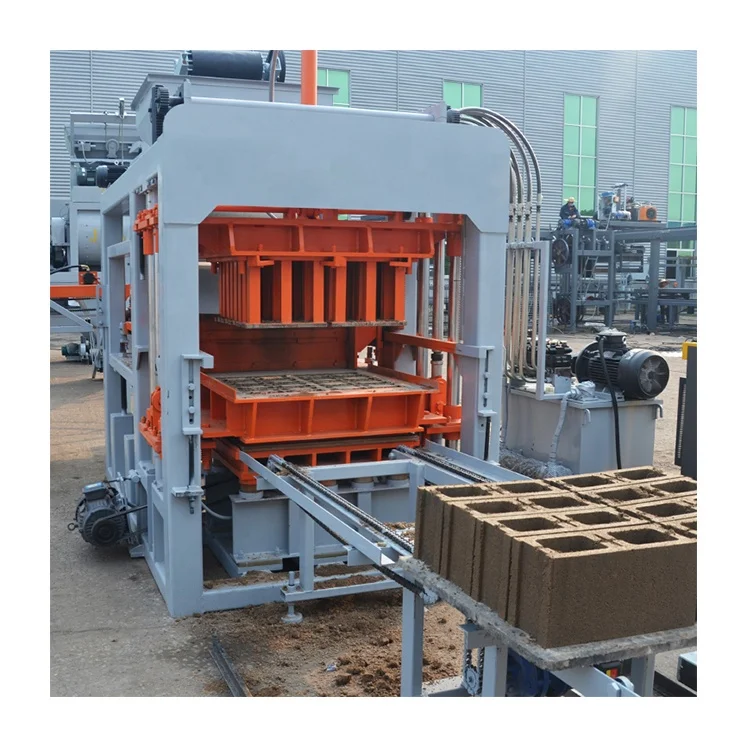
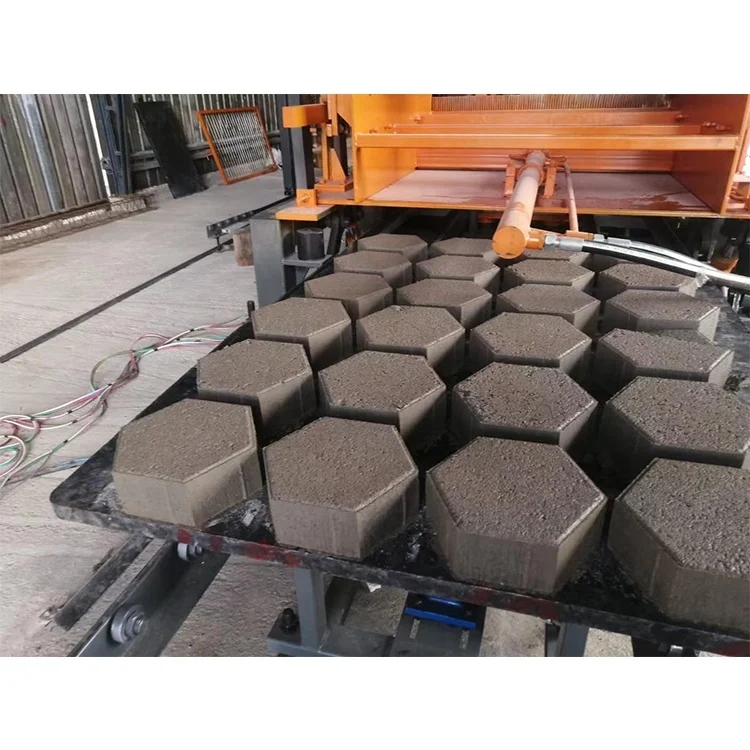 High quality block machine
![QTJ4-35 Block Making Machine for Hollow Block – Manufacturer 记录ID 80035 数字之和:8+0+0+3+5=16 第一层:shiyueblockmachine.com → FULL MACHINE RANGE → 全品类目录类角色 → Manufacturer / Factory Supply / Full Range 第三层:16 % 3 = 1 → Factory Supply 第二层:16 % 6 = 4 → [品类词] with [核心配置] – [站点修饰词] Block Making Machine with Belt Conveyor – Factory Supply](https://shiyueblockmachine.com/wp-content/uploads/2026/04/H226555bf51f44687a8dd9cee247a6ab2c.webp)