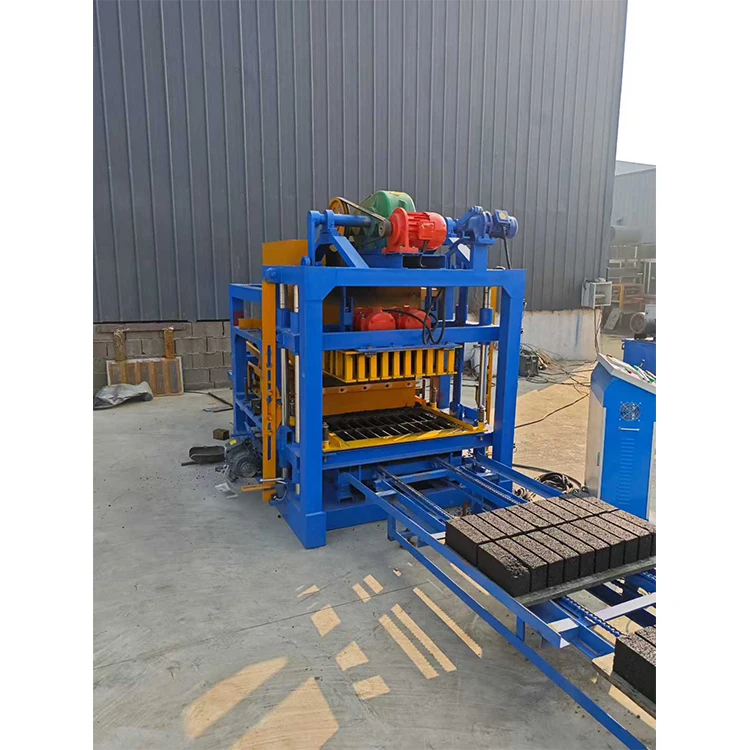
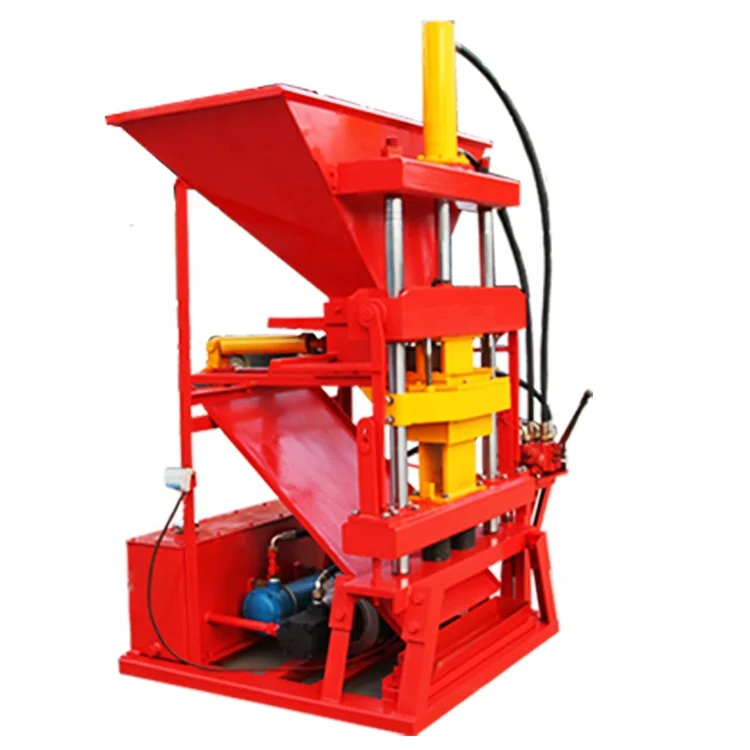
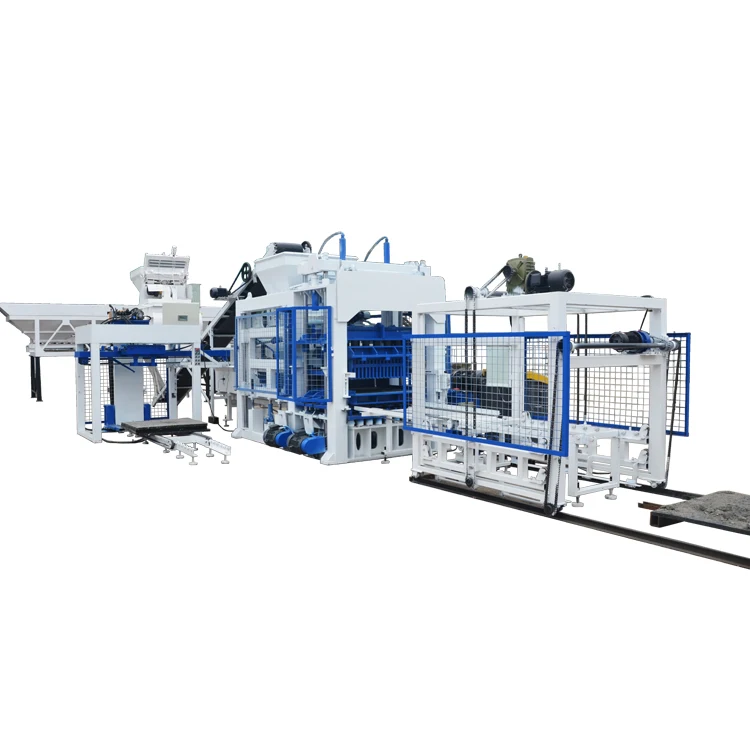
Scalable Configuration — the QT6-15 automatic block machine for sale can be specified from a simple mixer-and-stacker setup to a fully automatic line with batching and cubing, letting you match investment to output tier.
Technical Specifications
| Parameter |
Value |
| Model |
QT6-15 |
| Product Type |
Automatic Concrete Block Making Machine |
| Molding Method |
Vibration and hydraulic pressing |
| Rated Pressure |
21 MPa |
| Molding Cycle |
15s–20s (basis not stated in source) |
| Pallet Size |
900×700 mm |
| Main Machine Weight |
6000 kg |
| Automation Level |
Simple line or full automatic line available |
| Motor Voltage |
Customizable to local voltage |
| Output (400×200×200 mm Hollow Block) |
1440 pcs/h, 11520 pcs/8h (source value — verify) |
| Output (200×100×60 mm Paving Brick) |
5040 pcs/h, 40320 pcs/8h (source value — verify) |
| Output (240×115×53 mm Solid Brick) |
7680 pcs/h, 61440 pcs/8h (source value — verify) |
| Mould Formats |
Hollow block, paving brick, solid brick |
| Raw Materials |
Cement, sand, fly ash, stone powder, slag |
| Warranty |
1 year (excluding wearing parts) |
Application Suitability
| Application |
Material or Output |
| Hollow block production for building walls |
Cement, sand, stone powder, slag |
| Paving brick production for sidewalks |
Cement, sand, fly ash, stone powder |
| Solid brick production for load-bearing structures |
Cement, sand, stone powder |
| On-site block production for contractors |
Local aggregate with cement binder |
Why "Pieces per Hour" Rarely Tells the Full Story
Real daily output depends on the block format you actually run, the raw material you source, and the curing time your climate allows.
Many automatic block machine for sale listings quote a peak hourly figure based on a thin solid brick, then buyers discover their primary product — a thick hollow block — runs at a fraction of that rate. I once configured a mid-tier press for an African client who expected steady output based on a sample run, but the local stone powder carried high clay content that slowed the vibration cycle significantly. Daily production dropped sharply until we re-tuned the vibration and pressure parameters to match that specific material [NEED_CITE: effect of aggregate clay content on block press cycle time].

Where the QT6-15 Sits in the Output Range
The QT6-15 occupies the mid-tier of our automatic block machine range. Below it, smaller semi-automatic models serve workshops that produce a few thousand blocks per day with manual pallet handling. Above it, larger automatic presses with bigger pallet sizes and higher vibration force target plants running multiple shifts. This model gives buyers entering commercial production a press that handles standard formats without over-investing in capacity they will not use on day one.
Scalability Across the Production Line
A buyer can start with the QT6-15 as a simple line — mixer feeding a conveyor belt, with a basic stacker handling finished pallets — and later add a cement silo, screw conveyor, cement scale, batching machine, pallet loader, and block-and-pallet separator. The press itself stays the same; the surrounding stations grow. This path suits entrepreneurs who want to begin production quickly and automate handling as order volume justifies the investment [NEED_CITE: typical automation upgrade path for block production plants].
How Rated Pressure and Vibration Work Together
The 21 MPa rated pressure and vibration system must both be matched to the mix design. Pressure alone compresses the material, but vibration settles fine particles into voids before pressure locks them in place. If vibration force is too low for a coarse aggregate, blocks emerge with weak spots. If pressure is too low for a fine sand mix, blocks lack surface density. The QT6-15’s hydraulic and vibration specifications need to be confirmed against your local material before the machine enters production.
The Cost of Skipping Configuration Details
When voltage and frequency are assumed rather than confirmed, a machine can arrive at site and fail to start — motors overheat on wrong frequency, PLC displays show errors in an unreadable language. Pallet size is another frequent gap: a 900×700 mm pallet must match the curing racks and forklifts already at your yard, or you face unexpected material handling costs. These are not engineering failures but communication failures, and they delay commissioning by weeks [NEED_CITE: common commissioning delays in exported block machinery].
Why Buyers Choose This Range
Block machinery is our single focus, which means the QT6-15 is specified as one system — press, mould, pallet, and handling — rather than assembled from separate suppliers. Configuration is set against your actual mix design and target format, not a catalogue default. We supply mould drawings and format lists with the quotation so you can verify output before committing. Moulds for custom block shapes are designed to buyer drawings when local markets demand formats outside the standard range.
Documentation & Verification
- Line layout showing capacity per block format for the QT6-15
- Machine specification sheet with hydraulic pressure and vibration ratings
- Mould drawing and format list included with quotation
- Voltage, frequency, and PLC language confirmation document
- Factory test record on your target block format before dispatch
- Packing photographs and customs documentation support
Installation, Commissioning & Support
- Foundation plan matched to the QT6-15’s 6000 kg weight and vibration load
- Electrical panel rated for confirmed local voltage and frequency
- Top cylinder removed for container loading, reassembled on site
- Vibration and pressure parameters tuned to your local aggregate during commissioning
- Operator training covering mould change and daily maintenance routines
- Wear parts list with reorder intervals for hydraulic seals and vibration components
What to Include in Your Inquiry
To match the QT6-15 and its line configuration to your operation, share the block formats you plan to produce, your target daily output per format, the raw materials available locally with any known characteristics, and your site’s voltage and frequency. Also let us know the curing area dimensions and whether you already have pallets, forklifts, or upstream equipment that the new line must connect to.
Frequently Asked Questions
Q: How is the QT6-15’s output capacity calculated for each block format?
A: Output figures are based on a specific block size, mould cavity count, and an assumed cycle time. Hollow blocks at 400×200×200 mm yield fewer pieces per pallet than thin solid bricks, so the hourly and daily totals differ substantially. We state capacity per format so your projection matches the product you actually sell.
Q: Where does the QT6-15 fit compared to smaller and larger models?
A: It sits in the mid-tier of our automatic block machine range. Smaller semi-automatic models suit lower daily volumes with simpler line configurations. Larger models offer bigger pallets and higher vibration force for multi-shift plants. The QT6-15 balances output and investment for buyers entering commercial production.
Q: Can I start with a basic line and add automation later?
A: Yes. The QT6-15 can begin as a simple line with a mixer, conveyor, and stacker. Later, you can add a cement silo, batching machine, pallet loader, and block-and-pallet separator without replacing the press itself.
Q: What voltage and frequency options are available?
A: The motor voltage is customizable to your local supply. You must confirm the exact voltage, frequency, and preferred PLC display language before production begins so the electrical system matches your site conditions on arrival.
Q: What plant footprint does a QT6-15 line require?
A: Footprint varies with automation level. A simple line with mixer, conveyor, and stacker needs a compact area around the press. A full line with silo, batching, pallet loader, and separator requires additional space for each station and material flow paths between them.

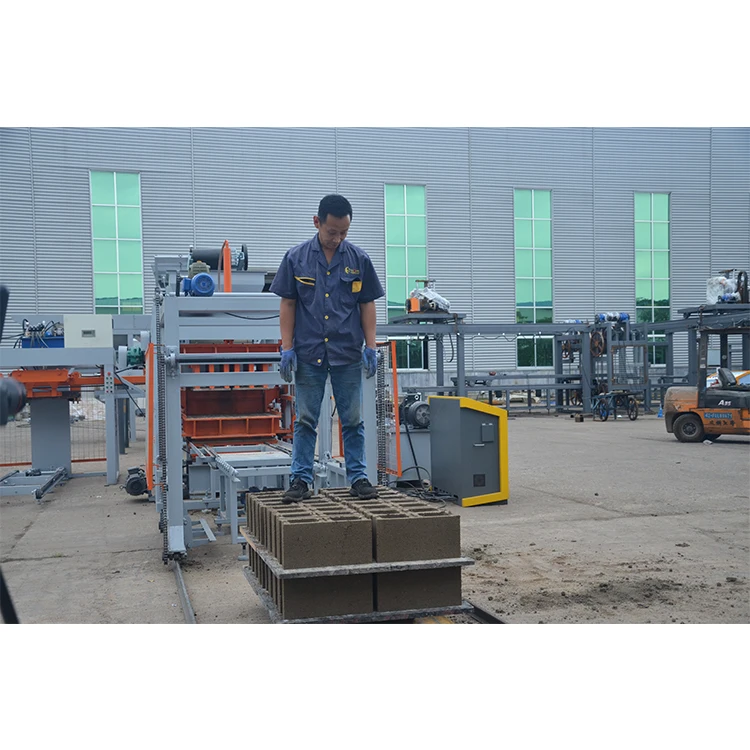
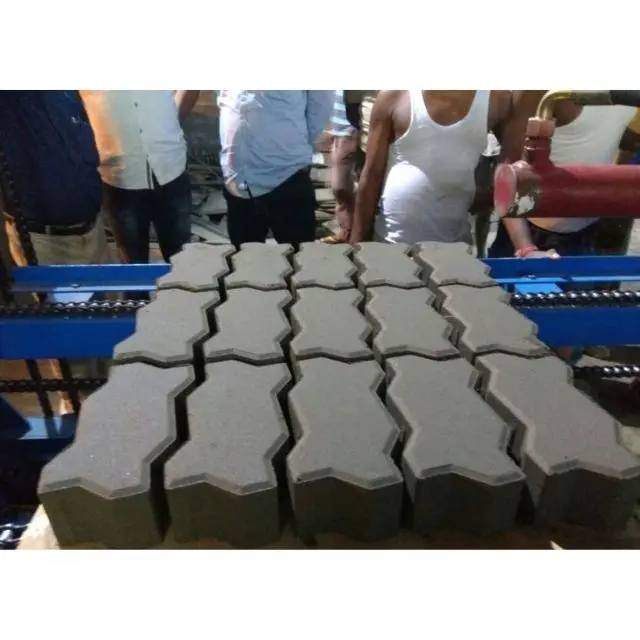 Automatic block machine