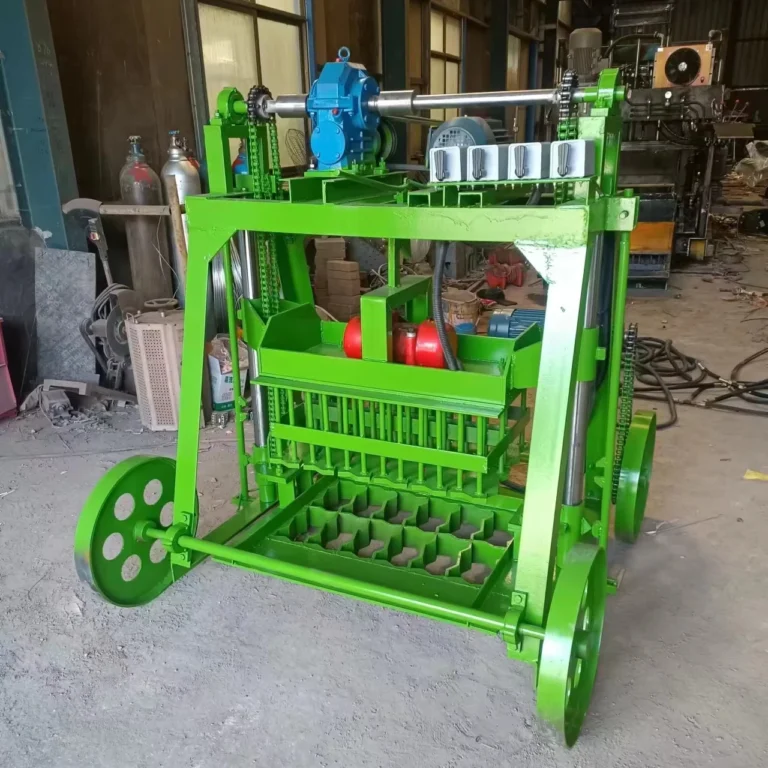
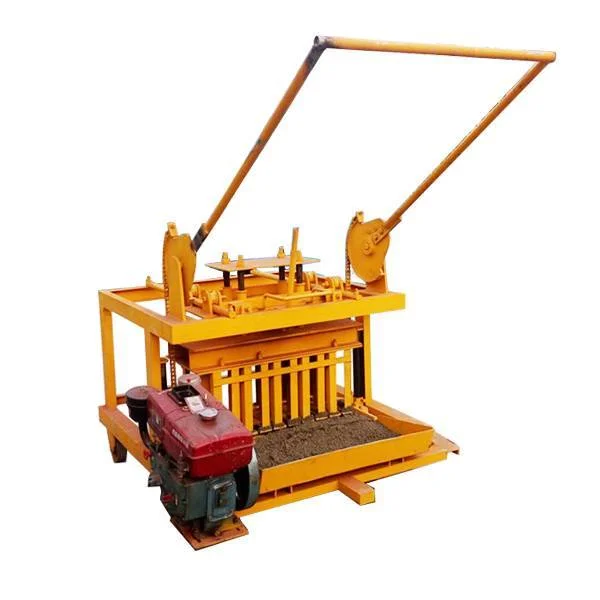
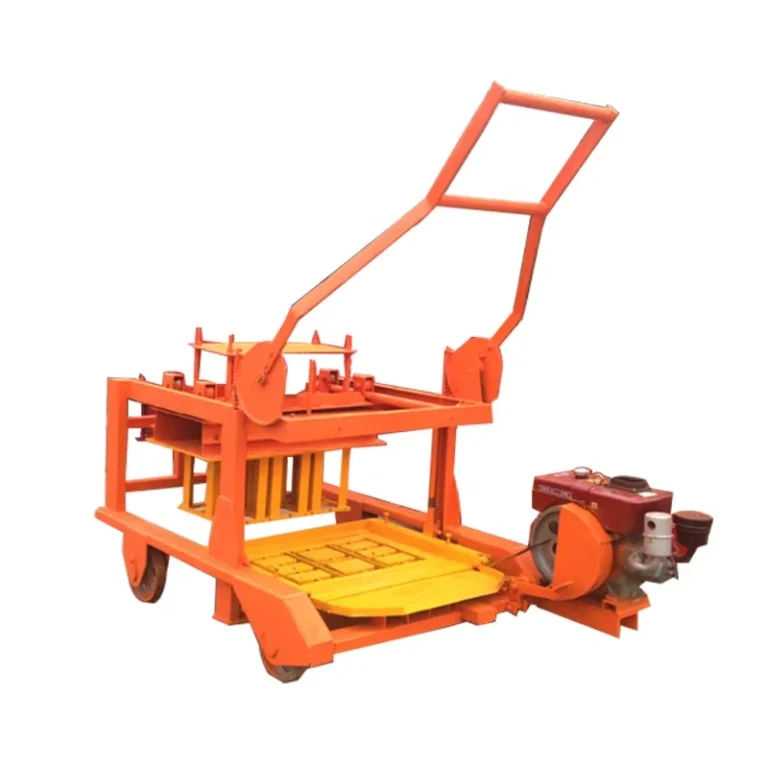
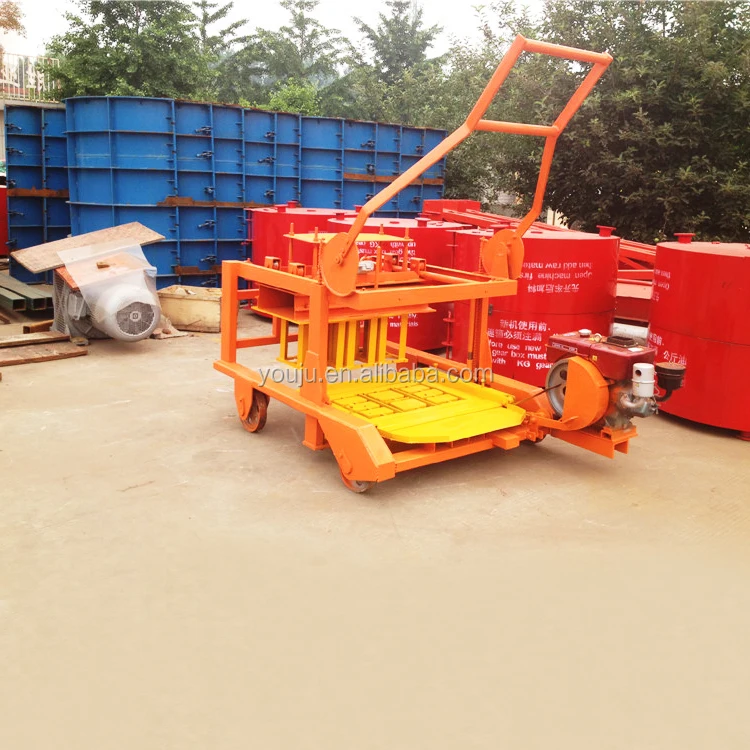
Matched System Design — the QMJ4-45 mobile block machine manufacturer supplies the press, moulds and power unit as one verified package rather than a collection of unmatched parts.
Technical Specifications
| Parameter |
Value |
| Model |
QMJ4-45 |
| Product Type |
Egg Laying Block Making Machine |
| Molding Capacity |
4pcs/mold (basis not stated in source — confirm block format / material / thickness) |
| Vibration Frequency |
2400 r/min |
| Daily Productivity |
2600–4000 pcs/day (basis not stated in source — confirm block format / material / thickness) |
| Molding Cycle |
45 s |
| Vibration Type |
Twice-vibrations of molding core |
| Demold Method |
Manual |
| Turning Method |
Manual |
| Total Power |
6 kW |
| Power Source |
Diesel or petrol engine |
| Automation Level |
Manual operation |
Application Suitability
| Application |
Material or Output |
| On-site hollow block production |
Crushed stone, river sand, cement mixes laid directly on prepared ground |
| Garden path and landscaping projects |
Lightweight decorative blocks and pavers from local aggregate |
| Remote housing developments |
Standard hollow blocks (400×200×200, 400×150×200, 400×120×200 mm) without fixed plant |
| Small contractor job sites |
Short-run production using existing cement and sand supply chains |
What "2600 to 4000 Pieces per Day" Really Means on a Job Site
Output depends entirely on which block format you run and whether your local sand matches the test sample.
Most mobile block machine manufacturer catalogues print a single daily range without naming the block size, mix ratio, or curing conditions behind that number. I have watched contractors arrive at a site expecting four thousand hollow blocks and finish the first day with under half that figure because the local sand carried high clay content and the vibration frequency needed adjustment. Before any machine leaves our factory, the buyer sends an aggregate sample so the cycle time and vibration amplitude are set against the actual material. [NEED_CITE: effect of aggregate clay content on block compressive strength]

Ground-Level Production Without Pallet Infrastructure
The QMJ4-45 lays blocks directly onto a flat concrete floor, which removes the entire pallet purchasing, cleaning and storage cycle that fixed-plant machines demand. For a contractor moving between job sites, this means the block maker arrives on a flatbed truck and starts producing within hours of ground preparation.
Choosing the Right Power Source for Off-Grid Work
Diesel and petrol engine options let the machine operate where grid power is unreliable or absent. The 6 kW total draw is modest enough for a small portable generator backup, so production can continue during outages without a dedicated transformer installation. [NEED_CITE: portable generator sizing for construction site equipment]
How Twice-Vibration and Molding Cycle Shape Block Density
The twice-vibration molding core runs at 2400 r/min, sending two successive compaction pulses into each mold cavity. This sequence forces air pockets out of the wet mix and packs aggregate tighter than a single vibration pass, which directly translates into more uniform wall thickness on hollow blocks. The 45-second molding cycle sets a hard ceiling on throughput: four blocks per cycle, no shortcuts, so any catalogue figure above the stated daily range should be treated with skepticism until the buyer confirms the exact block format and mix water ratio.
When the Wrong Mix Design Meets a Mobile Machine
A mobile block machine manufacturer cannot control the sand that arrives at your job site. If the aggregate contains excess fines or organic matter, the vibration force that works perfectly on clean river sand will produce blocks with surface cracking and low green strength. I once saw a buyer in Southeast Asia run laterite sand through an egg-layer without a trial batch and lose an entire week of output to crumbling blocks. Sending a five-kilogram material sample before shipment lets us adjust the vibration amplitude and recommend a cement ratio that holds together during the manual demold step. [NEED_CITE: local aggregate variability and concrete block quality]
Why Buyers Choose This Range Over Assembled Alternatives
The machine, mould, and engine arrive from a single block machinery specialist, so the vibration frequency, mould cavity dimensions and power curve are verified together during factory testing. Configuration starts from the buyer’s actual block format and daily target rather than a default catalogue line. Mould options cover the hollow block sizes most markets move, and custom mould drawings are available when a project specifies non-standard dimensions. Automation remains manual by design, keeping maintenance within the reach of a two-person crew on a remote site. Documentation, spare moulds and wear parts ship together so the first replacement cycle never stalls production.
Documentation & Verification
- Factory test record showing molding cycle on your specified hollow block format
- Mould drawing package listing cavity dimensions and compatible block sizes
- Diesel engine specification sheet with fuel consumption curve
- Operation manual covering mix ratios adjusted to your aggregate sample
- Packing photographs confirming machine and mould condition before container loading
- CE declaration included where the destination market requires it
Installation, Commissioning & Support
- Prepare a level concrete slab at least 100 mm thick across the planned production lane before the 6 kW engine arrives
- Verify diesel fuel grade matches engine specification sheet to avoid injector fouling during first startup
- Two-person crew can complete manual demold and turning training within one shift on site
- Mould change uses hand tools only; keep the included spanner set with the machine at all times
- Stock two spare vibration motor brushes and one set of mold liner inserts per active format
- Grease the turning pivot and demold lever weekly under the operation manual schedule
Before You Request a Quote
Send the exact hollow block dimensions your market demands, the daily volume you need to sustain the project timeline, and a five-kilogram sample of the sand and aggregate available locally. We will return a capacity calculation tied to your format, a mould drawing, and an engine specification matched to your site altitude and ambient temperature range.
Frequently Asked Questions
Q: How can I confirm the realistic daily output for my specific hollow block size?
A: Send us your target block dimensions and a sample of the local aggregate. We run a test cycle on the QMJ4-45 and provide a capacity calculation sheet that states the exact format, mix ratio, and molding cycle assumed. This replaces generic catalogue numbers with figures you can plan around.
Q: What ground preparation does mobile egg-laying production require?
A: You need a flat, compacted concrete surface free of standing water and debris. The slab must support the weight of wet blocks during the initial curing hours. No fixed foundation or pallet storage area is necessary, but the lane should allow the operator to walk the machine forward after each cycle.
Q: Which block formats and moulds are available for this model?
A: Standard moulds cover 400×200×200, 400×150×200, and 400×120×200 mm hollow blocks. Custom moulds can be manufactured from your drawings when a project requires non-standard dimensions. Mould change is manual and uses basic hand tools included with the machine.
Q: What spare parts should I keep on a remote job site?
A: We recommend stocking vibration motor brushes, mould liner inserts for each active format, and one spare drive belt for the engine. The operation manual lists all wear components with part numbers so replacements can be sourced locally or shipped directly if needed.

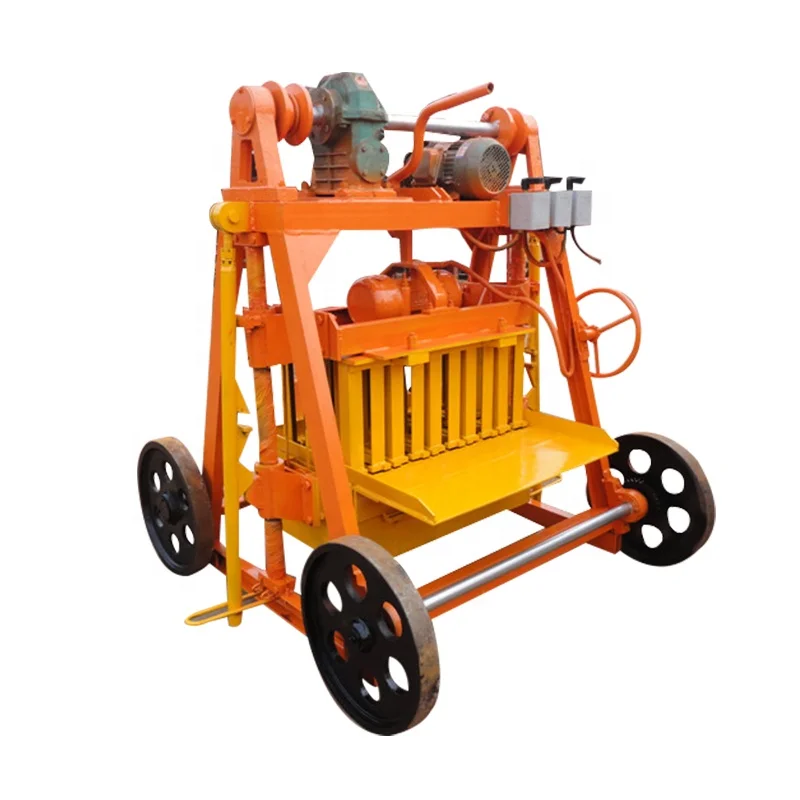
 Mobile block machine