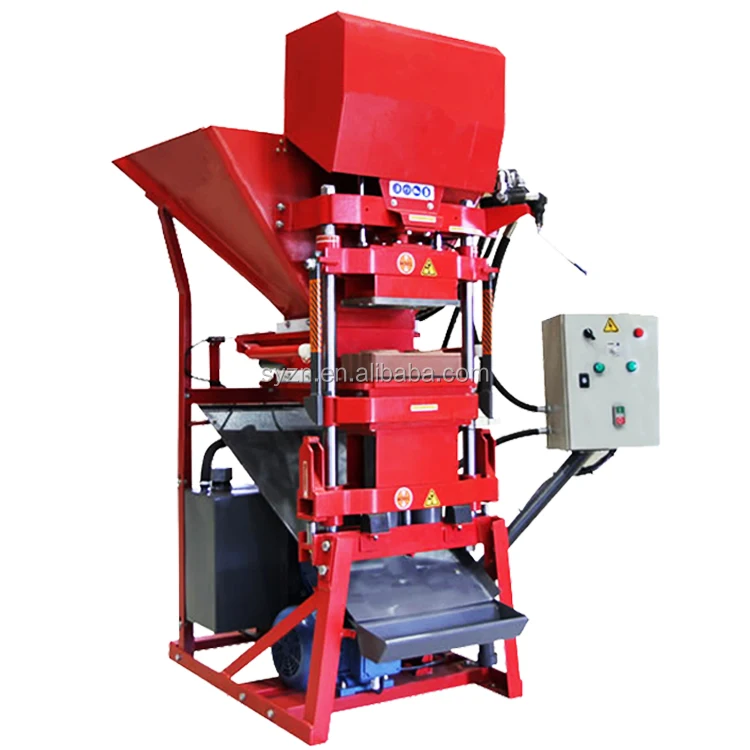
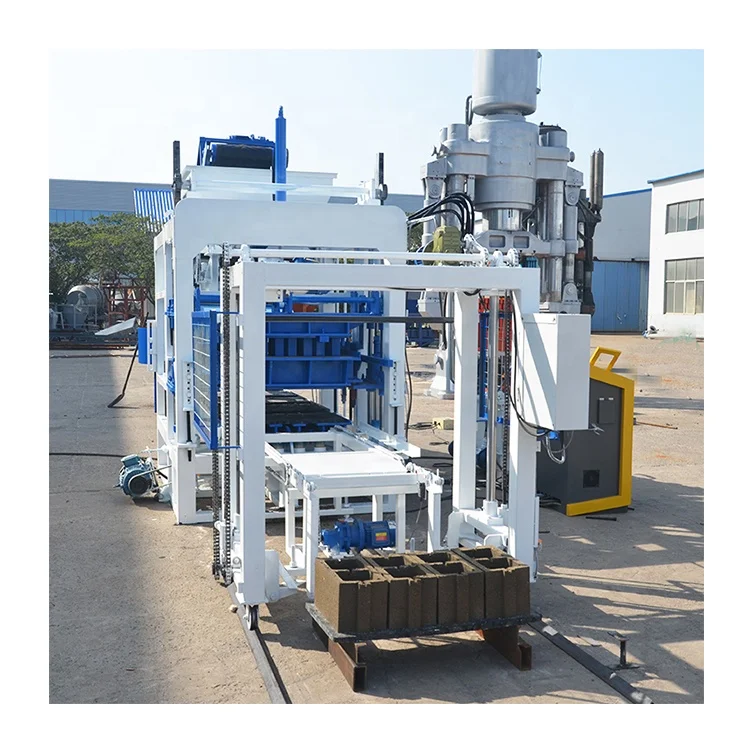
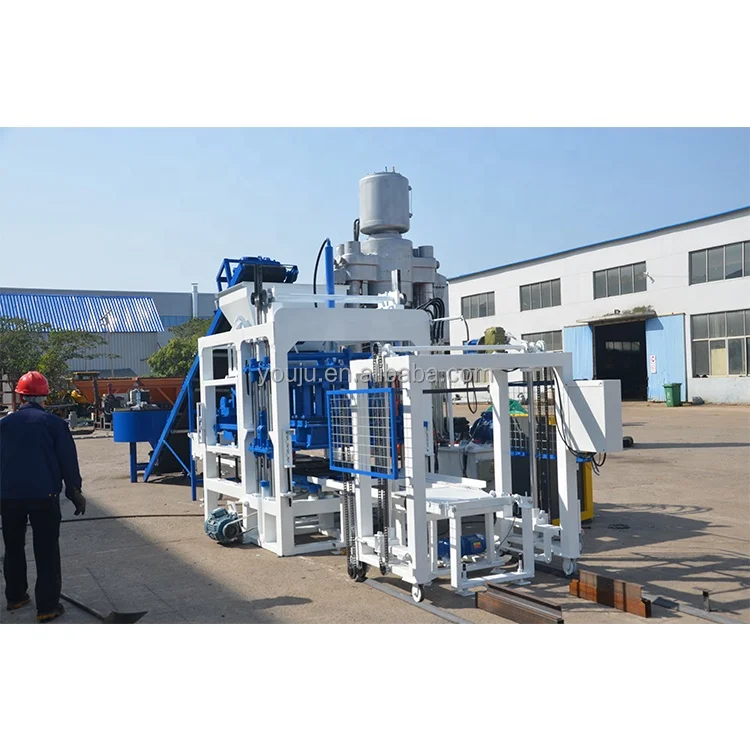
Compact Platform, Matched System — every QTJ4-25 configuration is set against the buyer’s local aggregate and target format rather than pulled from a default catalogue.
Technical Specifications
| Parameter |
Value |
| Model |
QTJ4-25 |
| Product Type |
Semi-Automatic Concrete Hollow Block Making Machine |
| Overall Dimensions (L×W×H) |
3060×1730×2580 mm |
| Total Weight |
4T |
| Vibration Force |
45KN |
| Cycle Time |
25s |
| Pallet Size |
850×550mm |
| Block Height Range |
40-280mm |
| Workshop Area |
50-150m² |
| Material Storage Area |
300-500m² |
| Belt Conveyor Length |
8m |
| Mixer Model |
JQ500 |
| Motor Brand |
Germany SIEMENS or ABB |
| Voltage |
380V, 3-phase, 50Hz (source value — confirm target market voltage requirement) |
| Control System |
Electric control (source value — PLC brand/type not specified) |
| Output Capacity |
480 pcs/h (based on 400×200×200mm hollow block, 4 pcs/mould) |
| Output Capacity |
600 pcs/h (based on 400×150×200mm hollow block, 5 pcs/mould) |
| Output Capacity |
840 pcs/h (based on 400×100×200mm hollow block, 7 pcs/mould) |
| Output Capacity |
2880 pcs/h (based on 240×115×53mm solid brick, 24 pcs/mould) |
| Mould Formats Supported |
Hollow block, solid block, riverside brick, revetment brick, square brick, grassed brick, paver, interlocking block, curbstone, colored paver |
| Custom Mould Design |
Available per buyer drawings |
| Warranty |
1 year (except wearing parts) |
Application Suitability
| Application |
Material or Output |
| Small to medium concrete block plants |
Hollow and solid blocks from crushed stone, sand and cement |
| On-site production for construction contractors |
Project-site blocks using locally available aggregate |
| Entrepreneurs setting up a first block plant |
Entry-tier output across multiple block formats |
| Building material distributors adding production |
Pavers, interlocking bricks and curbstones in moderate volumes |
What the QTJ4-25 Output Figures Actually Mean
Real daily production depends on which block format you run, not a single cycles-per-hour claim.
Too many quotations list one headline capacity number without revealing the block size or mould cavity count behind it. When the machine arrives and the buyer switches to the format their market actually demands, the hourly output drops sharply and the projected payback timeline collapses [NEED_CITE: common block machine quotation practices and buyer expectations]. The QTJ4-25 block machine manufacturer documentation separates every output figure by block format and cavity count, so you can match the number to the product you will actually sell.

Where the Semi-Automatic Tier Fits in the Shiyue Range
The QTJ4-25 occupies the entry-to-mid position across the full Shiyue block machine lineup, sitting above mobile egg-laying models and below fully automatic hydraulic lines. Buyers comparing a first plant investment typically weigh this tier against higher-output automatic machines, balancing initial capital against labour cost and daily volume requirements. The semi-automatic configuration keeps the operator in the loop for pallet handling while the electric control system manages vibration timing and mould movement.
Mould Versatility Without a Format Changeover Penalty
A single QTJ4-25 platform supports hollow blocks, solid bricks, pavers, interlocking blocks, curbstones and grassed pavers through mould swaps. Custom mould design is available against buyer drawings, which matters when a local market demands a non-standard dimension that catalogue moulds do not cover. The block height range of 40–280 mm accommodates most structural and landscaping formats without requiring a different machine base [NEED_CITE: block format standards and regional market preferences].
Reading the Specs That Actually Shape Daily Output
The 45KN vibration force paired with the 25-second cycle time determines how densely the concrete mix compacts inside the mould cavity. Insufficient vibration against a lightweight aggregate produces blocks that fail drop tests, while excessive force on a fine-sand mix causes surface cracking. The 850×550mm pallet size sets the curing rack dimensions and the forklift capacity you will need on the shop floor — ordering pallets that do not match your existing racking system creates a bottleneck before the first production run. The JQ500 pan mixer feeds material through an 8-meter belt conveyor, and its batch capacity must align with the press cycle to avoid the operator waiting for the next mix. Motor specification defaults to SIEMENS or ABB, both widely serviceable in most export markets, but voltage and frequency must be confirmed before the control panel is wired.
The Hidden Cost of Skipping the Aggregate Sample
Sending a local aggregate sample back to the factory before finalising vibration parameters avoids a scenario I have watched unfold on multiple job sites — the machine arrives, the operator loads a lightweight volcanic stone or shale mix, and the standard vibration settings produce blocks too fragile to stack. Retuning on site burns through weeks of production while the local crew learns what the factory should have dialled in before shipping [NEED_CITE: aggregate density variation and block compressive strength]. A mismatched mix design also accelerates mould wear, pushing replacement orders forward by months and increasing consumable cost across the first year of operation.
Why Source This Tier Through a Single-Brand Line
Block machinery is the only product category here, so the QTJ4-25 press, its moulds, pallets and the JQ500 mixer are specified as one system rather than assembled from unrelated suppliers. Configuration starts with the buyer’s target block format and local raw material, not a catalogue default — the capacity calculation sheet you receive states output per format. Mould design covers every format the buyer’s market sells, including custom drawings when standard cavities do not match. Automation level is selectable, meaning a buyer can start with the semi-automatic QTJ4-25 and move to a higher tier later without scrapping the mould inventory. Installation includes operator training on vibration timing, mould change procedure and daily maintenance intervals.
Documentation & Verification
- Capacity calculation sheet stating QTJ4-25 output per block format and mould cavity count
- Machine specification sheet confirming pallet size, vibration force and block height range
- Mould drawing and format list for every block type in the buyer’s production plan
- Voltage, frequency and control language confirmation recorded before production begins
- Factory test record run on the buyer’s specified block format before dispatch
Installation, Commissioning & Support
- Workshop floor of 50–150m² with level concrete base to support the 4T machine weight
- Dedicated 380V 3-phase circuit with confirmed frequency before the SIEMENS or ABB motor is energised
- Machine ships fully assembled; belt conveyor and mixer positioned on site during commissioning
- First-run parameter tuning on the buyer’s actual aggregate and cement mix ratio
- Operator training covering 25-second cycle timing, mould change sequence and pallet loading
- Wear parts and mould replacement list provided with the operation manual at handover
What to Prepare Before Requesting a Quotation
Share the block formats your market moves in volume, along with the target daily output for each. Include a sample or lab report of the local aggregate — particle size distribution and bulk density shape the vibration setting the factory will dial in. Confirm the site voltage, frequency and the language your operators need on the control interface.
Frequently Asked Questions
Q: How is the QTJ4-25 output capacity calculated for each block format?
A: Each capacity figure is based on a specific block dimension and mould cavity count. For example, 480 pieces per hour applies to 400×200×200mm hollow blocks at 4 pieces per mould, while 2880 pieces per hour applies to 240×115×53mm solid bricks at 24 pieces per mould. The calculation assumes a 25-second cycle time and does not include downtime for pallet handling or mould changes.
Q: When should a buyer choose the QTJ4-25 over a higher-output automatic machine?
A: The QTJ4-25 suits buyers setting up a first plant, working within a 50–150m² workshop, or producing moderate daily volumes across multiple formats. Buyers targeting high-volume single-format production or seeking to minimise manual pallet handling typically move to a fully automatic tier with integrated stacking and cubing systems.
Q: What plant footprint does a semi-automatic QTJ4-25 line require?
A: The press itself needs 50–150m² of workshop space, while the material storage area requires 300–500m² for aggregate, cement and finished block curing. The 850×550mm pallet size determines curing rack layout and forklift specification, so the total site footprint depends on how many days of curing inventory the buyer plans to hold.
Q: Can the QTJ4-25 be upgraded to higher automation later?
A: The semi-automatic platform allows a buyer to start with manual pallet handling and add automation modules as production volume grows. The mould inventory remains compatible with higher-tier Shiyue machines, so format investments carry forward when the buyer eventually moves to a fully automatic line.
Q: What voltage and control options are available for different export markets?
A: The standard specification lists 380V 3-phase 50Hz, but voltage and frequency must be confirmed against the buyer’s local grid before the control panel is built. Motor options include SIEMENS or ABB, both with global service networks. Control language is set during the confirmation stage so operators can read the interface on day one.

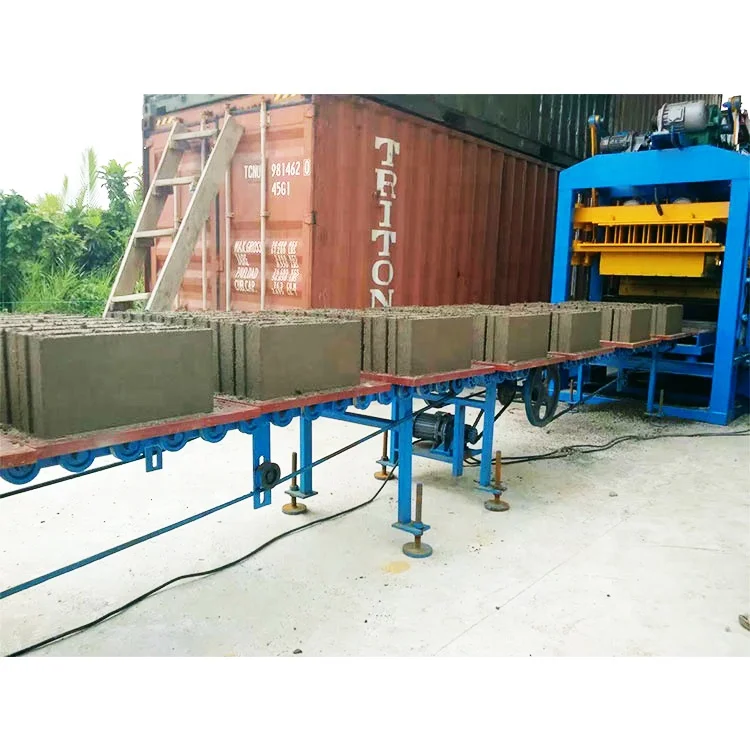
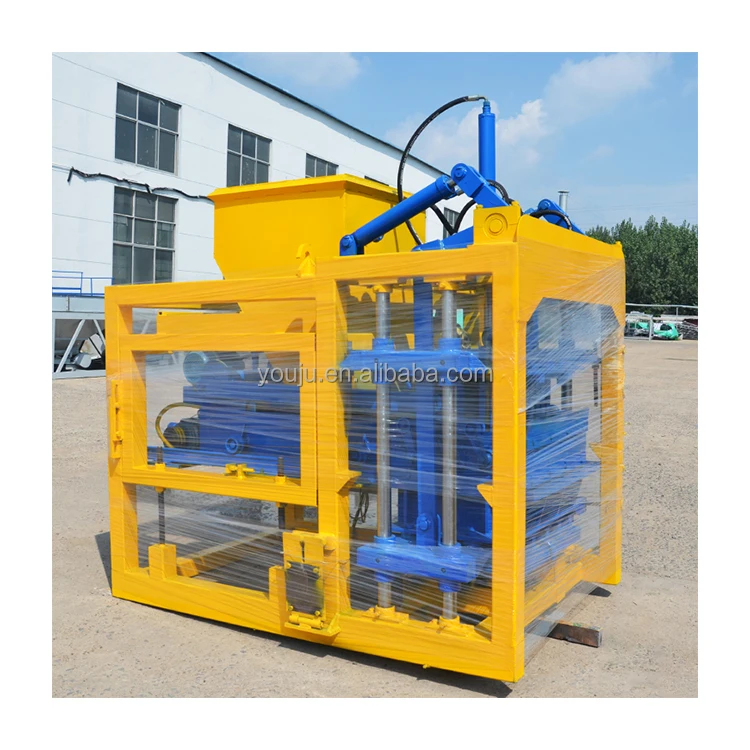 Automatic block machine