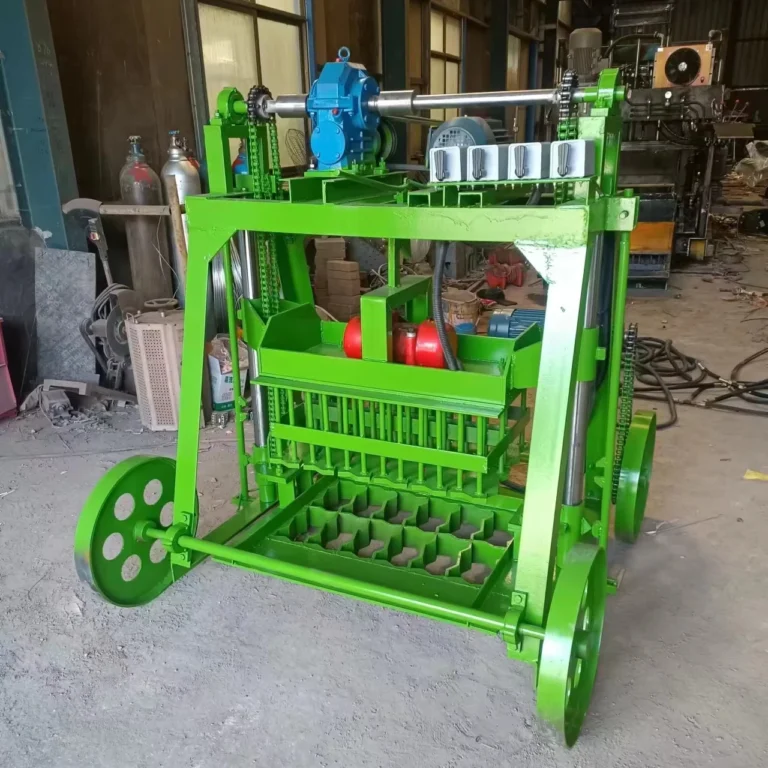
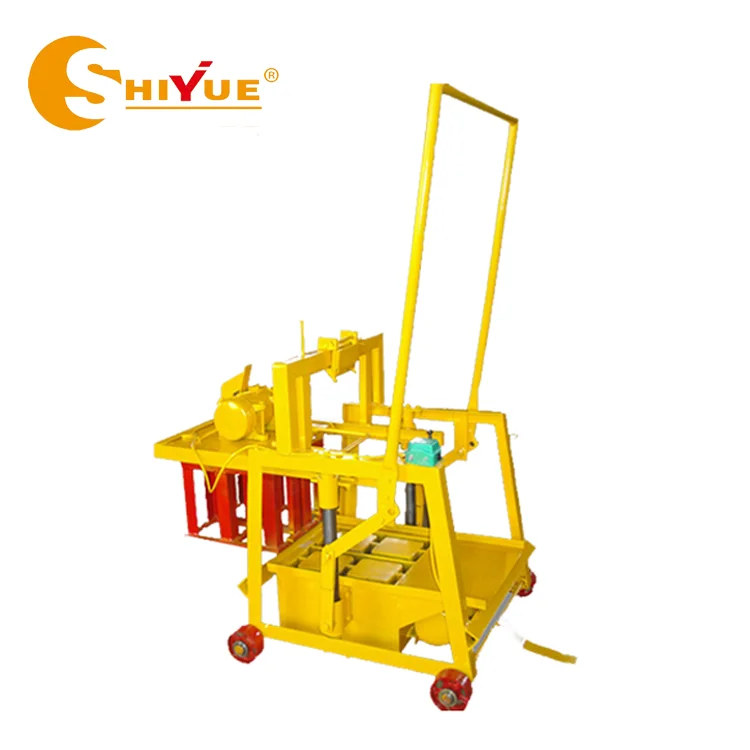
Integrated Line Configuration — Every specification from the press to the pallet and handling equipment is matched to one system rather than sourced separately, keeping the QMJ2-45 aligned with your site conditions and block format.
Technical Specifications
| Parameter |
Value |
| Model |
QMJ2-45 |
| Product Type |
Mobile Block Making Machine |
| Automation Level |
Manual mobile operation |
| Mould Format |
Hollow brick (multiple size options via mould change) |
| Cycle Time |
25-30s (basis not stated in source) |
| Output Capacity (400x200x200mm) |
2 pcs/mould, 160 pcs/hour, 1280 pcs/8hr |
| Output Capacity (400x150x200mm) |
3 pcs/mould, 240 pcs/hour, 1920 pcs/8hr (basis to be confirmed) |
| Output Capacity (400x100x200mm) |
4 pcs/mould, 320 pcs/hour, 2560 pcs/8hr |
| Pallet Requirement |
No pallets required |
| Labor Requirement |
1 to 3 workers |
| Operating Environment |
Small space compatible, freely movable |
| Mould Change |
Quick change for different hollow brick formats |
| Standards |
ISO9001:2000, CE |
Application Suitability
| Application |
Material or Output |
| On-site hollow brick production |
Construction contractors using local sand and cement |
| Small-scale block plants |
Limited space operations with low initial investment |
| Remote or off-grid locations |
Production without stable power supply dependency |
| First block production operations |
Entrepreneurs entering the concrete products market |
| Housing project contractors |
Local production of blocks for development sites |
Why "1280 Pieces per Day" Doesn’t Tell the Whole Story
Real capacity depends entirely on which block format you plan to produce and the raw materials available on your site.
Many mobile block making machine for sale quotations highlight a single peak output figure without clarifying the brick size or mix design behind that number. A contractor expecting to run 400×200×200mm hollow blocks all day will see far fewer units than the headline suggests, while someone producing smaller formats might exceed it. This mismatch leads to project delays and frustrated crews when the machine arrives and the daily tally falls short [NEED_CITE: block production capacity variables]. Having worked through these discrepancies with buyers across different regions, I now confirm the exact block format and local aggregate before quoting any output expectation.

Where the QMJ2-45 Sits in the Machine Range
The QMJ2-45 occupies the entry tier of block production equipment, designed for buyers who need immediate on-site output without the footprint or capital of a fixed plant. This mobile block making machine for sale operates without pallets, laying blocks directly onto the ground as it moves forward. For contractors evaluating their first block production setup or housing project managers comparing mobile versus stationary options, this tier represents the lowest barrier to entry before considering semi-automatic or fully automatic lines.
Understanding the Pallet-Free Advantage
Eliminating pallets removes an entire layer of cost and logistics from block production. Traditional stationary machines require wooden or bamboo pallets for each block, plus curing racks to store them during the hardening phase. The egg-laying design of this machine means blocks cure directly on the ground surface, which simplifies the workflow considerably for small crews working in tight spaces [NEED_CITE: pallet-free block production benefits]. However, this approach demands a flat, prepared surface and sufficient curing area to accommodate daily output without blocks being disturbed before they gain adequate strength.
Interpreting the Cycle Time and Output Figures
The stated 25-30 second cycle time applies per mould operation, but actual throughput depends on crew efficiency in feeding material and repositioning the machine. With two workers managing the feed and one operating the unit, the 400×200×200mm format yields 2 blocks per cycle, while the narrower 400×100×200mm format produces 4 blocks per cycle. These figures assume consistent material flow and no interruptions for mould changes or surface preparation. Buyers should calculate their realistic daily output based on available working hours, crew size, and the specific block format their market demands rather than relying on theoretical maximums.
The Hidden Cost of Skipping Raw Material Testing
Purchasing a machine configured for standard river sand when your site only has access to volcanic aggregate or crushed stone creates immediate production problems. The vibration force and hydraulic pressure settings that work for one material mix may produce weak, crumbly blocks with another. I have seen buyers receive equipment that performed perfectly during factory testing, only to discover their local aggregate requires different compaction parameters [NEED_CITE: aggregate variation impact on block strength]. Spending time on material compatibility testing before shipment prevents costly adjustments and production downtime after the machine arrives at your project site.
Why Buyers Choose This Supplier for Mobile Equipment
Block machinery remains the single focus here, meaning the QMJ2-45 arrives as a complete matched system rather than an assembled collection of components from different manufacturers. Configuration decisions are made against your actual mix design and target block format, not default catalogue settings. Mould design covers the hollow brick sizes your local market actually purchases, with custom drawings available for non-standard formats. The automation level allows buyers to start with manual mobile operation and upgrade to semi-automatic systems later as production volume justifies the investment. Installation support includes operator training so your crew understands mould change procedures and maintenance requirements from day one.
Documentation & Verification
- Line layout and capacity calculation stating the block format assumed for each output figure
- Machine specification sheet with voltage, frequency, and control language confirmation
- Mould drawing and format list confirming which brick sizes are included in shipment
- Factory test record and CE declaration documentation provided before dispatch
- Operation and maintenance manual covering mould change procedures and wear part replacement
Installation, Commissioning & Support
- Site preparation requires flat, level ground surface with adequate curing area for daily block output
- Power connection specifications must match local voltage and frequency before machine energization
- Assembly involves mounting the vibration motor and connecting control panel wiring on-site
- First production run includes parameter adjustment based on your specific aggregate and cement ratio
- Operator training covers mould change technique, material feeding rhythm, and basic troubleshooting
- Wear parts list identifies components requiring periodic replacement based on production volume
What Information Helps Us Configure Your Machine
To provide accurate output expectations and ensure the QMJ2-45 matches your project requirements, we need details about your target block formats, the raw materials available at your site, and your local power supply specifications. Understanding your daily production goals and available curing space helps determine whether this mobile tier serves your needs or if a semi-automatic line would better suit your volume targets.
Frequently Asked Questions
Q: How does the QMJ2-45 mobile tier compare to semi-automatic and automatic tiers in daily output and labor?
A: The QMJ2-45 requires 1-3 workers and produces blocks in a single format per mould change, with output limited by manual material feeding and machine repositioning. Semi-automatic tiers add conveyor feeding and pallet systems that increase throughput but require more floor space and capital investment. Automatic lines minimize labor through robotic stacking and continuous operation, suitable for high-volume plants where daily production justifies the equipment cost and infrastructure requirements.
Q: What block formats can this machine produce, and what is the realistic capacity per format?
A: The QMJ2-45 produces hollow bricks in 400×200×200mm, 400×150×200mm, and 400×100×200mm formats through mould changes. Realistic capacity per format depends on crew efficiency, material flow consistency, and available working hours. The wider format yields fewer pieces per hour than narrower formats. Actual daily output should be calculated based on your specific block format, local material characteristics, and site conditions rather than theoretical maximums.
Q: What plant footprint and site conditions does a mobile machine need versus a fixed automatic line?
A: Mobile machines require flat, prepared ground with sufficient curing area to store blocks without disturbance during the hardening phase. No fixed foundation or building structure is necessary, making them suitable for remote sites and temporary project locations. Fixed automatic lines require dedicated factory space with concrete floors, curing chambers, and pallet return systems. The choice depends on whether you need portability for multiple project sites or consistent high-volume production from a permanent location.
Q: Can I start with this mobile machine and upgrade to a semi-automatic or automatic line later?
A: Many buyers begin with mobile equipment to establish market presence and understand local demand patterns before investing in larger systems. The knowledge gained about material behavior, block formats, and customer preferences transfers directly when scaling up. However, mobile and stationary machines operate on different principles, so upgrading means purchasing new equipment rather than modifying existing units. Planning the upgrade path early helps justify the initial mobile investment as a learning phase.
Q: What voltage, frequency and control language options are available for my destination market?
A: Voltage and frequency must be confirmed before production to match your local electrical grid specifications. Common configurations include 220V/50Hz, 380V/50Hz, and 440V/60Hz depending on export market requirements. Control panel language options should be specified during ordering to ensure operators can understand interface messages and error codes. Confirming these details early prevents commissioning delays and ensures the machine integrates smoothly with your existing electrical infrastructure upon arrival.

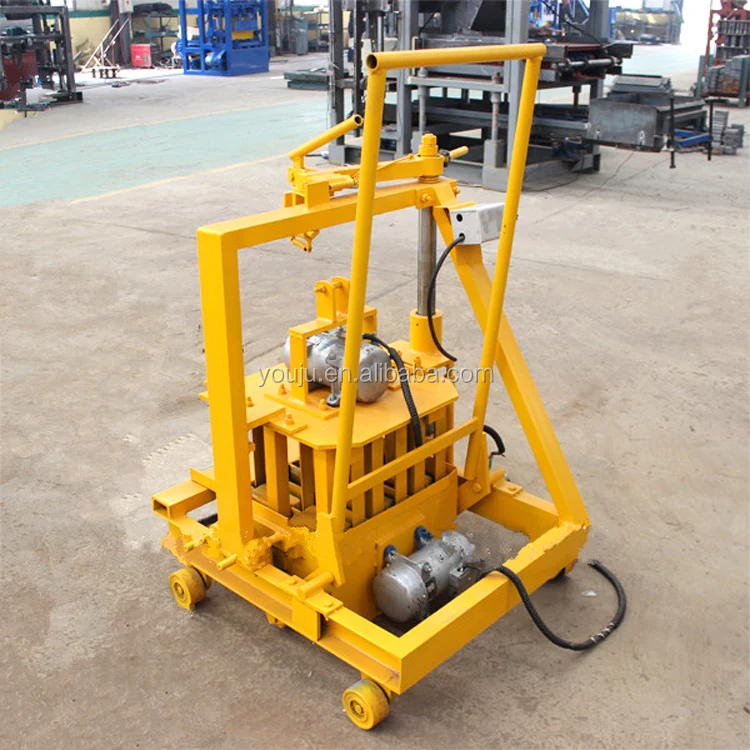
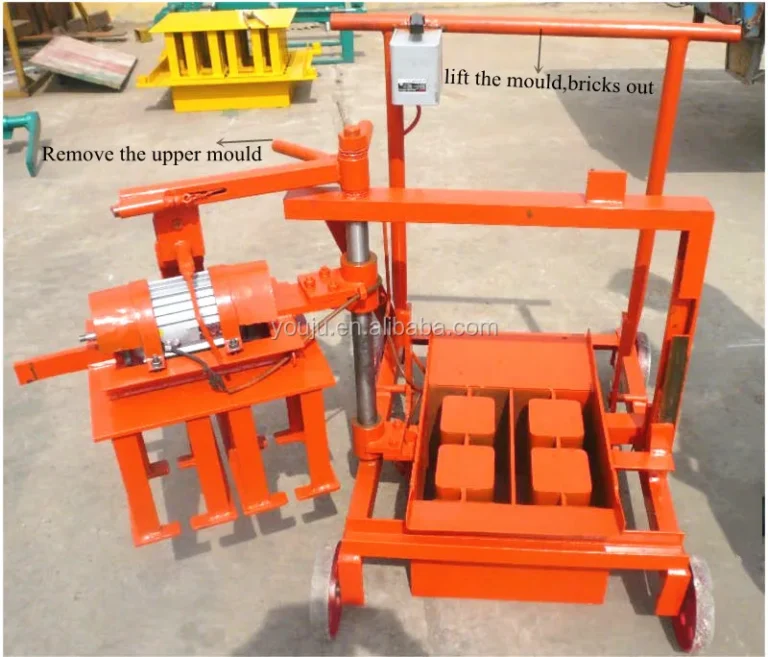 Mobile block machine