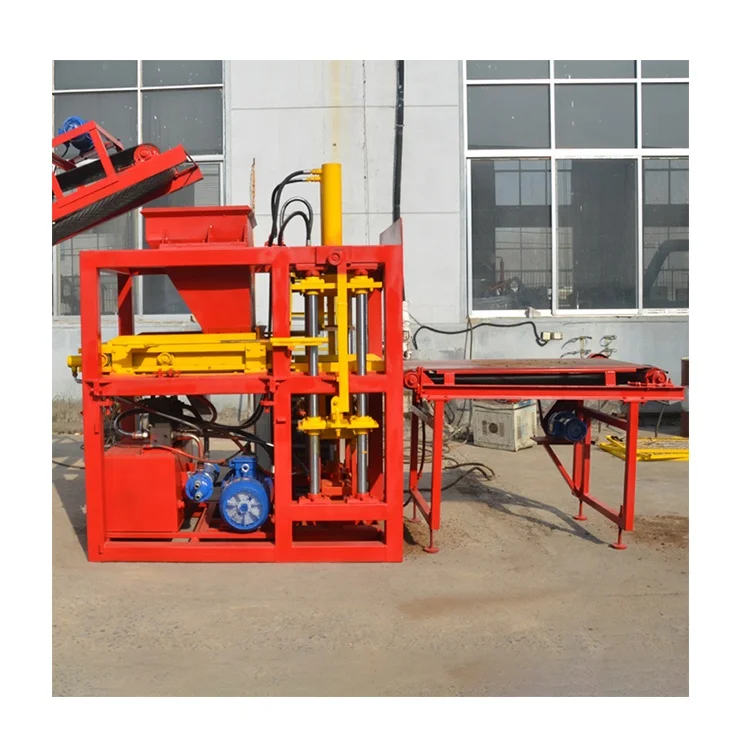
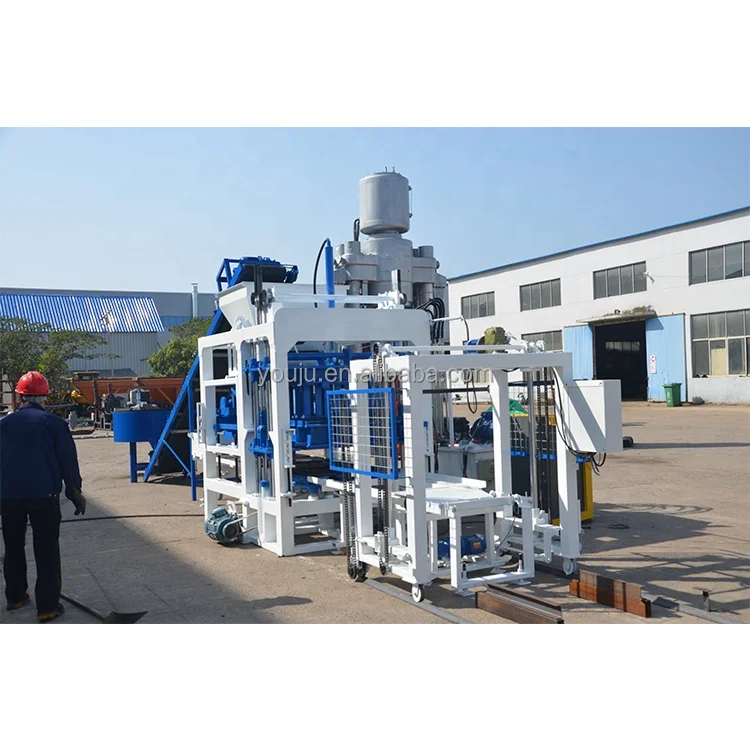
Matched System Supply — machine, mould, pallet and handling are specified together for the ECO 2700 so the entry tier performs as a complete unit, not a collection of mismatched parts.
Technical Specifications
| Parameter |
Value |
| Model |
ECO 2700 |
| Product Type |
Clay Block Making Machine |
| Overall Dimensions (L×W×H) |
1000×1000×1800 mm |
| Shaping Cycle |
15-20 seconds (basis not stated in source — confirm block format / material / thickness) |
| Rated Power |
5.5 kW |
| Hydraulic Pressure |
16 MPa |
| Net Weight |
1000 KGS |
| Voltage & Frequency |
380V, 3-phase, 50HZ (customizable to local voltage) |
| Automation Level |
Semi-automatic / manual operation |
| Motor Brand |
Siemens |
| Key Features |
Compact footprint, hydraulic pressing, CE compliant design |
| Warranty |
1 year |
Application Suitability
| Application |
Material or Output |
| Small-scale clay block and brick production |
Local clay, soil, and aggregate mixes for masonry units |
| Small business and startup block plants |
Entry-level daily volumes in workshop or yard settings |
| On-site masonry block forming |
Project-specific clay and soil blends for contractor use |
What "15-20 Second Cycles" Leaves Out for the ECO 2700 Clay Block Making Machine
Cycle time means nothing until the block format and mix design are locked in.
Buyers often see a shaping cycle listed and immediately calculate an eight-hour shift output, only to find that their specific clay block size and local soil mix require a longer press and vibration period to achieve handling strength. When the raw material behaves differently than the test standard, the actual daily yield falls well short of the catalog number. I have watched first-time plant owners order a semi-automatic unit based on cycle speed alone, then spend weeks adjusting moisture content and press timing to get blocks that do not crumble off the pallet [NEED_CITE: effect of local clay composition on block forming cycle times].

Where the ECO 2700 Fits in the Full Machine Range
The ECO 2700 clay block making machine sits at the entry tier of the Shiyue lineup, built for buyers who need a compact, low-investment starting point. Its 1000×1000×1800 mm footprint means it fits inside a standard workshop bay without major site preparation, which matters when capital is limited and the production area is shared with other activities. Buyers evaluating the full range use this model as a reference for what semi-automatic output looks like before deciding whether a higher-tier automatic line justifies its floor space and power draw.
Deciding Between Semi-Automatic and the Next Tier Up
Choosing between this entry-level unit and a mid-range automatic line depends on your realistic daily volume and the labour you can deploy. Semi-automatic operation keeps the initial investment lower and works when pallet handling by hand is manageable for the output target. As daily demand grows, the cost of additional workers feeding and collecting pallets can overtake the price difference to a more automated configuration. The range is structured so buyers can map that crossover point against their local market demand [NEED_CITE: labour cost versus automation investment crossover in small block plants].
Pressure, Power, and Cycle Timing Explained
The 16 MPa hydraulic pressure on the ECO 2700 determines how densely the clay mix is compacted during forming, which directly affects whether blocks can be moved off the pallet without edge damage. At 5.5 kW, the motor provides enough force for small-format clay blocks but limits the machine to mixes that do not require the sustained vibration of larger hollow block production. The 15–20 second shaping cycle is achievable on thinner, solid clay brick formats where the material flows into the mould cavity quickly; heavier or taller block formats will extend that cycle, which is why the block format must be confirmed before any output projection is made. Siemens motor components provide a known service baseline, reducing the risk of unexpected drive failures during the first year of operation.
The Cost of Skipping Format Confirmation
When a buyer orders without specifying the exact clay block dimensions their market requires, the mould that ships may produce a format that does not sell locally. The machine runs, the blocks come out intact, but the product sits in the yard because the regional construction standard calls for a different size or shape. Correcting this means ordering a new mould, waiting for delivery, and losing weeks of production while the original inventory moves at a discount or goes to waste [NEED_CITE: block format mismatch and its effect on first-year plant revenue].
Why Source the ECO 2700 Through This Range
The machine, mould, and pallet are specified as a matched system rather than assembled from separate catalogue pages, so the 16 MPa pressure is validated against the mould cavity depth and the pallet rigidity. Configuration is set against the buyer’s actual clay mix and target block format, not a generic default, which prevents the cycle time surprises that show up after arrival. Mould design covers the formats the buyer’s market actually purchases, and the automation level is selectable so a semi-automatic start can transition to higher tiers within the same system architecture.
Documentation & Verification
- Line layout showing ECO 2700 footprint within a small workshop bay
- Capacity calculation stating the clay block format and mix assumed
- Mould drawing and format list for confirmed block dimensions
- Voltage and control language confirmation before production starts
- Factory test record on your specified clay mix before dispatch
- Operation and maintenance manual with wear parts list
Installation, Commissioning & Support
- 1000×1000 mm base requires a level concrete pad with standard anchor points
- 380V three-phase supply must be on a dedicated circuit rated above 5.5 kW
- Machine ships partially assembled with mould and hydraulic unit pre-mounted
- First-run parameter setting calibrated to your confirmed clay mix and block format
- Operator training covers mould change, pallet handling, and daily inspection routines
- Wear parts and mould supply maintained for ongoing production needs
What to Prepare Before Inquiry
To match the right configuration within the full range, share the clay block formats your local market sells, your target daily output, and a sample of your available raw material. Include your site’s voltage and frequency so the motor and control system are built to match. If you plan to expand output later, note that as well so the semi-automatic setup leaves room for a future automation transition.
Frequently Asked Questions
Q: Where does the ECO 2700 sit in the Shiyue full machine range, and when should I consider stepping up?
A: The ECO 2700 is the entry-tier semi-automatic unit, designed for small workshops and first-time plant owners. Step up to a mid-range or automatic line when your confirmed daily output requires more pallet positions per cycle, or when the labour cost of manual pallet handling exceeds the investment difference to a higher automation tier.
Q: How is the ECO 2700 output capacity calculated, and which block format is assumed?
A: Capacity depends entirely on the block format, mix design, and material moisture content. The 15–20 second shaping cycle applies to specific solid clay block formats. A capacity calculation stating the exact format and mix assumed is provided with every quotation so you can compare against higher tiers on a consistent basis.
Q: What plant footprint does the ECO 2700 require compared to higher-capacity models?
A: At 1000×1000×1800 mm, the ECO 2700 fits within a single workshop bay. Mid-range automatic lines require substantially more floor space for pallet circulation, stacking, and curing rack systems. The compact footprint keeps site preparation costs low for entry-level production setups.
Q: Can I start with the ECO 2700 semi-automatic and upgrade automation later?
A: Yes. The system architecture allows a semi-automatic start with manual pallet handling, then a transition to automatic pallet feeding and stacking as your volume grows. This upgrade path is built into the range so the initial investment is not stranded when demand increases.
Q: What voltage and control language options are available at the time of order?
A: The standard configuration is 380V three-phase at 50 Hz, but voltage and frequency are customisable to match your local supply. Control display language is confirmed before production begins so operators can read all menus and alarms in their working language from the first day of commissioning.

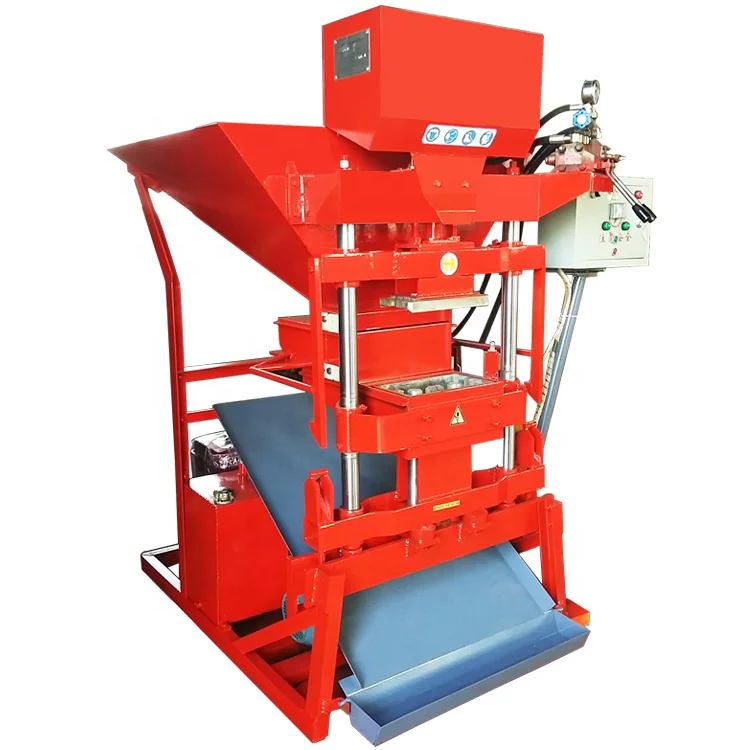
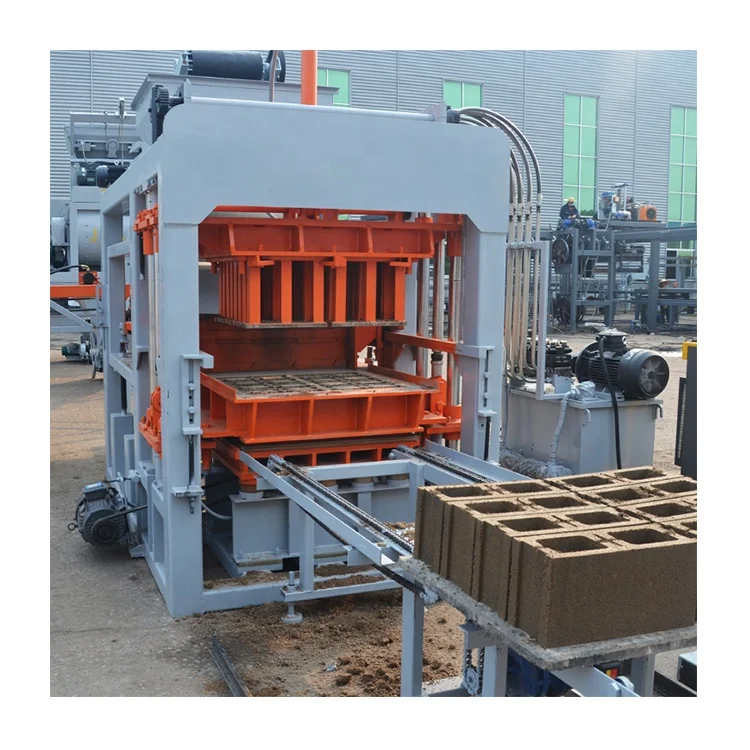 Semi automatic block