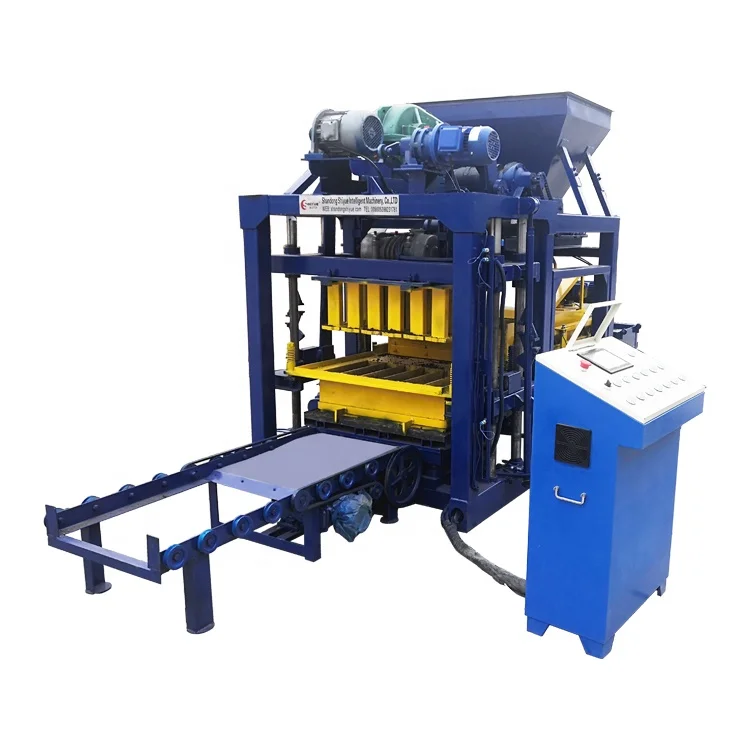
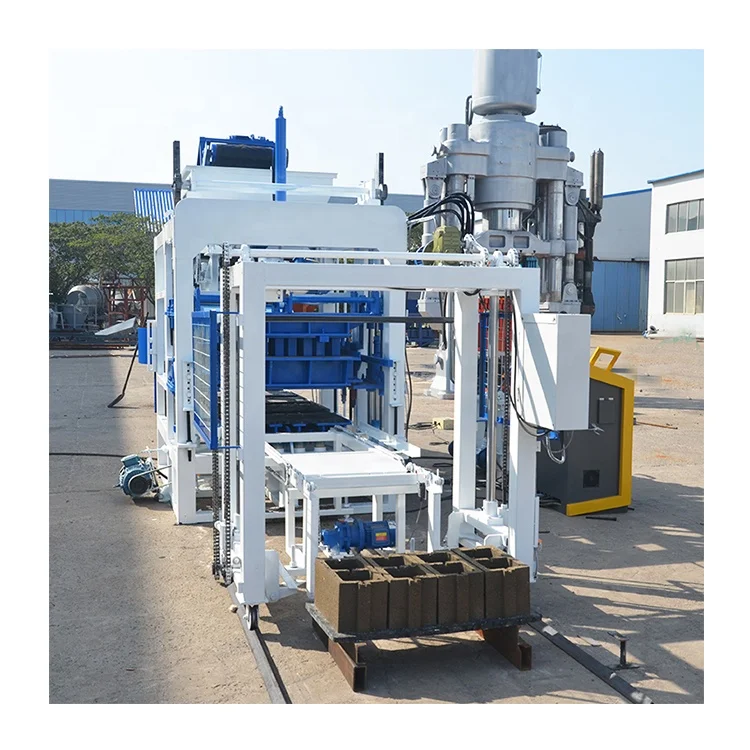
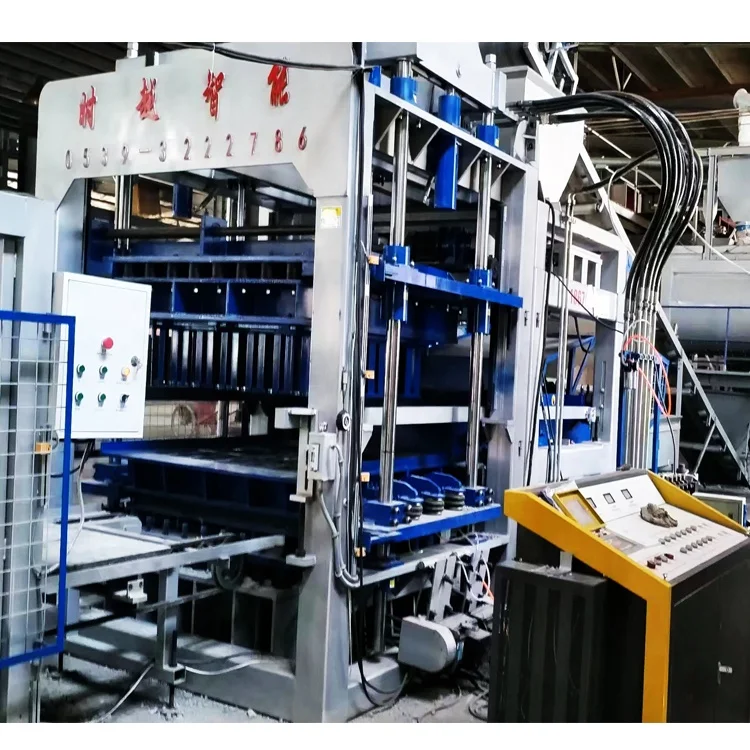
Configuration matched to your actual block format — the QT6-15 is specified against your target output, local aggregate, and pallet system rather than a generic catalogue default, so capacity figures and supporting equipment reflect what your plant will actually run.
Technical Specifications
| Parameter |
Value |
| Model |
QT6-15 |
| Product Type |
Automatic Concrete Block Making Machine |
| Molding Way |
Vibration and hydraulic pressing |
| Rated Pressure |
21 MPa |
| Molding Cycle |
15s–20s |
| Pallet Size |
900×700 mm |
| Main Machine Weight |
6000 kg |
| Output (Hollow Block 400×200×200 mm) |
1440 pcs/h, 11520 pcs/8h |
| Output (Paving Brick 200×100×60 mm) |
5040 pcs/h, 40320 pcs/8h |
| Output (Solid Brick 240×115×53 mm) |
7680 pcs/h, 61440 pcs/8h |
| Raw Materials |
Cement, sand, fly ash, stone powder, slag |
| Product Formats |
Hollow blocks, paving bricks, solid bricks, curbstones, interlocking bricks |
| Automation Level |
Configurable from simple line to fully automatic line |
| Motor Voltage |
Customizable to local voltage (confirm at inquiry) |
| Warranty |
1 year (excluding wearing parts) |
| Assembly State for Shipment |
Top cylinder removed for container loading; reassembled on site |
Application Suitability
| Application |
Material or Output |
| Hollow block production for housing projects |
Cement, sand, and crushed stone or fly ash mixes |
| Interlocking brick manufacturing |
Cement with laterite, volcanic aggregate, or stone powder |
| Paving brick for roads and walkways |
Cement, sand, and fine aggregate blends |
| Solid brick for load-bearing walls |
Cement and coarse aggregate with high compaction |
| Curbstone and kerb production |
Dense cement-aggregate mixes with extended cycle |
Why "Pieces per Hour" Without a Block Size Is Meaningless
When a supplier quotes the QT6-15 automatic block machine manufacturer capacity as a single number, that figure usually assumes one specific block format — often the smallest and fastest to press. Buyers then plan their daily output around a number the machine never actually delivers on their primary product.
Every capacity figure here is tied to a named block dimension.
The QT6-15 cycles in 15–20 seconds, but that translates to 1440 hollow blocks (400×200×200 mm) per hour while the same machine produces 5040 paving bricks (200×100×60 mm) in the same window. I have seen plants in Southeast Asia base their entire financial model on the paving brick number, only to discover their market primarily demands hollow blocks at a fraction of that throughput [NEED_CITE: block format assumptions in capacity quotations]. The gap between quoted and actual output is the single most common reason first-time buyers feel misled.

Placing the QT6-15 on the Automatic Range
The QT6-15 automatic block machine manufacturer sits in the mid-tier of the full machine lineup. Below it, semi-automatic models require manual pallet handling and are suited to small workshops with limited investment. Above it, high-capacity automatic lines add full batching, automatic pallet loading, and cubing systems designed for continuous two-shift operation. The QT6-15 bridges these tiers by offering configurable automation — a buyer can start with a JS500 mixer and an 8 m conveyor belt, then add automatic stacking and pallet separation later as demand grows.
What Automation Level Fits Your Plant
A simple line configuration pairs the QT6-15 with a JS500 mixer, conveyor, and manual pallet handling — enough for contractors producing blocks on a housing project site. A fully automatic line adds a batching machine, cement silo with screw conveyor, automatic pallet loader, stacker, and block-and-pallet separator. The choice depends on labour availability and shift length rather than the press itself. I worked with a plant in Java that ran a simple line on a single shift and later added an automatic stacker when they moved to double shifts; the press needed no modification because the automation level was designed to be modular [NEED_CITE: modular automation in block production lines].
Reading the Specs That Matter on Site
The 21 MPa rated hydraulic pressure works together with vibration to compact the mix into the mould cavity. Higher pressure alone will not produce stronger blocks if the vibration frequency is not matched to the aggregate gradation — a lightweight volcanic aggregate, common across Indonesian quarries, requires different vibration settings than dense crushed granite. The 900×700 mm pallet size must align with your curing rack spacing and the fork dimensions of the forklift you already own; a mismatch here means either rebuilding the curing area or replacing handling equipment. The moulding cycle of 15–20 seconds varies by format and mix moisture, and the cycle time directly determines whether the mixer can keep up or the press sits idle waiting for material.
The Cost of Getting the Pallet and Voltage Wrong
A buyer once received a block machine configured for 380V/50Hz in a market running 440V/60Hz; the motor overheated within the first week, and commissioning stalled until a replacement motor was shipped [NEED_CITE: voltage mismatch in exported machinery]. Equally, pallets specified without checking the curing rack system lead to bottles-necks: if the pallet is too wide for the rack slots, every block must be re-stacked by hand before curing, wiping out the cycle-time advantage the press was supposed to deliver. These are not engineering failures — they are specification oversights that surface only after the container is opened.
Why Source the QT6-15 from This Range
Block machinery is the single focus here, so the press, mould, pallet, and handling equipment are specified as one matched system rather than assembled from unrelated suppliers. The configuration is set against the buyer’s actual mix design, local aggregate, and target block format — not a catalogue default. Moulds for interlocking bricks, hollow blocks, and curbstones are designed in-house to match the formats your local market sells, including custom drawings when standard formats do not apply. The automation level is selectable, allowing a buyer to enter the range at a simple-line budget and expand later. Factory testing is run on the buyer’s block format before dispatch, not on a generic test block.
Documentation & Verification
- Line layout with capacity calculation tied to each specific block format
- Machine specification sheet confirming voltage, frequency, and PLC display language
- Mould drawing and format list for your confirmed product range
- Pallet specification matched to your curing rack and forklift dimensions
- Factory test record on your block format before container loading
- Hydraulic and electrical schematic for on-site maintenance reference
Installation, Commissioning & Support
- Top cylinder removed for container loading; reassembled during on-site installation
- Voltage and frequency confirmed before production to match local supply
- Pallet size verified against buyer’s curing rack and forklift before shipment
- Operator training covers mould change procedure and cycle time adjustment per format
- Wear parts and mould list supplied for first replacement planning
- Commissioning includes test run with local raw material to confirm block strength
What to Include in Your Inquiry
To size the QT6-15 correctly, share your primary block format and daily output target, the local aggregate type you plan to use, and your existing curing area dimensions. Confirm the voltage and frequency at your site along with the preferred PLC display language. If you already operate a mixer or pallet handling system, provide the model and capacity so the supporting equipment can be matched.
Frequently Asked Questions
Q: How is the QT6-15 capacity verified, and which block format does each figure assume?
A: Every capacity number is tied to a specific block dimension. The 1440 pcs/h figure assumes a 400×200×200 mm hollow block, while 5040 pcs/h assumes a 200×100×60 mm paving brick. The factory test record documents output on your confirmed format before dispatch, so you see actual throughput rather than a best-case number from a smaller block.
Q: Where does the QT6-15 sit in the full machine range — what tier is above and below it?
A: Below the QT6-15, semi-automatic machines require manual pallet handling and suit smaller workshops. Above it, high-capacity lines add full batching, pallet loading, and cubing for continuous multi-shift production. The QT6-15 occupies the mid-tier with selectable automation, letting you start simple and add stackers or batching later.
Q: What automation level should I choose for my plant size and labour availability?
A: A simple line with a JS500 mixer and conveyor works for single-shift operations with available labour. A fully automatic line with batching, pallet loading, and stacking suits double-shift plants or sites where labour cost is high. The press itself is identical; only the upstream and downstream equipment changes.
Q: What voltage, frequency, and PLC language options are available for my market?
A: Motor voltage is customizable to your local supply. Frequency and PLC display language must be confirmed before production begins. Provide these details at inquiry stage so the electrical schematic and control panel are built to your specification from the start.
Q: What supporting equipment is included in the quotation, and what is optional?
A: The base quotation covers the QT6-15 press and selected moulds. Optional equipment includes the JS500 mixer, conveyor belt, automatic stacker, cement silo, batching machine, pallet loader, and block-and-pallet separator. Each item is quoted separately so you can configure the line to match your budget and site conditions.

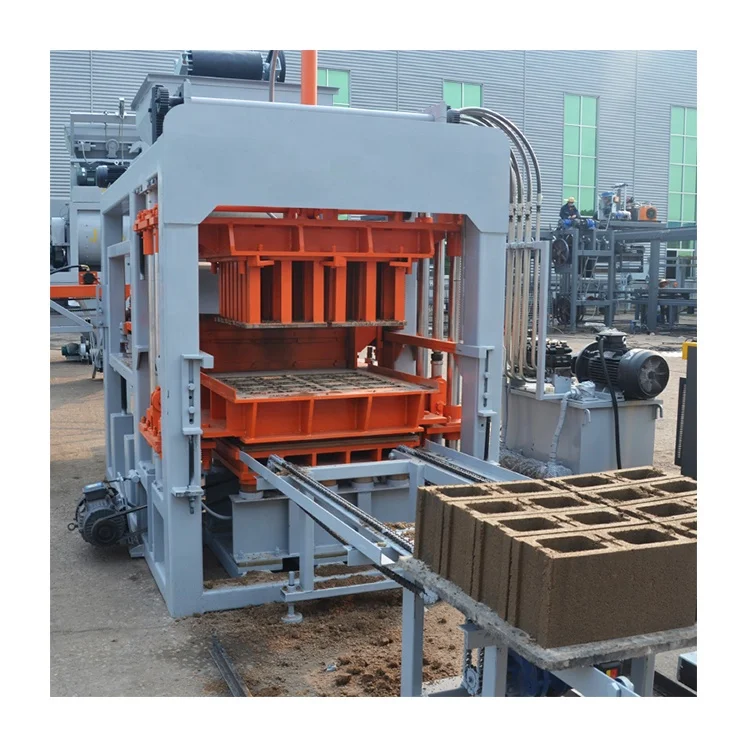
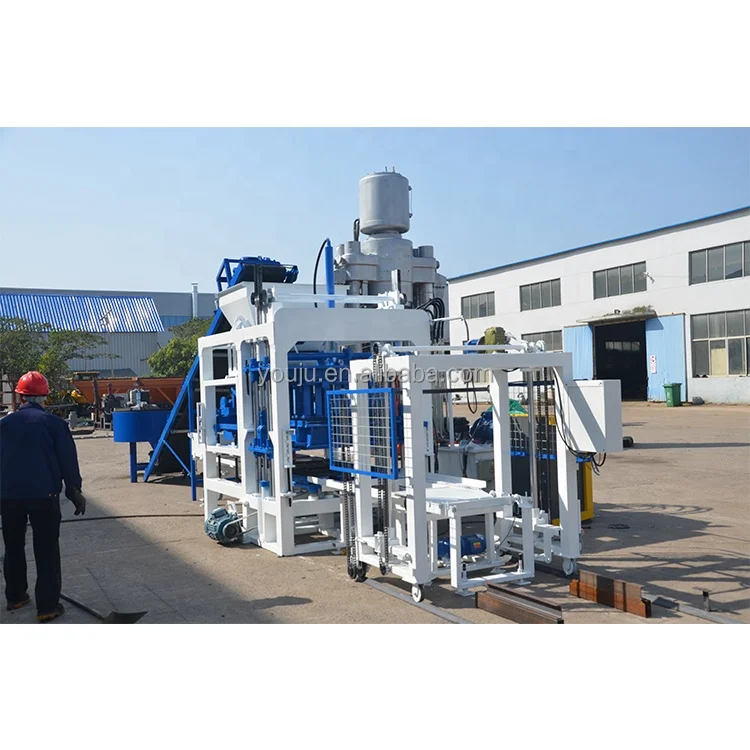 Automatic block machine